 Add to Chrome
 Add to Firefox
 Add to Edge
Beyond Conservative Automated Driving in Multi-Agent Scenarios via Coupled Model Predictive Control and Deep Reinforcement Learning
Apr 15, 2026
Automated driving at unsignalized intersections is challenging due to complex multi-vehicle interactions and the need to balance safety and efficiency. Model Predictive Control (MPC) offers structured constraint handling through optimization but relies on hand-crafted rules that often produce overly conservative behavior. Deep Reinforcement Learning (RL) learns adaptive behaviors from experience but often struggles with safety assurance and generalization to unseen environments. In this study, we present an integrated MPC-RL framework to improve navigation performance in multi-agent scenarios. Experiments show that MPC-RL outperforms standalone MPC and end-to-end RL across three traffic-density levels. Collectively, MPC-RL reduces the collision rate by 21% and improves the success rate by 6.5% compared to pure MPC. We further evaluate zero-shot transfer to a highway merging scenario without retraining. Both MPC-based methods transfer substantially better than end-to-end PPO, which highlights the role of the MPC backbone in cross-scenario robustness. The framework also shows faster loss stabilization than end-to-end RL during training, which indicates a reduced learning burden. These results suggest that the integrated approach can improve the balance between safety performance and efficiency in multi-agent intersection scenarios, while the MPC component provides a strong foundation for generalization across driving environments. The implementation code is available open-source.

Artificial Intelligence for Modeling and Simulation of Mixed Automated and Human Traffic
Apr 14, 2026Autonomous vehicles (AVs) are now operating on public roads, which makes their testing and validation more critical than ever. Simulation offers a safe and controlled environment for evaluating AV performance in varied conditions. However, existing simulation tools mainly focus on graphical realism and rely on simple rule-based models and therefore fail to accurately represent the complexity of driving behaviors and interactions. Artificial intelligence (AI) has shown strong potential to address these limitations; however, despite the rapid progress across AI methodologies, a comprehensive survey of their application to mixed autonomy traffic simulation remains lacking. Existing surveys either focus on simulation tools without examining the AI methods behind them, or cover ego-centric decision-making without addressing the broader challenge of modeling surrounding traffic. Moreover, they do not offer a unified taxonomy of AI methods covering individual behavior modeling to full scene simulation. To address these gaps, this survey provides a structured review and synthesis of AI methods for modeling AV and human driving behavior in mixed autonomy traffic simulation. We introduce a taxonomy that organizes methods into three families: agent-level behavior models, environment-level simulation methods, and cognitive and physics-informed methods. The survey analyzes how existing simulation platforms fall short of the needs of mixed autonomy research and outlines directions to narrow this gap. It also provides a chronological overview of AI methods and reviews evaluation protocols and metrics, simulation tools, and datasets. By covering both traffic engineering and computer science perspectives, we aim to bridge the gap between these two communities.
Procedural Generation of Algorithm Discovery Tasks in Machine Learning
Mar 18, 2026Automating the development of machine learning algorithms has the potential to unlock new breakthroughs. However, our ability to improve and evaluate algorithm discovery systems has thus far been limited by existing task suites. They suffer from many issues, such as: poor evaluation methodologies; data contamination; and containing saturated or very similar problems. Here, we introduce DiscoGen, a procedural generator of algorithm discovery tasks for machine learning, such as developing optimisers for reinforcement learning or loss functions for image classification. Motivated by the success of procedural generation in reinforcement learning, DiscoGen spans millions of tasks of varying difficulty and complexity from a range of machine learning fields. These tasks are specified by a small number of configuration parameters and can be used to optimise algorithm discovery agents (ADAs). We present DiscoBench, a benchmark consisting of a fixed, small subset of DiscoGen tasks for principled evaluation of ADAs. Finally, we propose a number of ambitious, impactful research directions enabled by DiscoGen, in addition to experiments demonstrating its use for prompt optimisation of an ADA. DiscoGen is released open-source at https://github.com/AlexGoldie/discogen.
Characterizing Behavioral Differences and Adaptations of Automated Vehicles and Human Drivers at Unsignalized Intersections: Insights from Waymo and Lyft Open Datasets
Oct 16, 2024The integration of autonomous vehicles (AVs) into transportation systems presents an unprecedented opportunity to enhance road safety and efficiency. However, understanding the interactions between AVs and human-driven vehicles (HVs) at intersections remains an open research question. This study aims to bridge this gap by examining behavioral differences and adaptations of AVs and HVs at unsignalized intersections by utilizing two comprehensive AV datasets from Waymo and Lyft. Using a systematic methodology, the research identifies and analyzes merging and crossing conflicts by calculating key safety and efficiency metrics, including time to collision (TTC), post-encroachment time (PET), maximum required deceleration (MRD), time advantage (TA), and speed and acceleration profiles. The findings reveal a paradox in mixed traffic flow: while AVs maintain larger safety margins, their conservative behavior can lead to unexpected situations for human drivers, potentially causing unsafe conditions. From a performance point of view, human drivers exhibit more consistent behavior when interacting with AVs versus other HVs, suggesting AVs may contribute to harmonizing traffic flow patterns. Moreover, notable differences were observed between Waymo and Lyft vehicles, which highlights the importance of considering manufacturer-specific AV behaviors in traffic modeling and management strategies for the safe integration of AVs. The processed dataset utilized in this study is openly published to foster the research on AV-HV interactions.
A Systematic Review of Edge Case Detection in Automated Driving: Methods, Challenges and Future Directions
Oct 11, 2024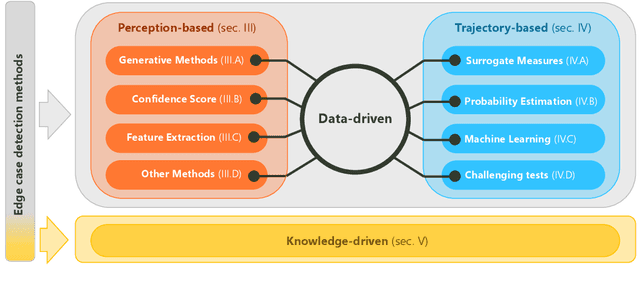
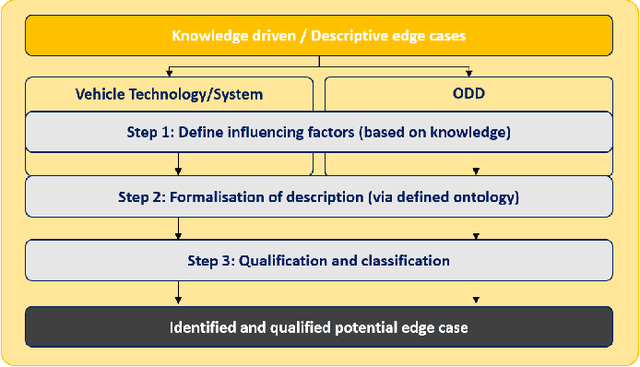
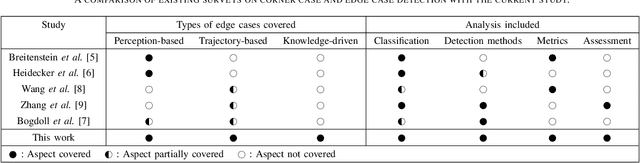
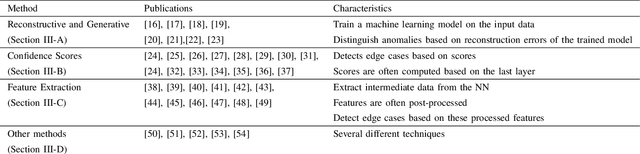
The rapid development of automated vehicles (AVs) promises to revolutionize transportation by enhancing safety and efficiency. However, ensuring their reliability in diverse real-world conditions remains a significant challenge, particularly due to rare and unexpected situations known as edge cases. Although numerous approaches exist for detecting edge cases, there is a notable lack of a comprehensive survey that systematically reviews these techniques. This paper fills this gap by presenting a practical, hierarchical review and systematic classification of edge case detection and assessment methodologies. Our classification is structured on two levels: first, categorizing detection approaches according to AV modules, including perception-related and trajectory-related edge cases; and second, based on underlying methodologies and theories guiding these techniques. We extend this taxonomy by introducing a new class called "knowledge-driven" approaches, which is largely overlooked in the literature. Additionally, we review the techniques and metrics for the evaluation of edge case detection methods and identified edge cases. To our knowledge, this is the first survey to comprehensively cover edge case detection methods across all AV subsystems, discuss knowledge-driven edge cases, and explore evaluation techniques for detection methods. This structured and multi-faceted analysis aims to facilitate targeted research and modular testing of AVs. Moreover, by identifying the strengths and weaknesses of various approaches and discussing the challenges and future directions, this survey intends to assist AV developers, researchers, and policymakers in enhancing the safety and reliability of automated driving (AD) systems through effective edge case detection.