 Add to Chrome
 Add to Firefox
 Add to Edge
AIRA_2: Overcoming Bottlenecks in AI Research Agents
Mar 27, 2026
Existing research has identified three structural performance bottlenecks in AI research agents: (1) synchronous single-GPU execution constrains sample throughput, limiting the benefit of search; (2) a generalization gap where validation-based selection causes performance to degrade over extended search horizons; and (3) the limited capability of fixed, single-turn LLM operators imposes a ceiling on search performance. We introduce AIRA$_2$, which addresses these bottlenecks through three architectural choices: an asynchronous multi-GPU worker pool that increases experiment throughput linearly; a Hidden Consistent Evaluation protocol that delivers a reliable evaluation signal; and ReAct agents that dynamically scope their actions and debug interactively. On MLE-bench-30, AIRA$_2$ achieves a mean Percentile Rank of 71.8% at 24 hours - surpassing the previous best of 69.9% - and steadily improves to 76.0% at 72 hours. Ablation studies reveal that each component is necessary and that the "overfitting" reported in prior work was driven by evaluation noise rather than true data memorization.

Procedural Generation of Algorithm Discovery Tasks in Machine Learning
Mar 18, 2026Automating the development of machine learning algorithms has the potential to unlock new breakthroughs. However, our ability to improve and evaluate algorithm discovery systems has thus far been limited by existing task suites. They suffer from many issues, such as: poor evaluation methodologies; data contamination; and containing saturated or very similar problems. Here, we introduce DiscoGen, a procedural generator of algorithm discovery tasks for machine learning, such as developing optimisers for reinforcement learning or loss functions for image classification. Motivated by the success of procedural generation in reinforcement learning, DiscoGen spans millions of tasks of varying difficulty and complexity from a range of machine learning fields. These tasks are specified by a small number of configuration parameters and can be used to optimise algorithm discovery agents (ADAs). We present DiscoBench, a benchmark consisting of a fixed, small subset of DiscoGen tasks for principled evaluation of ADAs. Finally, we propose a number of ambitious, impactful research directions enabled by DiscoGen, in addition to experiments demonstrating its use for prompt optimisation of an ADA. DiscoGen is released open-source at https://github.com/AlexGoldie/discogen.
Omnilingual MT: Machine Translation for 1,600 Languages
Mar 17, 2026High-quality machine translation (MT) can scale to hundreds of languages, setting a high bar for multilingual systems. However, compared to the world's 7,000 languages, current systems still offer only limited coverage: about 200 languages on the target side, and maybe a few hundreds more on the source side, supported due to cross-lingual transfer. And even these numbers have been hard to evaluate due to the lack of reliable benchmarks and metrics. We present Omnilingual Machine Translation (OMT), the first MT system supporting more than 1,600 languages. This scale is enabled by a comprehensive data strategy that integrates large public multilingual corpora with newly created datasets, including manually curated MeDLEY bitext. We explore two ways of specializing a Large Language model (LLM) for machine translation: as a decoder-only model (OMT-LLaMA) or as a module in an encoder-decoder architecture (OMT-NLLB). Notably, all our 1B to 8B parameter models match or exceed the MT performance of a 70B LLM baseline, revealing a clear specialization advantage and enabling strong translation quality in low-compute settings. Moreover, our evaluation of English-to-1,600 translations further shows that while baseline models can interpret undersupported languages, they frequently fail to generate them with meaningful fidelity; OMT-LLaMA models substantially expand the set of languages for which coherent generation is feasible. Additionally, OMT models improve in cross-lingual transfer, being close to solving the "understanding" part of the puzzle in MT for the 1,600 evaluated. Our leaderboard and main human-created evaluation datasets (BOUQuET and Met-BOUQuET) are dynamically evolving towards Omnilinguality and freely available.
AIRS-Bench: a Suite of Tasks for Frontier AI Research Science Agents
Feb 09, 2026LLM agents hold significant promise for advancing scientific research. To accelerate this progress, we introduce AIRS-Bench (the AI Research Science Benchmark), a suite of 20 tasks sourced from state-of-the-art machine learning papers. These tasks span diverse domains, including language modeling, mathematics, bioinformatics, and time series forecasting. AIRS-Bench tasks assess agentic capabilities over the full research lifecycle -- including idea generation, experiment analysis and iterative refinement -- without providing baseline code. The AIRS-Bench task format is versatile, enabling easy integration of new tasks and rigorous comparison across different agentic frameworks. We establish baselines using frontier models paired with both sequential and parallel scaffolds. Our results show that agents exceed human SOTA in four tasks but fail to match it in sixteen others. Even when agents surpass human benchmarks, they do not reach the theoretical performance ceiling for the underlying tasks. These findings indicate that AIRS-Bench is far from saturated and offers substantial room for improvement. We open-source the AIRS-Bench task definitions and evaluation code to catalyze further development in autonomous scientific research.
What Does It Take to Be a Good AI Research Agent? Studying the Role of Ideation Diversity
Nov 19, 2025AI research agents offer the promise to accelerate scientific progress by automating the design, implementation, and training of machine learning models. However, the field is still in its infancy, and the key factors driving the success or failure of agent trajectories are not fully understood. We examine the role that ideation diversity plays in agent performance. First, we analyse agent trajectories on MLE-bench, a well-known benchmark to evaluate AI research agents, across different models and agent scaffolds. Our analysis reveals that different models and agent scaffolds yield varying degrees of ideation diversity, and that higher-performing agents tend to have increased ideation diversity. Further, we run a controlled experiment where we modify the degree of ideation diversity, demonstrating that higher ideation diversity results in stronger performance. Finally, we strengthen our results by examining additional evaluation metrics beyond the standard medal-based scoring of MLE-bench, showing that our findings still hold across other agent performance metrics.
AI Research Agents for Machine Learning: Search, Exploration, and Generalization in MLE-bench
Jul 03, 2025AI research agents are demonstrating great potential to accelerate scientific progress by automating the design, implementation, and training of machine learning models. We focus on methods for improving agents' performance on MLE-bench, a challenging benchmark where agents compete in Kaggle competitions to solve real-world machine learning problems. We formalize AI research agents as search policies that navigate a space of candidate solutions, iteratively modifying them using operators. By designing and systematically varying different operator sets and search policies (Greedy, MCTS, Evolutionary), we show that their interplay is critical for achieving high performance. Our best pairing of search strategy and operator set achieves a state-of-the-art result on MLE-bench lite, increasing the success rate of achieving a Kaggle medal from 39.6% to 47.7%. Our investigation underscores the importance of jointly considering the search strategy, operator design, and evaluation methodology in advancing automated machine learning.
POPGym Arcade: Parallel Pixelated POMDPs
Mar 04, 2025We introduce POPGym Arcade, a benchmark consisting of 7 pixel-based environments each with three difficulties, utilizing a single observation and action space. Each environment offers both fully observable and partially observable variants, enabling counterfactual studies on partial observability. POPGym Arcade utilizes JIT compilation on hardware accelerators to achieve substantial speedups over CPU-bound environments. Moreover, this enables Podracer-style architectures to further increase hardware utilization and training speed. We evaluate memory models on our environments using a Podracer variant of Q learning, and examine the results. Finally, we generate memory saliency maps, uncovering how memories propagate through policies. Our library is available at https://github.com/bolt-research/popgym_arcade.
Beyond the Boundaries of Proximal Policy Optimization
Nov 01, 2024

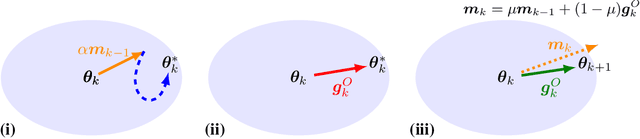

Proximal policy optimization (PPO) is a widely-used algorithm for on-policy reinforcement learning. This work offers an alternative perspective of PPO, in which it is decomposed into the inner-loop estimation of update vectors, and the outer-loop application of updates using gradient ascent with unity learning rate. Using this insight we propose outer proximal policy optimization (outer-PPO); a framework wherein these update vectors are applied using an arbitrary gradient-based optimizer. The decoupling of update estimation and update application enabled by outer-PPO highlights several implicit design choices in PPO that we challenge through empirical investigation. In particular we consider non-unity learning rates and momentum applied to the outer loop, and a momentum-bias applied to the inner estimation loop. Methods are evaluated against an aggressively tuned PPO baseline on Brax, Jumanji and MinAtar environments; non-unity learning rates and momentum both achieve statistically significant improvement on Brax and Jumanji, given the same hyperparameter tuning budget.
CoDreamer: Communication-Based Decentralised World Models
Jun 19, 2024Sample efficiency is a critical challenge in reinforcement learning. Model-based RL has emerged as a solution, but its application has largely been confined to single-agent scenarios. In this work, we introduce CoDreamer, an extension of the Dreamer algorithm for multi-agent environments. CoDreamer leverages Graph Neural Networks for a two-level communication system to tackle challenges such as partial observability and inter-agent cooperation. Communication is separately utilised within the learned world models and within the learned policies of each agent to enhance modelling and task-solving. We show that CoDreamer offers greater expressive power than a naive application of Dreamer, and we demonstrate its superiority over baseline methods across various multi-agent environments.
SMX: Sequential Monte Carlo Planning for Expert Iteration
Feb 12, 2024Developing agents that can leverage planning abilities during their decision and learning processes is critical to the advancement of Artificial Intelligence. Recent works have demonstrated the effectiveness of combining tree-based search methods and self-play learning mechanisms. Yet, these methods typically face scaling challenges due to the sequential nature of their search. While practical engineering solutions can partly overcome this, they still demand extensive computational resources, which hinders their applicability. In this paper, we introduce SMX, a model-based planning algorithm that utilises scalable Sequential Monte Carlo methods to create an effective self-learning mechanism. Grounded in the theoretical framework of control as inference, SMX benefits from robust theoretical underpinnings. Its sampling-based search approach makes it adaptable to environments with both discrete and continuous action spaces. Furthermore, SMX allows for high parallelisation and can run on hardware accelerators to optimise computing efficiency. SMX demonstrates a statistically significant improvement in performance compared to AlphaZero, as well as demonstrating its performance as an improvement operator for a model-free policy, matching or exceeding top model-free methods across both continuous and discrete environments.