 Add to Chrome
 Add to Firefox
 Add to Edge
Synthetic Dataset Generation and Validation for Robotic Surgery Instrument Segmentation
Feb 14, 2026
This paper presents a comprehensive workflow for generating and validating a synthetic dataset designed for robotic surgery instrument segmentation. A 3D reconstruction of the Da Vinci robotic arms was refined and animated in Autodesk Maya through a fully automated Python-based pipeline capable of producing photorealistic, labeled video sequences. Each scene integrates randomized motion patterns, lighting variations, and synthetic blood textures to mimic intraoperative variability while preserving pixel-accurate ground truth masks. To validate the realism and effectiveness of the generated data, several segmentation models were trained under controlled ratios of real and synthetic data. Results demonstrate that a balanced composition of real and synthetic samples significantly improves model generalization compared to training on real data only, while excessive reliance on synthetic data introduces a measurable domain shift. The proposed framework provides a reproducible and scalable tool for surgical computer vision, supporting future research in data augmentation, domain adaptation, and simulation-based pretraining for robotic-assisted surgery. Data and code are available at https://github.com/EIDOSLAB/Sintetic-dataset-DaVinci.

Cardiac Output Prediction from Echocardiograms: Self-Supervised Learning with Limited Data
Feb 14, 2026Cardiac Output (CO) is a key parameter in the diagnosis and management of cardiovascular diseases. However, its accurate measurement requires right-heart catheterization, an invasive and time-consuming procedure, motivating the development of reliable non-invasive alternatives using echocardiography. In this work, we propose a self-supervised learning (SSL) pretraining strategy based on SimCLR to improve CO prediction from apical four-chamber echocardiographic videos. The pretraining is performed using the same limited dataset available for the downstream task, demonstrating the potential of SSL even under data scarcity. Our results show that SSL mitigates overfitting and improves representation learning, achieving an average Pearson correlation of 0.41 on the test set and outperforming PanEcho, a model trained on over one million echocardiographic exams. Source code is available at https://github.com/EIDOSLAB/cardiac-output.
Automated Prediction of Paravalvular Regurgitation before Transcatheter Aortic Valve Implantation
Feb 14, 2026Severe aortic stenosis is a common and life-threatening condition in elderly patients, often treated with Transcatheter Aortic Valve Implantation (TAVI). Despite procedural advances, paravalvular aortic regurgitation (PVR) remains one of the most frequent post-TAVI complications, with a proven impact on long-term prognosis. In this work, we investigate the potential of deep learning to predict the occurrence of PVR from preoperative cardiac CT. To this end, a dataset of preoperative TAVI patients was collected, and 3D convolutional neural networks were trained on isotropic CT volumes. The results achieved suggest that volumetric deep learning can capture subtle anatomical features from pre-TAVI imaging, opening new perspectives for personalized risk assessment and procedural optimization. Source code is available at https://github.com/EIDOSLAB/tavi.
MedSAE: Dissecting MedCLIP Representations with Sparse Autoencoders
Oct 30, 2025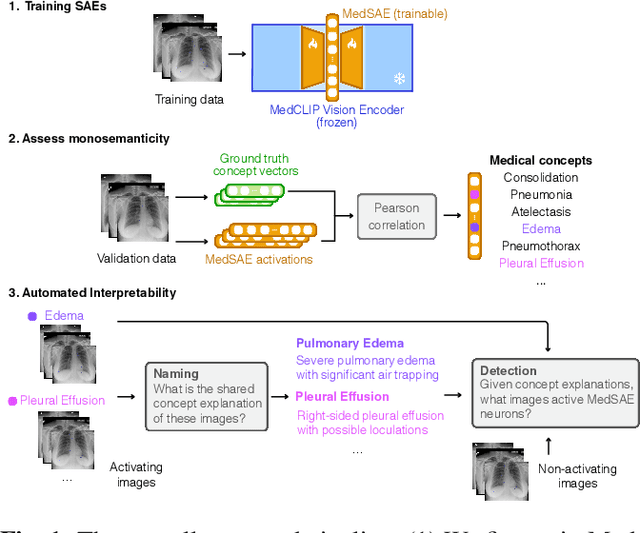
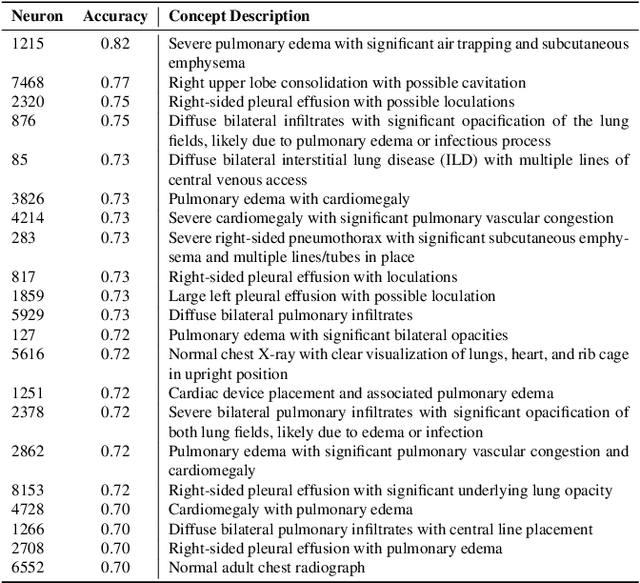
Artificial intelligence in healthcare requires models that are accurate and interpretable. We advance mechanistic interpretability in medical vision by applying Medical Sparse Autoencoders (MedSAEs) to the latent space of MedCLIP, a vision-language model trained on chest radiographs and reports. To quantify interpretability, we propose an evaluation framework that combines correlation metrics, entropy analyzes, and automated neuron naming via the MedGEMMA foundation model. Experiments on the CheXpert dataset show that MedSAE neurons achieve higher monosemanticity and interpretability than raw MedCLIP features. Our findings bridge high-performing medical AI and transparency, offering a scalable step toward clinically reliable representations.
When Does Pruning Benefit Vision Representations?
Jul 02, 2025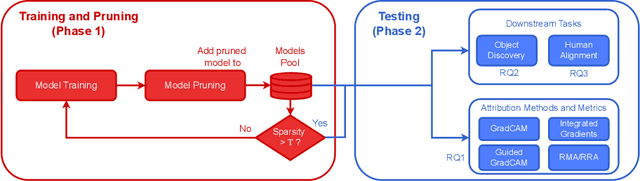
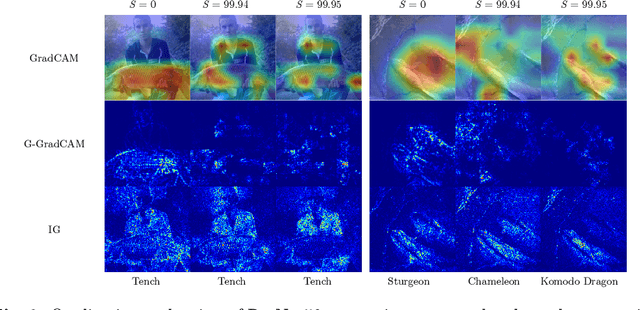
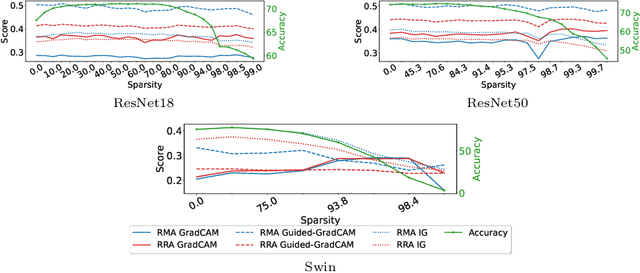

Pruning is widely used to reduce the complexity of deep learning models, but its effects on interpretability and representation learning remain poorly understood. This paper investigates how pruning influences vision models across three key dimensions: (i) interpretability, (ii) unsupervised object discovery, and (iii) alignment with human perception. We first analyze different vision network architectures to examine how varying sparsity levels affect feature attribution interpretability methods. Additionally, we explore whether pruning promotes more succinct and structured representations, potentially improving unsupervised object discovery by discarding redundant information while preserving essential features. Finally, we assess whether pruning enhances the alignment between model representations and human perception, investigating whether sparser models focus on more discriminative features similarly to humans. Our findings also reveal the presence of sweet spots, where sparse models exhibit higher interpretability, downstream generalization and human alignment. However, these spots highly depend on the network architectures and their size in terms of trainable parameters. Our results suggest a complex interplay between these three dimensions, highlighting the importance of investigating when and how pruning benefits vision representations.
Boost Your NeRF: A Model-Agnostic Mixture of Experts Framework for High Quality and Efficient Rendering
Jul 15, 2024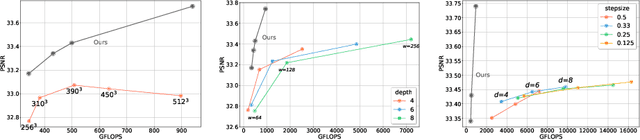

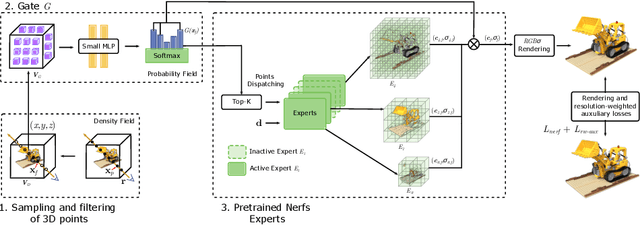
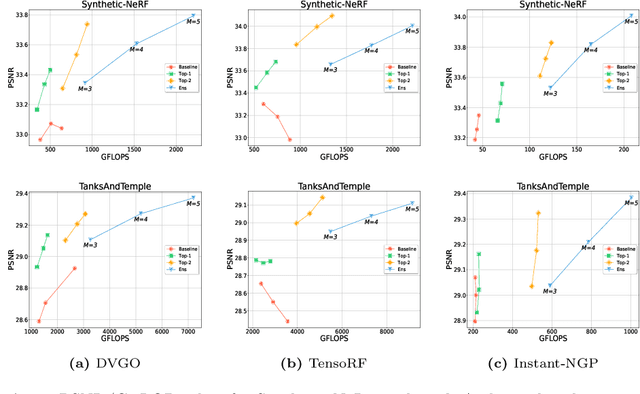
Since the introduction of NeRFs, considerable attention has been focused on improving their training and inference times, leading to the development of Fast-NeRFs models. Despite demonstrating impressive rendering speed and quality, the rapid convergence of such models poses challenges for further improving reconstruction quality. Common strategies to improve rendering quality involves augmenting model parameters or increasing the number of sampled points. However, these computationally intensive approaches encounter limitations in achieving significant quality enhancements. This study introduces a model-agnostic framework inspired by Sparsely-Gated Mixture of Experts to enhance rendering quality without escalating computational complexity. Our approach enables specialization in rendering different scene components by employing a mixture of experts with varying resolutions. We present a novel gate formulation designed to maximize expert capabilities and propose a resolution-based routing technique to effectively induce sparsity and decompose scenes. Our work significantly improves reconstruction quality while maintaining competitive performance.
Unsupervised Contrastive Analysis for Salient Pattern Detection using Conditional Diffusion Models
Jun 04, 2024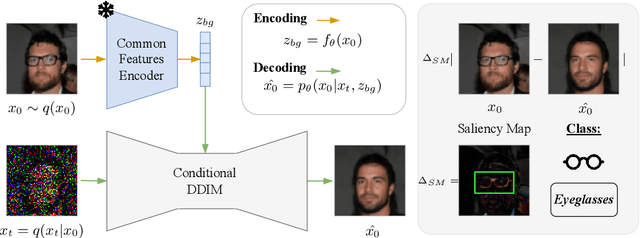

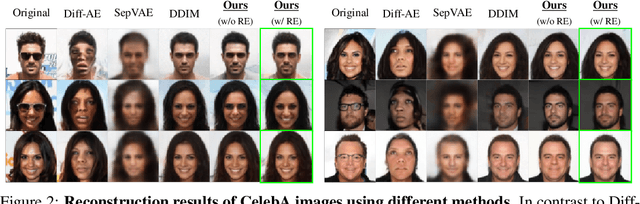
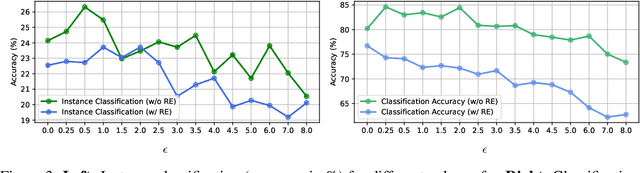
Contrastive Analysis (CA) regards the problem of identifying patterns in images that allow distinguishing between a background (BG) dataset (i.e. healthy subjects) and a target (TG) dataset (i.e. unhealthy subjects). Recent works on this topic rely on variational autoencoders (VAE) or contrastive learning strategies to learn the patterns that separate TG samples from BG samples in a supervised manner. However, the dependency on target (unhealthy) samples can be challenging in medical scenarios due to their limited availability. Also, the blurred reconstructions of VAEs lack utility and interpretability. In this work, we redefine the CA task by employing a self-supervised contrastive encoder to learn a latent representation encoding only common patterns from input images, using samples exclusively from the BG dataset during training, and approximating the distribution of the target patterns by leveraging data augmentation techniques. Subsequently, we exploit state-of-the-art generative methods, i.e. diffusion models, conditioned on the learned latent representation to produce a realistic (healthy) version of the input image encoding solely the common patterns. Thorough validation on a facial image dataset and experiments across three brain MRI datasets demonstrate that conditioning the generative process of state-of-the-art generative methods with the latent representation from our self-supervised contrastive encoder yields improvements in the generated image quality and in the accuracy of image classification. The code is available at https://github.com/CristianoPatricio/unsupervised-contrastive-cond-diff.
Hierarchical Object-Centric Learning with Capsule Networks
May 30, 2024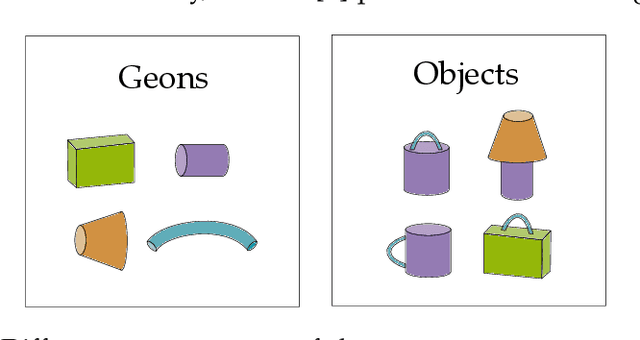
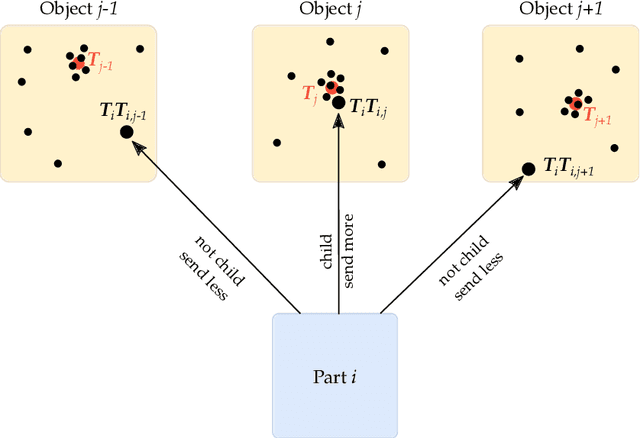
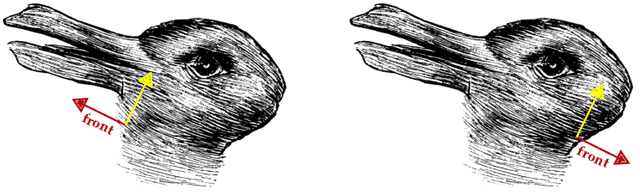
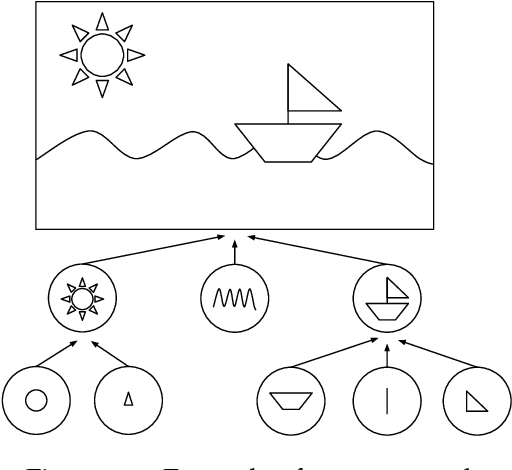
Capsule networks (CapsNets) were introduced to address convolutional neural networks limitations, learning object-centric representations that are more robust, pose-aware, and interpretable. They organize neurons into groups called capsules, where each capsule encodes the instantiation parameters of an object or one of its parts. Moreover, a routing algorithm connects capsules in different layers, thereby capturing hierarchical part-whole relationships in the data. This thesis investigates the intriguing aspects of CapsNets and focuses on three key questions to unlock their full potential. First, we explore the effectiveness of the routing algorithm, particularly in small-sized networks. We propose a novel method that anneals the number of routing iterations during training, enhancing performance in architectures with fewer parameters. Secondly, we investigate methods to extract more effective first-layer capsules, also known as primary capsules. By exploiting pruned backbones, we aim to improve computational efficiency by reducing the number of capsules while achieving high generalization. This approach reduces CapsNets memory requirements and computational effort. Third, we explore part-relationship learning in CapsNets. Through extensive research, we demonstrate that capsules with low entropy can extract more concise and discriminative part-whole relationships compared to traditional capsule networks, even with reasonable network sizes. Lastly, we showcase how CapsNets can be utilized in real-world applications, including autonomous localization of unmanned aerial vehicles, quaternion-based rotations prediction in synthetic datasets, and lung nodule segmentation in biomedical imaging. The findings presented in this thesis contribute to a deeper understanding of CapsNets and highlight their potential to address complex computer vision challenges.
AI-Assisted Diagnosis for Covid-19 CXR Screening: From Data Collection to Clinical Validation
May 19, 2024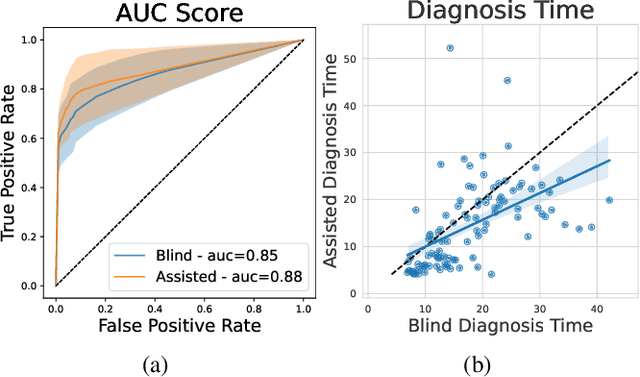
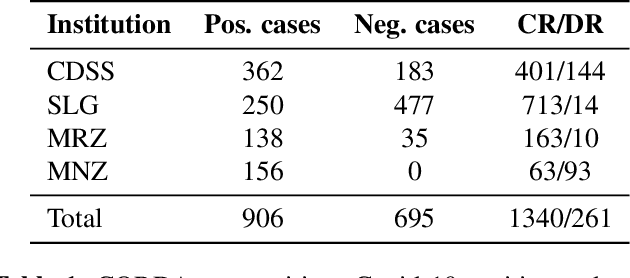
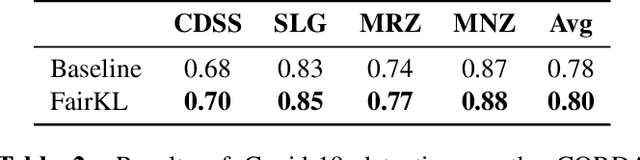
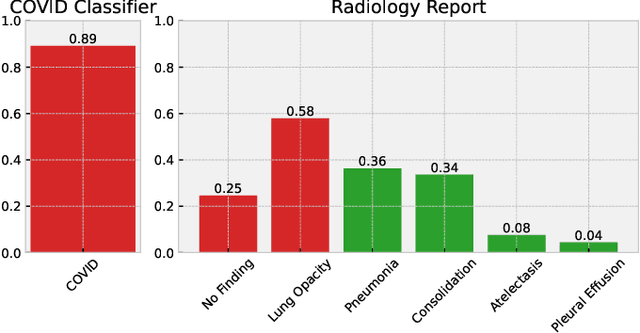
In this paper, we present the major results from the Covid Radiographic imaging System based on AI (Co.R.S.A.) project, which took place in Italy. This project aims to develop a state-of-the-art AI-based system for diagnosing Covid-19 pneumonia from Chest X-ray (CXR) images. The contributions of this work are manyfold: the release of the public CORDA dataset, a deep learning pipeline for Covid-19 detection, and the clinical validation of the developed solution by expert radiologists. The proposed detection model is based on a two-step approach that, paired with state-of-the-art debiasing, provides reliable results. Most importantly, our investigation includes the actual usage of the diagnosis aid tool by radiologists, allowing us to assess the real benefits in terms of accuracy and time efficiency. Project homepage: https://corsa.di.unito.it/
LSVL: Large-scale season-invariant visual localization for UAVs
Dec 07, 2022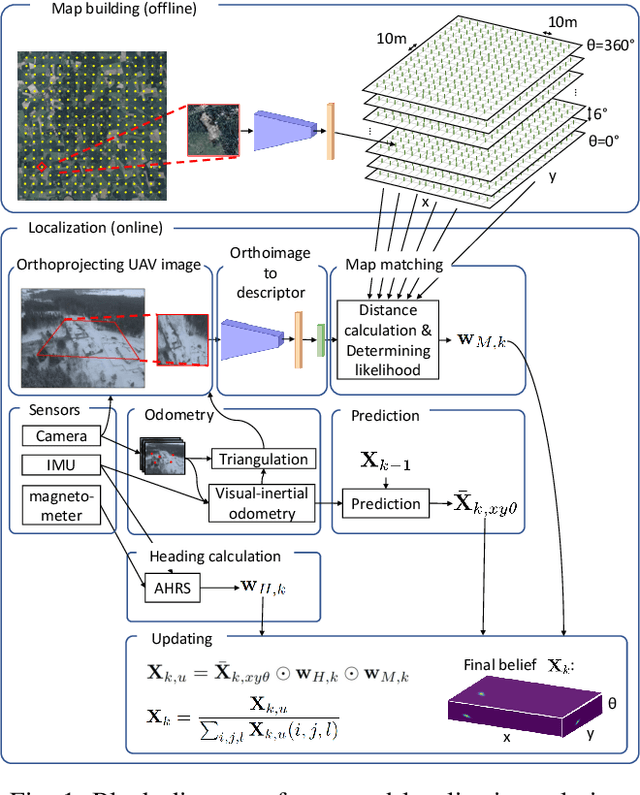
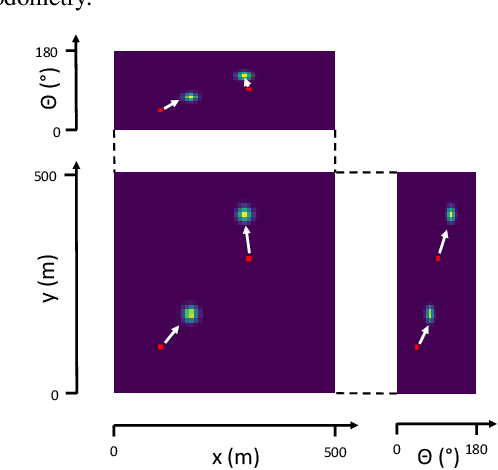
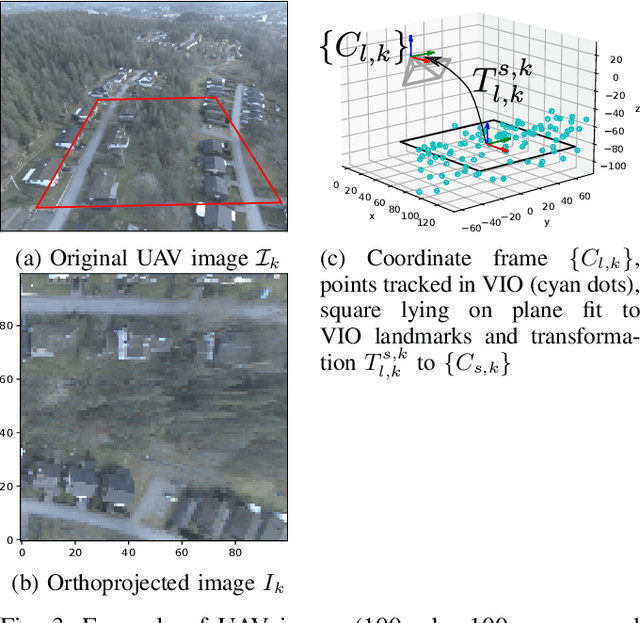
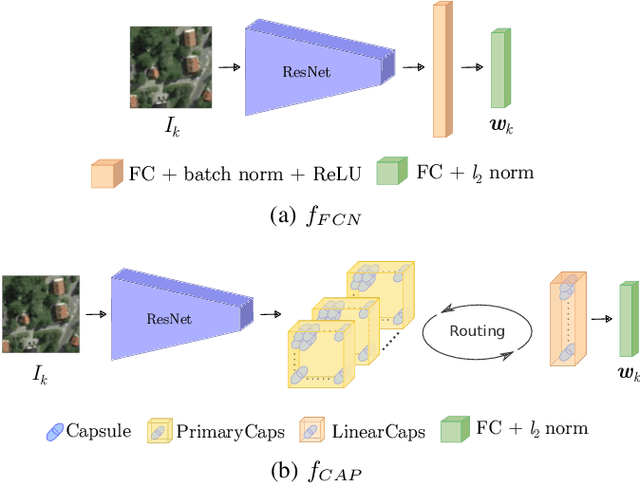
Localization of autonomous unmanned aerial vehicles (UAVs) relies heavily on Global Navigation Satellite Systems (GNSS), which are susceptible to interference. Especially in security applications, robust localization algorithms independent of GNSS are needed to provide dependable operations of autonomous UAVs also in interfered conditions. Typical non-GNSS visual localization approaches rely on known starting pose, work only on a small-sized map, or require known flight paths before a mission starts. We consider the problem of localization with no information on initial pose or planned flight path. We propose a solution for global visual localization on a map at scale up to 100 km2, based on matching orthoprojected UAV images to satellite imagery using learned season-invariant descriptors. We show that the method is able to determine heading, latitude and longitude of the UAV at 12.6-18.7 m lateral translation error in as few as 23.2-44.4 updates from an uninformed initialization, also in situations of significant seasonal appearance difference (winter-summer) between the UAV image and the map. We evaluate the characteristics of multiple neural network architectures for generating the descriptors, and likelihood estimation methods that are able to provide fast convergence and low localization error. We also evaluate the operation of the algorithm using real UAV data and evaluate running time on a real-time embedded platform. We believe this is the first work that is able to recover the pose of an UAV at this scale and rate of convergence, while allowing significant seasonal difference between camera observations and map.