 Add to Chrome
 Add to Firefox
 Add to Edge
A knowledge-guided agentic framework for mitigating patient-context ambiguity in health queries
Aug 20, 2026
Patients often submit short, underspecified queries to healthcare chatbots that lack the patient-specific information needed to determine an appropriate response. Although these queries may be linguistically clear, they can support multiple plausible answers depending on undisclosed factors such as symptoms, diagnoses, medications, allergies, or dietary restrictions. A language model answering such a query directly may therefore rely on unsupported assumptions about the patient. We introduce a knowledge-guided agentic framework for mitigating patient-context ambiguity before final response generation. The framework operates between the patient and an otherwise unchanged downstream language model. It interprets the initial query, uses a task-specific knowledge graph to construct a set of plausible hypotheses, identifies the missing patient-context variables needed to distinguish among them, and asks targeted follow-up questions. The original query and the acquired context are then combined into a clarified prompt for the downstream model. We evaluated the framework across five language models using two controlled ambiguity-mitigation benchmarks: diagnosis retrieval from 1,034 symptom queries with clinically relevant evidence systematically masked, and dietary-safety classification from 487 queries with decisive health context omitted. The framework was compared with direct answering of the underspecified query and with rephrasing the same query without acquiring new patient information. In diagnosis retrieval, it increased overall exact Top-1 accuracy by at least 57.1 percentage points and selective exact Recall@5 by at least 77.7 percentage points across the five evaluated models compared with direct prompting. In dietary-safety classification, it improved accuracy across all five models and achieved the highest Matthews correlation coefficient for four...

T2D-Bench: Evidence-Gated Evaluation of LLM Outputs for Type 2 Diabetes Using a Multi-Layer Clinical-Lifestyle Knowledge Graph
Jun 23, 2026Large language models (LLMs) can produce clinically fluent recommendations for type 2 diabetes while failing to satisfy guideline constraints or explicitly justify lifestyle-related glycemic claims. We present T2D-Bench, a reproducible benchmark and evidence-gated evaluation framework for testing whether LLM outputs satisfy explicit, graph-checkable evidence requirements. T2D-Bench is built on a multi-layer clinical-lifestyle knowledge graph that combines a biomedical spine (UMLS, DrugBank, SIDER), computable ADA Standards of Care rules, and lifestyle knowledge connected through a mechanistic bridge to glycemic laboratory effects. Across 100 structured vignettes spanning diagnosis, medication safety, and adversarial lifestyle conflicts, baseline outputs failed benchmark-defined evidence-path checks in 35% of cases for GPT-4o-mini and 33% for GPT-4o. The evidence gate detects unsupported omissions and uses constrained revision to bring outputs into verifier-level compliance with benchmark-defined evidence requirements. These results show that computable evidence constraints can make unsupported clinical omissions explicit, measurable, and correctable in diabetes-focused LLM outputs.
Personal Care Utility: Health as Everyday Infrastructure
Jun 12, 2026Healthcare is essential, expert, and episodic by design - built around the roughly one hour per year a person spends with a clinician. The 8,759 hours outside clinical settings, where eating, sleeping, movement, medication, and stress actually shape long-term health, have no comparable infrastructure. The bottleneck for personalized health is not raw data or reasoning capability; it is the absence of that infrastructure layer. This paper introduces the Personal Care Utility (PCU): a layered, event-driven architecture proposed as the missing utility for everyday health, in the way that payments, networks, and power are utilities for their domains. PCU organizes continuous personal signals into semantically meaningful life events through a Personicle, estimates dynamic health state against personal baselines, reasons about cause and context, and routes guidance through an orchestrator that separates clinical decision logic, behavioral strategy selection, and natural-language expression. This separation lets large language models support reasoning and communication while keeping safety-critical clinical decisions grounded in validated evidence. We instantiate PCU for Type 2 Diabetes - turning CGM, meal, activity, medication, sleep, stress, and clinical data into glycemic events, individualized state estimates, causal explanations, and knowledge-grounded interventions. A day-in-the-life scenario shows the same infrastructure producing real-time nudges, weekly summaries, medication check-ins, silence, or deterministic safety alerts depending on context and risk. We close with how PCU generalizes to other chronic conditions and the governance questions any always-on personal health utility must address. The result is a blueprint that treats personalization not as a final messaging layer, but as an architectural property of everyday health guidance.
Personal Care Utility (PCU): Building the Health Infrastructure for Everyday Insight and Guidance
Oct 26, 2025Building on decades of success in digital infrastructure and biomedical innovation, we propose the Personal Care Utility (PCU) - a cybernetic system for lifelong health guidance. PCU is conceived as a global, AI-powered utility that continuously orchestrates multimodal data, knowledge, and services to assist individuals and populations alike. Drawing on multimodal agents, event-centric modeling, and contextual inference, it offers three essential capabilities: (1) trusted health information tailored to the individual, (2) proactive health navigation and behavior guidance, and (3) ongoing interpretation of recovery and treatment response after medical events. Unlike conventional episodic care, PCU functions as an ambient, adaptive companion - observing, interpreting, and guiding health in real time across daily life. By integrating personal sensing, experiential computing, and population-level analytics, PCU promises not only improved outcomes for individuals but also a new substrate for public health and scientific discovery. We describe the architecture, design principles, and implementation challenges of this emerging paradigm.
World Food Atlas Project
Apr 25, 2025A coronavirus pandemic is forcing people to be "at home" all over the world. In a life of hardly ever going out, we would have realized how the food we eat affects our bodies. What can we do to know our food more and control it better? To give us a clue, we are trying to build a World Food Atlas (WFA) that collects all the knowledge about food in the world. In this paper, we present two of our trials. The first is the Food Knowledge Graph (FKG), which is a graphical representation of knowledge about food and ingredient relationships derived from recipes and food nutrition data. The second is the FoodLog Athl and the RecipeLog that are applications for collecting people's detailed records about food habit. We also discuss several problems that we try to solve to build the WFA by integrating these two ideas.
Cardiac Evidence Backtracking for Eating Behavior Monitoring using Collocative Electrocardiogram Imagining
Feb 20, 2025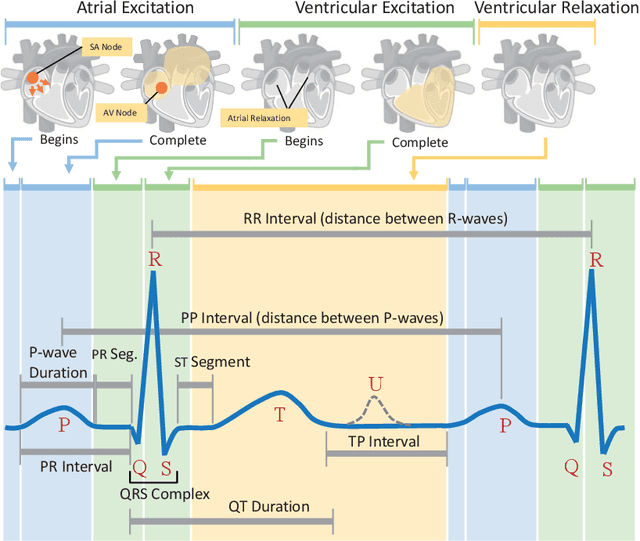
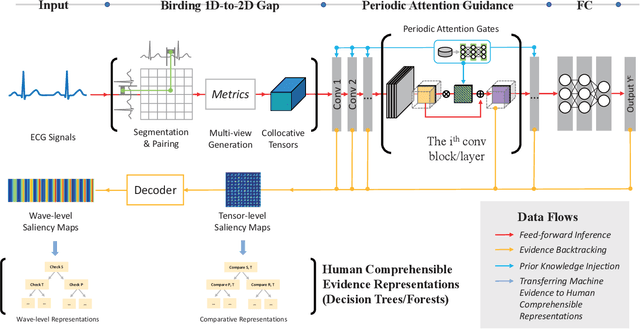
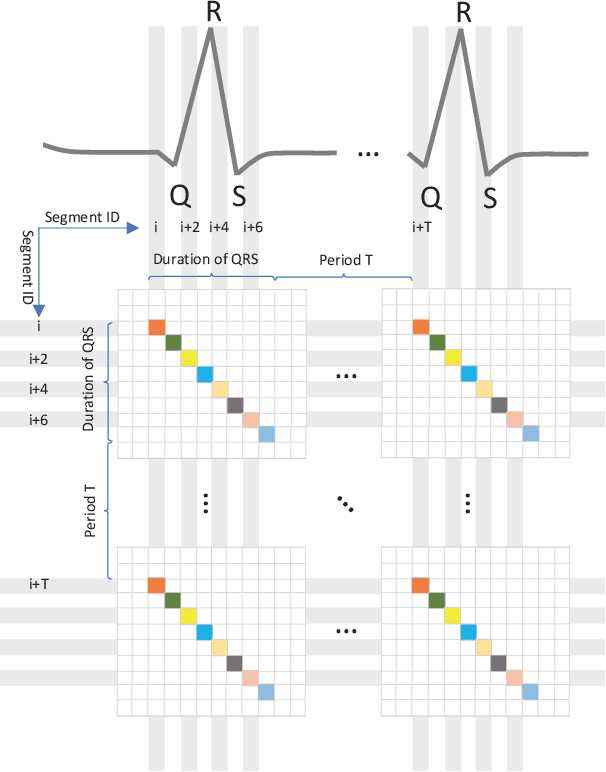
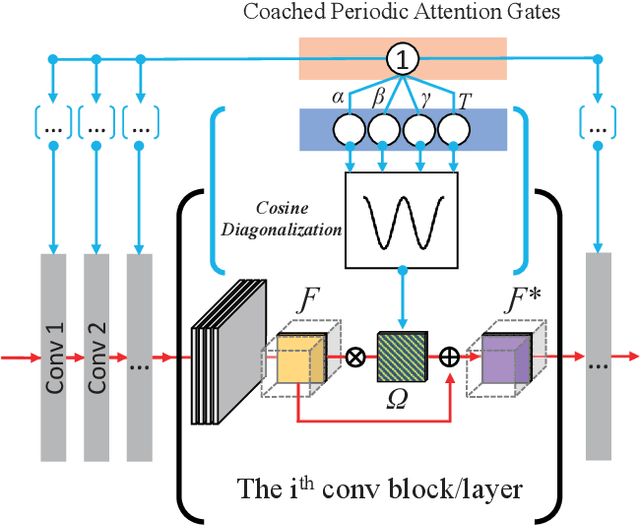
Eating monitoring has remained an open challenge in medical research for years due to the lack of non-invasive sensors for continuous monitoring and the reliable methods for automatic behavior detection. In this paper, we present a pilot study using the wearable 24-hour ECG for sensing and tailoring the sophisticated deep learning for ad-hoc and interpretable detection. This is accomplished using a collocative learning framework in which 1) we construct collocative tensors as pseudo-images from 1D ECG signals to improve the feasibility of 2D image-based deep models; 2) we formulate the cardiac logic of analyzing the ECG data in a comparative way as periodic attention regulators so as to guide the deep inference to collect evidence in a human comprehensible manner; and 3) we improve the interpretability of the framework by enabling the backtracking of evidence with a set of methods designed for Class Activation Mapping (CAM) decoding and decision tree/forest generation. The effectiveness of the proposed framework has been validated on the largest ECG dataset of eating behavior with superior performance over conventional models, and its capacity of cardiac evidence mining has also been verified through the consistency of the evidence it backtracked and that of the previous medical studies.
Enhancing FKG.in: automating Indian food composition analysis
Dec 09, 2024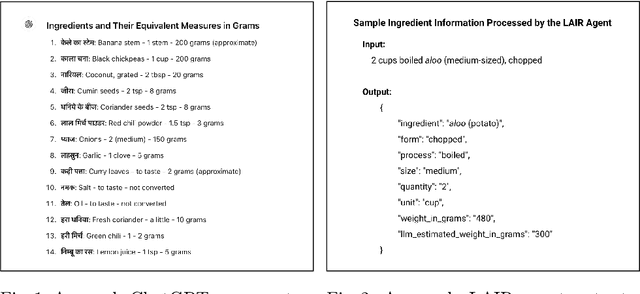
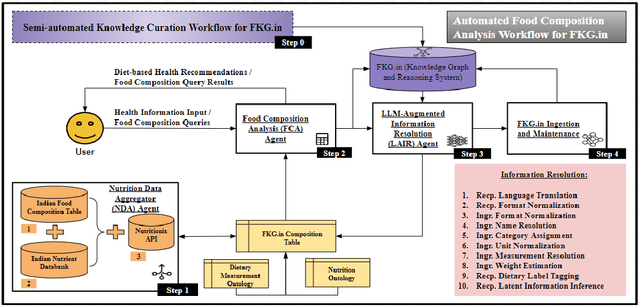
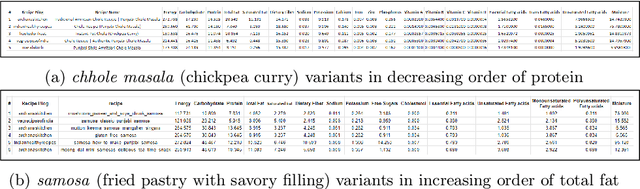
This paper presents a novel approach to compute food composition data for Indian recipes using a knowledge graph for Indian food (FKG.in) and LLMs. The primary focus is to provide a broad overview of an automated food composition analysis workflow and describe its core functionalities: nutrition data aggregation, food composition analysis, and LLM-augmented information resolution. This workflow aims to complement FKG.in and iteratively supplement food composition data from verified knowledge bases. Additionally, this paper highlights the challenges of representing Indian food and accessing food composition data digitally. It also reviews three key sources of food composition data: the Indian Food Composition Tables, the Indian Nutrient Databank, and the Nutritionix API. Furthermore, it briefly outlines how users can interact with the workflow to obtain diet-based health recommendations and detailed food composition information for numerous recipes. We then explore the complex challenges of analyzing Indian recipe information across dimensions such as structure, multilingualism, and uncertainty as well as present our ongoing work on LLM-based solutions to address these issues. The methods proposed in this workshop paper for AI-driven knowledge curation and information resolution are application-agnostic, generalizable, and replicable for any domain.
Building FKG.in: a Knowledge Graph for Indian Food
Sep 01, 2024


This paper presents an ontology design along with knowledge engineering, and multilingual semantic reasoning techniques to build an automated system for assimilating culinary information for Indian food in the form of a knowledge graph. The main focus is on designing intelligent methods to derive ontology designs and capture all-encompassing knowledge about food, recipes, ingredients, cooking characteristics, and most importantly, nutrition, at scale. We present our ongoing work in this workshop paper, describe in some detail the relevant challenges in curating knowledge of Indian food, and propose our high-level ontology design. We also present a novel workflow that uses AI, LLM, and language technology to curate information from recipe blog sites in the public domain to build knowledge graphs for Indian food. The methods for knowledge curation proposed in this paper are generic and can be replicated for any domain. The design is application-agnostic and can be used for AI-driven smart analysis, building recommendation systems for Personalized Digital Health, and complementing the knowledge graph for Indian food with contextual information such as user information, food biochemistry, geographic information, agricultural information, etc.
Empathy Through Multimodality in Conversational Interfaces
May 08, 2024Agents represent one of the most emerging applications of Large Language Models (LLMs) and Generative AI, with their effectiveness hinging on multimodal capabilities to navigate complex user environments. Conversational Health Agents (CHAs), a prime example of this, are redefining healthcare by offering nuanced support that transcends textual analysis to incorporate emotional intelligence. This paper introduces an LLM-based CHA engineered for rich, multimodal dialogue-especially in the realm of mental health support. It adeptly interprets and responds to users' emotional states by analyzing multimodal cues, thus delivering contextually aware and empathetically resonant verbal responses. Our implementation leverages the versatile openCHA framework, and our comprehensive evaluation involves neutral prompts expressed in diverse emotional tones: sadness, anger, and joy. We evaluate the consistency and repeatability of the planning capability of the proposed CHA. Furthermore, human evaluators critique the CHA's empathic delivery, with findings revealing a striking concordance between the CHA's outputs and evaluators' assessments. These results affirm the indispensable role of vocal (soon multimodal) emotion recognition in strengthening the empathetic connection built by CHAs, cementing their place at the forefront of interactive, compassionate digital health solutions.
Knowledge-Infused LLM-Powered Conversational Health Agent: A Case Study for Diabetes Patients
Feb 28, 2024Effective diabetes management is crucial for maintaining health in diabetic patients. Large Language Models (LLMs) have opened new avenues for diabetes management, facilitating their efficacy. However, current LLM-based approaches are limited by their dependence on general sources and lack of integration with domain-specific knowledge, leading to inaccurate responses. In this paper, we propose a knowledge-infused LLM-powered conversational health agent (CHA) for diabetic patients. We customize and leverage the open-source openCHA framework, enhancing our CHA with external knowledge and analytical capabilities. This integration involves two key components: 1) incorporating the American Diabetes Association dietary guidelines and the Nutritionix information and 2) deploying analytical tools that enable nutritional intake calculation and comparison with the guidelines. We compare the proposed CHA with GPT4. Our evaluation includes 100 diabetes-related questions on daily meal choices and assessing the potential risks associated with the suggested diet. Our findings show that the proposed agent demonstrates superior performance in generating responses to manage essential nutrients.