 Add to Chrome
 Add to Firefox
 Add to Edge
studentSplat: Your Student Model Learns Single-view 3D Gaussian Splatting
Jan 16, 2026
Recent advance in feed-forward 3D Gaussian splatting has enable remarkable multi-view 3D scene reconstruction or single-view 3D object reconstruction but single-view 3D scene reconstruction remain under-explored due to inherited ambiguity in single-view. We present \textbf{studentSplat}, a single-view 3D Gaussian splatting method for scene reconstruction. To overcome the scale ambiguity and extrapolation problems inherent in novel-view supervision from a single input, we introduce two techniques: 1) a teacher-student architecture where a multi-view teacher model provides geometric supervision to the single-view student during training, addressing scale ambiguity and encourage geometric validity; and 2) an extrapolation network that completes missing scene context, enabling high-quality extrapolation. Extensive experiments show studentSplat achieves state-of-the-art single-view novel-view reconstruction quality and comparable performance to multi-view methods at the scene level. Furthermore, studentSplat demonstrates competitive performance as a self-supervised single-view depth estimation method, highlighting its potential for general single-view 3D understanding tasks.

Robust Egocentric Visual Attention Prediction Through Language-guided Scene Context-aware Learning
Jan 05, 2026As the demand for analyzing egocentric videos grows, egocentric visual attention prediction, anticipating where a camera wearer will attend, has garnered increasing attention. However, it remains challenging due to the inherent complexity and ambiguity of dynamic egocentric scenes. Motivated by evidence that scene contextual information plays a crucial role in modulating human attention, in this paper, we present a language-guided scene context-aware learning framework for robust egocentric visual attention prediction. We first design a context perceiver which is guided to summarize the egocentric video based on a language-based scene description, generating context-aware video representations. We then introduce two training objectives that: 1) encourage the framework to focus on the target point-of-interest regions and 2) suppress distractions from irrelevant regions which are less likely to attract first-person attention. Extensive experiments on Ego4D and Aria Everyday Activities (AEA) datasets demonstrate the effectiveness of our approach, achieving state-of-the-art performance and enhanced robustness across diverse, dynamic egocentric scenarios.
Advances In Video Compression System Using Deep Neural Network: A Review And Case Studies
Jan 16, 2021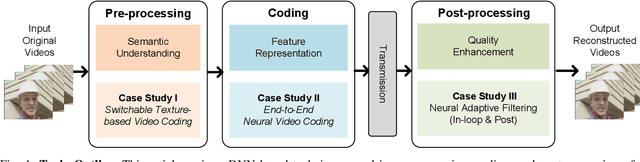
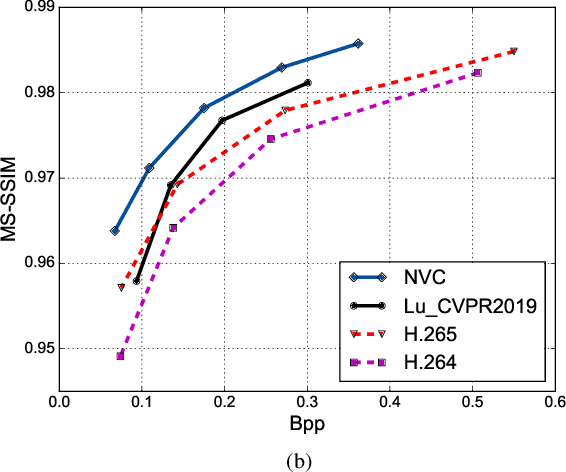
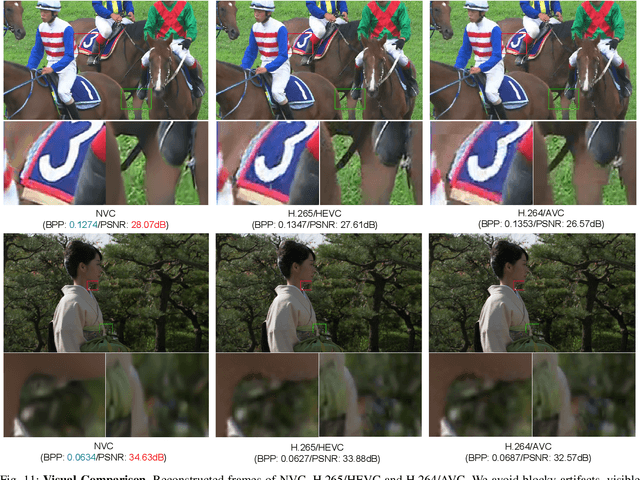
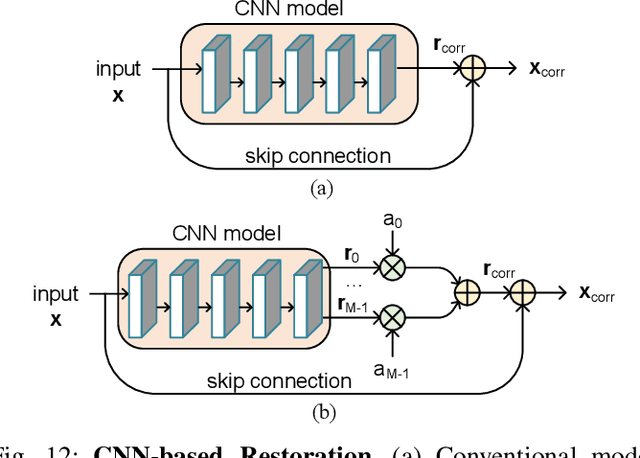
Significant advances in video compression system have been made in the past several decades to satisfy the nearly exponential growth of Internet-scale video traffic. From the application perspective, we have identified three major functional blocks including pre-processing, coding, and post-processing, that have been continuously investigated to maximize the end-user quality of experience (QoE) under a limited bit rate budget. Recently, artificial intelligence (AI) powered techniques have shown great potential to further increase the efficiency of the aforementioned functional blocks, both individually and jointly. In this article, we review extensively recent technical advances in video compression system, with an emphasis on deep neural network (DNN)-based approaches; and then present three comprehensive case studies. On pre-processing, we show a switchable texture-based video coding example that leverages DNN-based scene understanding to extract semantic areas for the improvement of subsequent video coder. On coding, we present an end-to-end neural video coding framework that takes advantage of the stacked DNNs to efficiently and compactly code input raw videos via fully data-driven learning. On post-processing, we demonstrate two neural adaptive filters to respectively facilitate the in-loop and post filtering for the enhancement of compressed frames. Finally, a companion website hosting the contents developed in this work can be accessed publicly at https://purdueviper.github.io/dnn-coding/.