 Add to Chrome
 Add to Firefox
 Add to Edge
GWM-VLA: Geometry-Aware Latent World Modeling for Vision-Language-Action Learning
Aug 07, 2026
Vision-Language-Action (VLA) models achieve strong robotic manipulation performance but often degrade under visual and environmental shifts. Latent world modeling offers a promising approach to improving robustness, yet existing methods commonly encode camera views independently and predict holistic scene dynamics without explicitly modeling their geometric relationships. We propose GWM-VLA, a geometry-aware latent world modeling framework for VLA learning. GWM-VLA combines geometry-aware multi-view state encoding, global context-conditioned target-view prediction, and shared latent-action representations grounded by robot-action supervision. Specifically, VGGT-$Ω$ jointly aggregates multi-view observations at each timestep to construct geometry-aware multi-view states. The latent world model predicts the next-step patch tokens of a selected target view using patch and register tokens obtained after multi-view aggregation, thereby retaining multi-view geometric information without predicting the complete multi-view state. We use the wrist view as the target in our experiments, placing greater emphasis on end-effector motion and local gripper-object interactions. Finally, the shared latent-action representations condition both the latent world model and the flow-matching action head, allowing latent-prediction supervision and ground-truth robot-action supervision to jointly shape the same latent-action representations. Experiments across both simulation and real-world environments demonstrate the effectiveness and robustness of GWM-VLA.

Supervised multiview learning based on simultaneous learning of multiview intact and single view classifier
Jan 09, 2016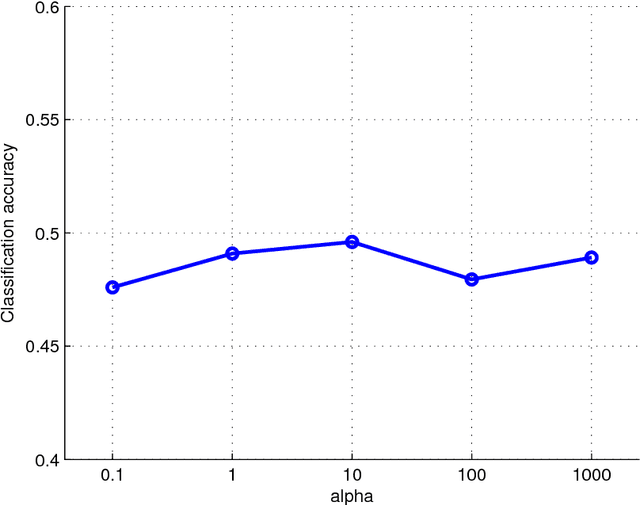
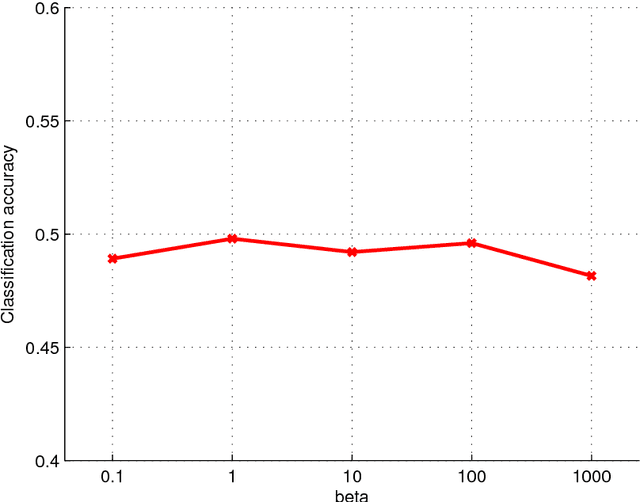
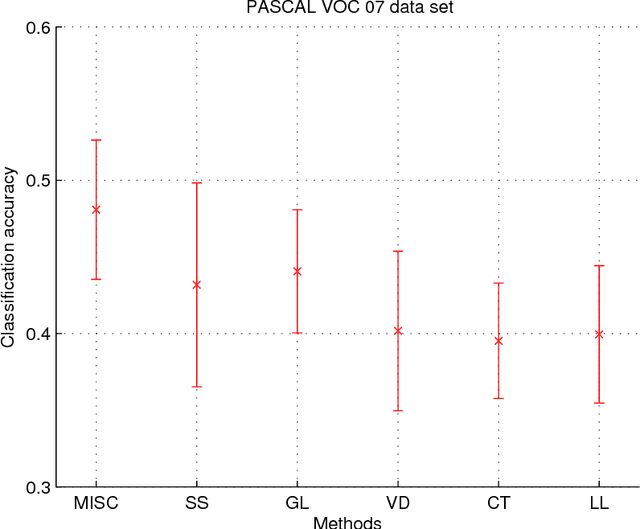
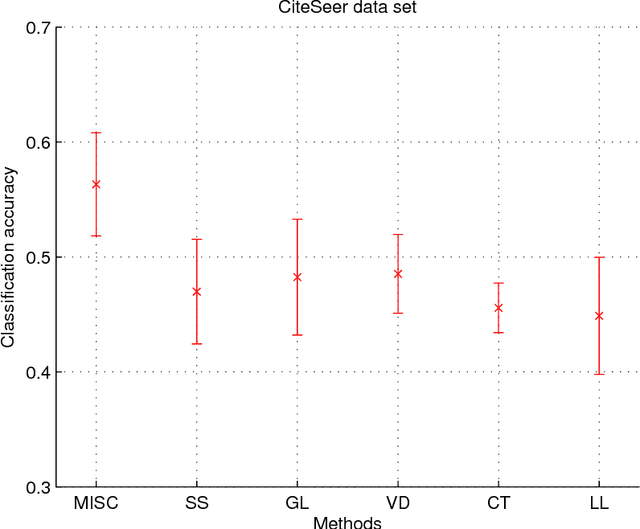
Multiview learning problem refers to the problem of learning a classifier from multiple view data. In this data set, each data points is presented by multiple different views. In this paper, we propose a novel method for this problem. This method is based on two assumptions. The first assumption is that each data point has an intact feature vector, and each view is obtained by a linear transformation from the intact vector. The second assumption is that the intact vectors are discriminative, and in the intact space, we have a linear classifier to separate the positive class from the negative class. We define an intact vector for each data point, and a view-conditional transformation matrix for each view, and propose to reconstruct the multiple view feature vectors by the product of the corresponding intact vectors and transformation matrices. Moreover, we also propose a linear classifier in the intact space, and learn it jointly with the intact vectors. The learning problem is modeled by a minimization problem, and the objective function is composed of a Cauchy error estimator-based view-conditional reconstruction term over all data points and views, and a classification error term measured by hinge loss over all the intact vectors of all the data points. Some regularization terms are also imposed to different variables in the objective function. The minimization problem is solve by an iterative algorithm using alternate optimization strategy and gradient descent algorithm. The proposed algorithm shows it advantage in the compression to other multiview learning algorithms on benchmark data sets.