 Add to Chrome
 Add to Firefox
 Add to Edge
TED: Accelerate Model Training by Internal Generalization
May 06, 2024
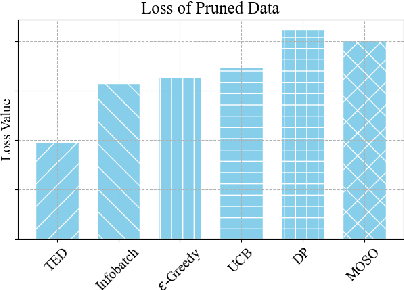
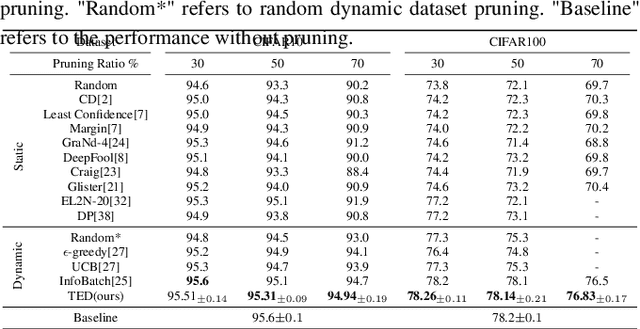
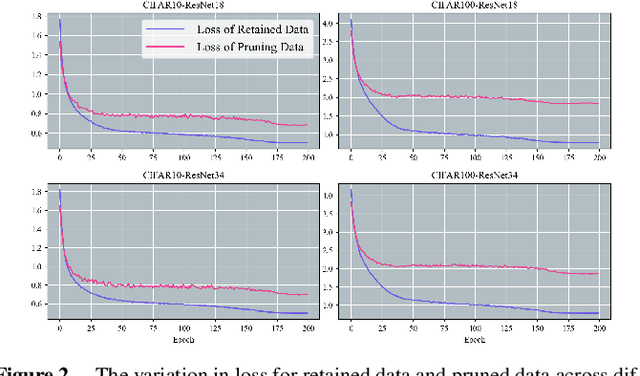
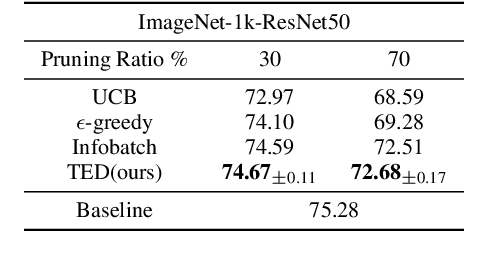
Large language models have demonstrated strong performance in recent years, but the high cost of training drives the need for efficient methods to compress dataset sizes. We propose TED pruning, a method that addresses the challenge of overfitting under high pruning ratios by quantifying the model's ability to improve performance on pruned data while fitting retained data, known as Internal Generalization (IG). TED uses an optimization objective based on Internal Generalization Distance (IGD), measuring changes in IG before and after pruning to align with true generalization performance and achieve implicit regularization. The IGD optimization objective was verified to allow the model to achieve the smallest upper bound on generalization error. The impact of small mask fluctuations on IG is studied through masks and Taylor approximation, and fast estimation of IGD is enabled. In analyzing continuous training dynamics, the prior effect of IGD is validated, and a progressive pruning strategy is proposed. Experiments on image classification, natural language understanding, and large language model fine-tuning show TED achieves lossless performance with 60-70\% of the data. Upon acceptance, our code will be made publicly available.

Pseudo Label Refinery for Unsupervised Domain Adaptation on Cross-dataset 3D Object Detection
Apr 30, 2024


Recent self-training techniques have shown notable improvements in unsupervised domain adaptation for 3D object detection (3D UDA). These techniques typically select pseudo labels, i.e., 3D boxes, to supervise models for the target domain. However, this selection process inevitably introduces unreliable 3D boxes, in which 3D points cannot be definitively assigned as foreground or background. Previous techniques mitigate this by reweighting these boxes as pseudo labels, but these boxes can still poison the training process. To resolve this problem, in this paper, we propose a novel pseudo label refinery framework. Specifically, in the selection process, to improve the reliability of pseudo boxes, we propose a complementary augmentation strategy. This strategy involves either removing all points within an unreliable box or replacing it with a high-confidence box. Moreover, the point numbers of instances in high-beam datasets are considerably higher than those in low-beam datasets, also degrading the quality of pseudo labels during the training process. We alleviate this issue by generating additional proposals and aligning RoI features across different domains. Experimental results demonstrate that our method effectively enhances the quality of pseudo labels and consistently surpasses the state-of-the-art methods on six autonomous driving benchmarks. Code will be available at https://github.com/Zhanwei-Z/PERE.
Adapprox: Adaptive Approximation in Adam Optimization via Randomized Low-Rank Matrices
Mar 22, 2024As deep learning models exponentially increase in size, optimizers such as Adam encounter significant memory consumption challenges due to the storage of first and second moment data. Current memory-efficient methods like Adafactor and CAME often compromise accuracy with their matrix factorization techniques. Addressing this, we introduce Adapprox, a novel approach that employs randomized low-rank matrix approximation for a more effective and accurate approximation of Adam's second moment. Adapprox features an adaptive rank selection mechanism, finely balancing accuracy and memory efficiency, and includes an optional cosine similarity guidance strategy to enhance stability and expedite convergence. In GPT-2 training and downstream tasks, Adapprox surpasses AdamW by achieving 34.5% to 49.9% and 33.8% to 49.9% memory savings for the 117M and 345M models, respectively, with the first moment enabled, and further increases these savings without the first moment. Besides, it enhances convergence speed and improves downstream task performance relative to its counterparts.
Adaptive Target Detection for FDA-MIMO Radar with Training Data in Gaussian noise
Mar 21, 2024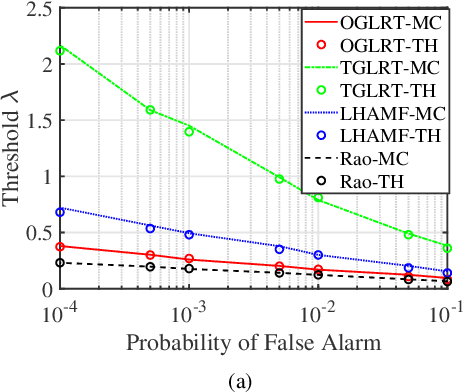
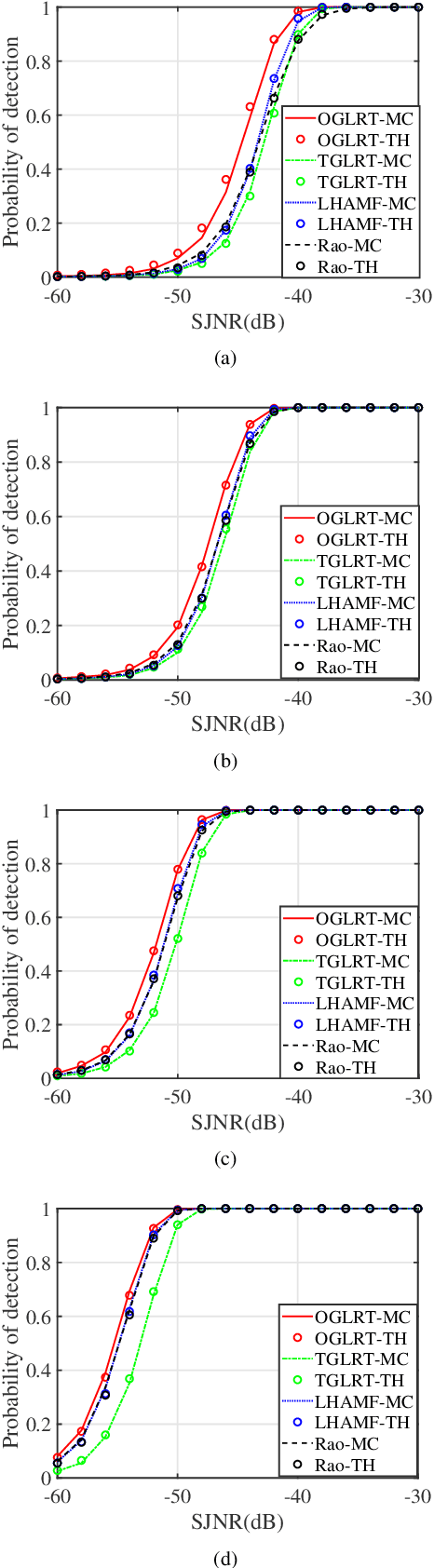
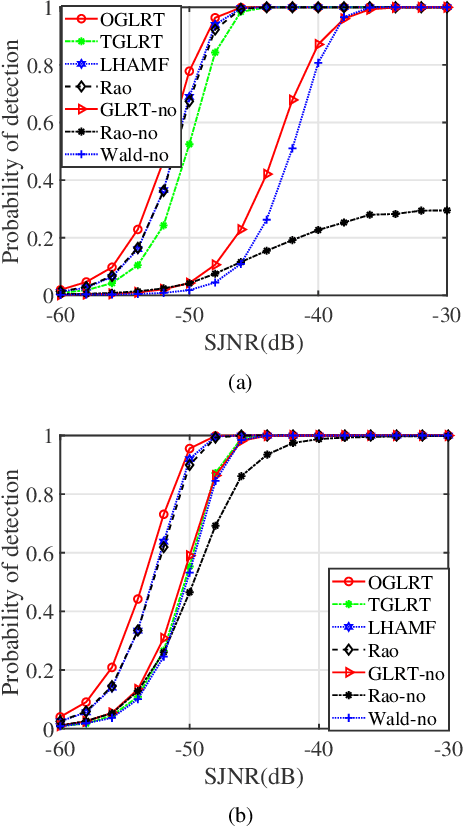
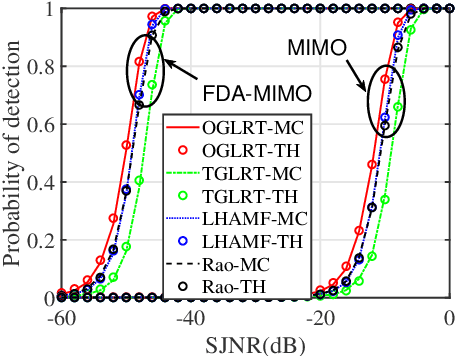
This paper addresses the problem of detecting a moving target embedded in Gaussian noise with an unknown covariance matrix for frequency diverse array multiple-input multiple-output (FDA-MIMO) radar. To end it, assume that obtaining a set of training data is available. Moreover, we propose three adaptive detectors in accordance with the one-step generalized likelihood ratio test (GLRT), two-step GLRT, and Rao criteria, namely OGLRT, TGLRT, and Rao. The LH adaptive matched filter (LHAMF) detector is also introduced when decomposing the Rao test. Next, all provided detectors have constant false alarm rate (CFAR) properties against the covariance matrix. Besides, the closed-form expressions for false alarm probability (PFA) and detection probability (PD) are derived. Finally, this paper substantiates the correctness of the aforementioned algorithms through numerical simulations.
LNPT: Label-free Network Pruning and Training
Mar 20, 2024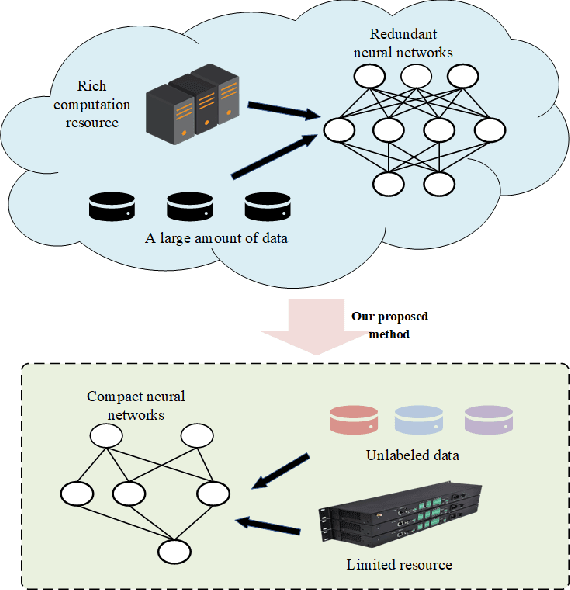


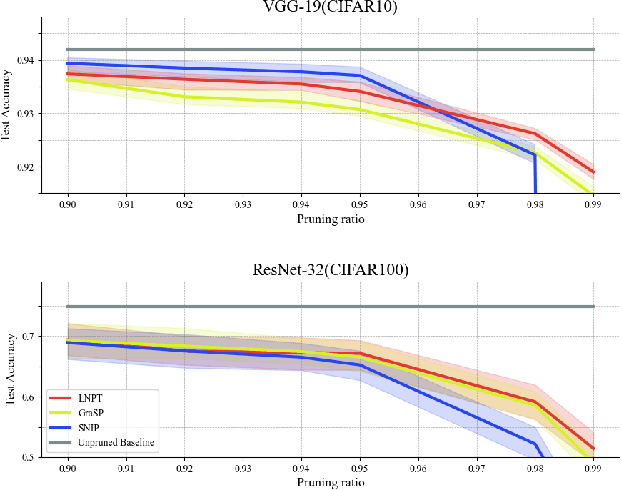
Pruning before training enables the deployment of neural networks on smart devices. By retaining weights conducive to generalization, pruned networks can be accommodated on resource-constrained smart devices. It is commonly held that the distance on weight norms between the initialized and the fully-trained networks correlates with generalization performance. However, as we have uncovered, inconsistency between this metric and generalization during training processes, which poses an obstacle to determine the pruned structures on smart devices in advance. In this paper, we introduce the concept of the learning gap, emphasizing its accurate correlation with generalization. Experiments show that the learning gap, in the form of feature maps from the penultimate layer of networks, aligns with variations of generalization performance. We propose a novel learning framework, LNPT, which enables mature networks on the cloud to provide online guidance for network pruning and learning on smart devices with unlabeled data. Our results demonstrate the superiority of this approach over supervised training.
SEVEN: Pruning Transformer Model by Reserving Sentinels
Mar 19, 2024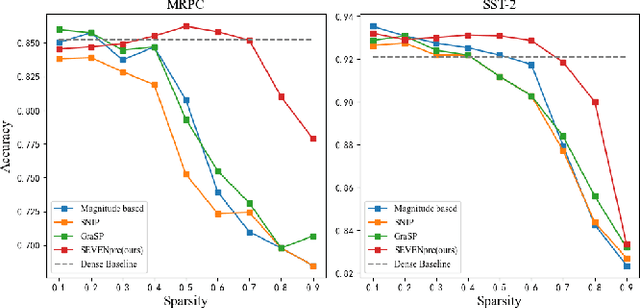
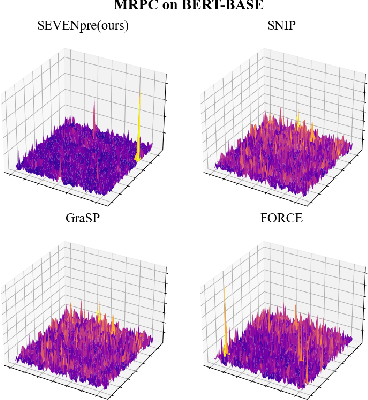

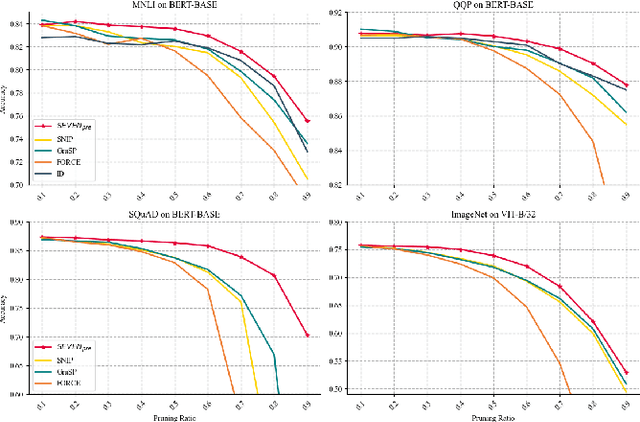
Large-scale Transformer models (TM) have demonstrated outstanding performance across various tasks. However, their considerable parameter size restricts their applicability, particularly on mobile devices. Due to the dynamic and intricate nature of gradients on TM compared to Convolutional Neural Networks, commonly used pruning methods tend to retain weights with larger gradient noise. This results in pruned models that are sensitive to sparsity and datasets, exhibiting suboptimal performance. Symbolic Descent (SD) is a general approach for training and fine-tuning TM. In this paper, we attempt to describe the noisy batch gradient sequences on TM through the cumulative process of SD. We utilize this design to dynamically assess the importance scores of weights.SEVEN is introduced by us, which particularly favors weights with consistently high sensitivity, i.e., weights with small gradient noise. These weights are tended to be preserved by SEVEN. Extensive experiments on various TM in natural language, question-answering, and image classification domains are conducted to validate the effectiveness of SEVEN. The results demonstrate significant improvements of SEVEN in multiple pruning scenarios and across different sparsity levels. Additionally, SEVEN exhibits robust performance under various fine-tuning strategies. The code is publicly available at https://github.com/xiaojinying/SEVEN.
Improving the JPEG-resistance of Adversarial Attacks on Face Recognition by Interpolation Smoothing
Feb 26, 2024


JPEG compression can significantly impair the performance of adversarial face examples, which previous adversarial attacks on face recognition (FR) have not adequately addressed. Considering this challenge, we propose a novel adversarial attack on FR that aims to improve the resistance of adversarial examples against JPEG compression. Specifically, during the iterative process of generating adversarial face examples, we interpolate the adversarial face examples into a smaller size. Then we utilize these interpolated adversarial face examples to create the adversarial examples in the next iteration. Subsequently, we restore the adversarial face examples to their original size by interpolating. Throughout the entire process, our proposed method can smooth the adversarial perturbations, effectively mitigating the presence of high-frequency signals in the crafted adversarial face examples that are typically eliminated by JPEG compression. Our experimental results demonstrate the effectiveness of our proposed method in improving the JPEG-resistance of adversarial face examples.
GUITAR: Gradient Pruning toward Fast Neural Ranking
Dec 28, 2023With the continuous popularity of deep learning and representation learning, fast vector search becomes a vital task in various ranking/retrieval based applications, say recommendation, ads ranking and question answering. Neural network based ranking is widely adopted due to its powerful capacity in modeling complex relationships, such as between users and items, questions and answers. However, it is usually exploited in offline or re-ranking manners for it is time-consuming in computations. Online neural network ranking--so called fast neural ranking--is considered challenging because neural network measures are usually non-convex and asymmetric. Traditional Approximate Nearest Neighbor (ANN) search which usually focuses on metric ranking measures, is not applicable to these advanced measures. In this paper, we introduce a novel graph searching framework to accelerate the searching in the fast neural ranking problem. The proposed graph searching algorithm is bi-level: we first construct a probable candidate set; then we only evaluate the neural network measure over the probable candidate set instead of evaluating the neural network over all neighbors. Specifically, we propose a gradient-based algorithm that approximates the rank of the neural network matching score to construct the probable candidate set; and we present an angle-based heuristic procedure to adaptively identify the proper size of the probable candidate set. Empirical results on public data confirm the effectiveness of our proposed algorithms.
Continual Adversarial Defense
Dec 15, 2023


In response to the rapidly evolving nature of adversarial attacks on a monthly basis, numerous defenses have been proposed to generalize against as many known attacks as possible. However, designing a defense method that can generalize to all types of attacks, including unseen ones, is not realistic because the environment in which defense systems operate is dynamic and comprises various unique attacks used by many attackers. The defense system needs to upgrade itself by utilizing few-shot defense feedback and efficient memory. Therefore, we propose the first continual adversarial defense (CAD) framework that adapts to any attacks in a dynamic scenario, where various attacks emerge stage by stage. In practice, CAD is modeled under four principles: (1) continual adaptation to new attacks without catastrophic forgetting, (2) few-shot adaptation, (3) memory-efficient adaptation, and (4) high accuracy on both clean and adversarial images. We leverage cutting-edge continual learning, few-shot learning, and ensemble learning techniques to qualify the principles. Experiments conducted on CIFAR-10 and ImageNet-100 validate the effectiveness of our approach against multiple stages of 10 modern adversarial attacks and significant improvements over 10 baseline methods. In particular, CAD is capable of quickly adapting with minimal feedback and a low cost of defense failure, while maintaining good performance against old attacks. Our research sheds light on a brand-new paradigm for continual defense adaptation against dynamic and evolving attacks.
Pair-wise Layer Attention with Spatial Masking for Video Prediction
Nov 19, 2023Video prediction yields future frames by employing the historical frames and has exhibited its great potential in many applications, e.g., meteorological prediction, and autonomous driving. Previous works often decode the ultimate high-level semantic features to future frames without texture details, which deteriorates the prediction quality. Motivated by this, we develop a Pair-wise Layer Attention (PLA) module to enhance the layer-wise semantic dependency of the feature maps derived from the U-shape structure in Translator, by coupling low-level visual cues and high-level features. Hence, the texture details of predicted frames are enriched. Moreover, most existing methods capture the spatiotemporal dynamics by Translator, but fail to sufficiently utilize the spatial features of Encoder. This inspires us to design a Spatial Masking (SM) module to mask partial encoding features during pretraining, which adds the visibility of remaining feature pixels by Decoder. To this end, we present a Pair-wise Layer Attention with Spatial Masking (PLA-SM) framework for video prediction to capture the spatiotemporal dynamics, which reflect the motion trend. Extensive experiments and rigorous ablation studies on five benchmarks demonstrate the advantages of the proposed approach. The code is available at GitHub.