 Add to Chrome
 Add to Firefox
 Add to Edge
SIM-Enabled Hybrid Digital-Wave Beamforming for Fronthaul-Constrained Cell-Free Massive MIMO Systems
Jun 23, 2025
As the dense deployment of access points (APs) in cell-free massive multiple-input multiple-output (CF-mMIMO) systems presents significant challenges, per-AP coverage can be expanded using large-scale antenna arrays (LAAs). However, this approach incurs high implementation costs and substantial fronthaul demands due to the need for dedicated RF chains for all antennas. To address these challenges, we propose a hybrid beamforming framework that integrates wave-domain beamforming via stacked intelligent metasurfaces (SIM) with conventional digital processing. By dynamically manipulating electromagnetic waves, SIM-equipped APs enhance beamforming gains while significantly reducing RF chain requirements. We formulate a joint optimization problem for digital and wave-domain beamforming along with fronthaul compression to maximize the weighted sum-rate for both uplink and downlink transmission under finite-capacity fronthaul constraints. Given the high dimensionality and non-convexity of the problem, we develop alternating optimization-based algorithms that iteratively optimize digital and wave-domain variables. Numerical results demonstrate that the proposed hybrid schemes outperform conventional hybrid schemes, that rely on randomly set wave-domain beamformers or restrict digital beamforming to simple power control. Moreover, the proposed scheme employing sufficiently deep SIMs achieves near fully-digital performance with fewer RF chains in most simulated cases, except in the downlink at low signal-to-noise ratios.

In-Context Learning for Gradient-Free Receiver Adaptation: Principles, Applications, and Theory
Jun 18, 2025In recent years, deep learning has facilitated the creation of wireless receivers capable of functioning effectively in conditions that challenge traditional model-based designs. Leveraging programmable hardware architectures, deep learning-based receivers offer the potential to dynamically adapt to varying channel environments. However, current adaptation strategies, including joint training, hypernetwork-based methods, and meta-learning, either demonstrate limited flexibility or necessitate explicit optimization through gradient descent. This paper presents gradient-free adaptation techniques rooted in the emerging paradigm of in-context learning (ICL). We review architectural frameworks for ICL based on Transformer models and structured state-space models (SSMs), alongside theoretical insights into how sequence models effectively learn adaptation from contextual information. Further, we explore the application of ICL to cell-free massive MIMO networks, providing both theoretical analyses and empirical evidence. Our findings indicate that ICL represents a principled and efficient approach to real-time receiver adaptation using pilot signals and auxiliary contextual information-without requiring online retraining.
Dynamic Estimation Loss Control in Variational Quantum Sensing via Online Conformal Inference
May 29, 2025Quantum sensing exploits non-classical effects to overcome limitations of classical sensors, with applications ranging from gravitational-wave detection to nanoscale imaging. However, practical quantum sensors built on noisy intermediate-scale quantum (NISQ) devices face significant noise and sampling constraints, and current variational quantum sensing (VQS) methods lack rigorous performance guarantees. This paper proposes an online control framework for VQS that dynamically updates the variational parameters while providing deterministic error bars on the estimates. By leveraging online conformal inference techniques, the approach produces sequential estimation sets with a guaranteed long-term risk level. Experiments on a quantum magnetometry task confirm that the proposed dynamic VQS approach maintains the required reliability over time, while still yielding precise estimates. The results demonstrate the practical benefits of combining variational quantum algorithms with online conformal inference to achieve reliable quantum sensing on NISQ devices.
Adaptive Prediction-Powered AutoEval with Reliability and Efficiency Guarantees
May 24, 2025Selecting artificial intelligence (AI) models, such as large language models (LLMs), from multiple candidates requires accurate performance estimation. This is ideally achieved through empirical evaluations involving abundant real-world data. However, such evaluations are costly and impractical at scale. To address this challenge, autoevaluation methods leverage synthetic data produced by automated evaluators, such as LLMs-as-judges, reducing variance but potentially introducing bias. Recent approaches have employed semi-supervised prediction-powered inference (\texttt{PPI}) to correct for the bias of autoevaluators. However, the use of autoevaluators may lead in practice to a degradation in sample efficiency compared to conventional methods using only real-world data. In this paper, we propose \texttt{R-AutoEval+}, a novel framework that provides finite-sample reliability guarantees on the model evaluation, while also ensuring an enhanced (or at least no worse) sample efficiency compared to conventional methods. The key innovation of \texttt{R-AutoEval+} is an adaptive construction of the model evaluation variable, which dynamically tunes its reliance on synthetic data, reverting to conventional methods when the autoevaluator is insufficiently accurate. Experiments on the use of LLMs-as-judges for the optimization of quantization settings for the weights of an LLM, and for prompt design in LLMs confirm the reliability and efficiency of \texttt{R-AutoEval+}.
Multi-Fidelity Bayesian Optimization for Nash Equilibria with Black-Box Utilities
May 16, 2025Modern open and softwarized systems -- such as O-RAN telecom networks and cloud computing platforms -- host independently developed applications with distinct, and potentially conflicting, objectives. Coordinating the behavior of such applications to ensure stable system operation poses significant challenges, especially when each application's utility is accessible only via costly, black-box evaluations. In this paper, we consider a centralized optimization framework in which a system controller suggests joint configurations to multiple strategic players, representing different applications, with the goal of aligning their incentives toward a stable outcome. To model this interaction, we formulate a Stackelberg game in which the central optimizer lacks access to analytical utility functions and instead must learn them through sequential, multi-fidelity evaluations. To address this challenge, we propose MF-UCB-PNE, a novel multi-fidelity Bayesian optimization strategy that leverages a budget-constrained sampling process to approximate pure Nash equilibrium (PNE) solutions. MF-UCB-PNE systematically balances exploration across low-cost approximations with high-fidelity exploitation steps, enabling efficient convergence to incentive-compatible configurations. We provide theoretical and empirical insights into the trade-offs between query cost and equilibrium accuracy, demonstrating the effectiveness of MF-UCB-PNE in identifying effective equilibrium solutions under limited cost budgets.
Turbo-ICL: In-Context Learning-Based Turbo Equalization
May 09, 2025This paper introduces a novel in-context learning (ICL) framework, inspired by large language models (LLMs), for soft-input soft-output channel equalization in coded multiple-input multiple-output (MIMO) systems. The proposed approach learns to infer posterior symbol distributions directly from a prompt of pilot signals and decoder feedback. A key innovation is the use of prompt augmentation to incorporate extrinsic information from the decoder output as additional context, enabling the ICL model to refine its symbol estimates iteratively across turbo decoding iterations. Two model variants, based on Transformer and state-space architectures, are developed and evaluated. Extensive simulations demonstrate that, when traditional linear assumptions break down, e.g., in the presence of low-resolution quantization, ICL equalizers consistently outperform conventional model-based baselines, even when the latter are provided with perfect channel state information. Results also highlight the advantage of Transformer-based models under limited training diversity, as well as the efficiency of state-space models in resource-constrained scenarios.
Context-Aware Online Conformal Anomaly Detection with Prediction-Powered Data Acquisition
May 03, 2025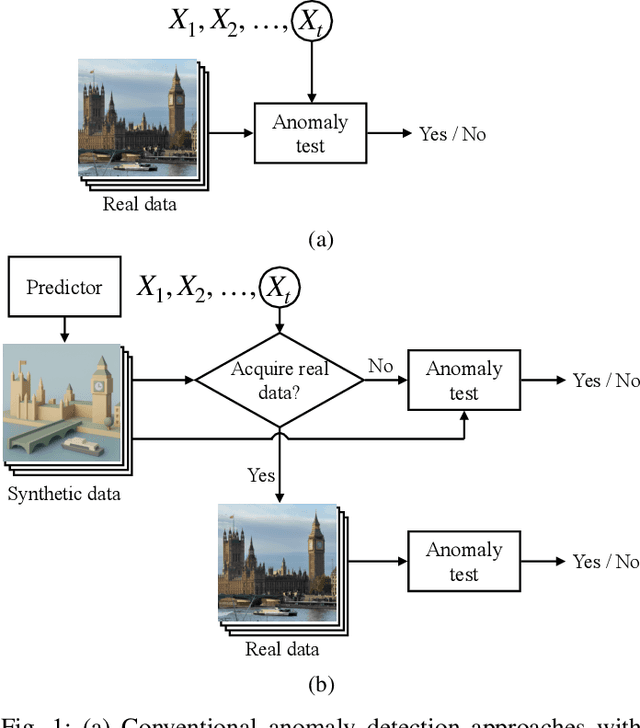

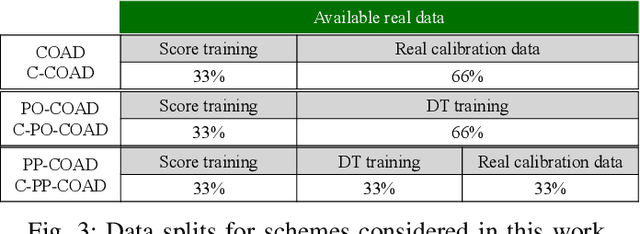
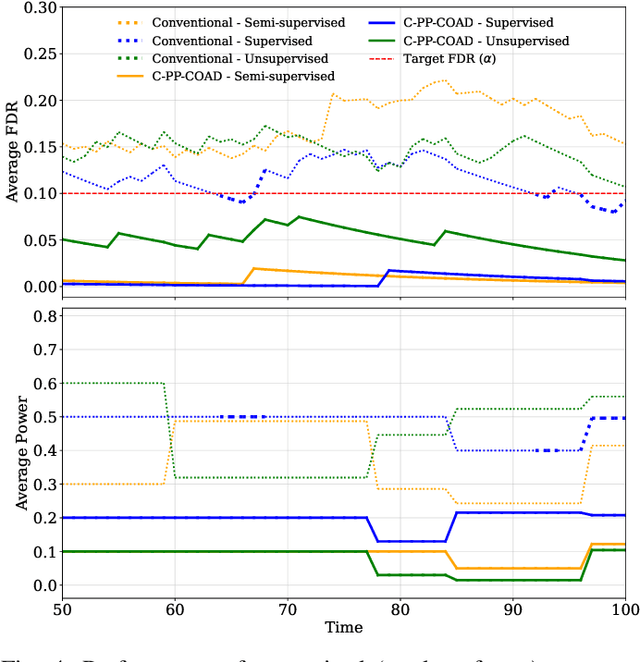
Online anomaly detection is essential in fields such as cybersecurity, healthcare, and industrial monitoring, where promptly identifying deviations from expected behavior can avert critical failures or security breaches. While numerous anomaly scoring methods based on supervised or unsupervised learning have been proposed, current approaches typically rely on a continuous stream of real-world calibration data to provide assumption-free guarantees on the false discovery rate (FDR). To address the inherent challenges posed by limited real calibration data, we introduce context-aware prediction-powered conformal online anomaly detection (C-PP-COAD). Our framework strategically leverages synthetic calibration data to mitigate data scarcity, while adaptively integrating real data based on contextual cues. C-PP-COAD utilizes conformal p-values, active p-value statistics, and online FDR control mechanisms to maintain rigorous and reliable anomaly detection performance over time. Experiments conducted on both synthetic and real-world datasets demonstrate that C-PP-COAD significantly reduces dependency on real calibration data without compromising guaranteed FDR control.
On the Generalization of Adversarially Trained Quantum Classifiers
Apr 24, 2025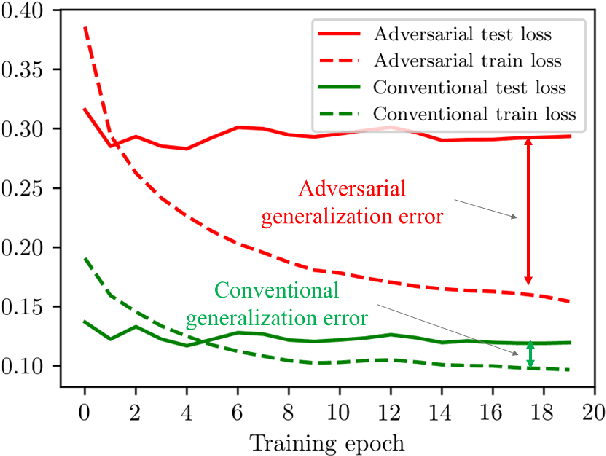
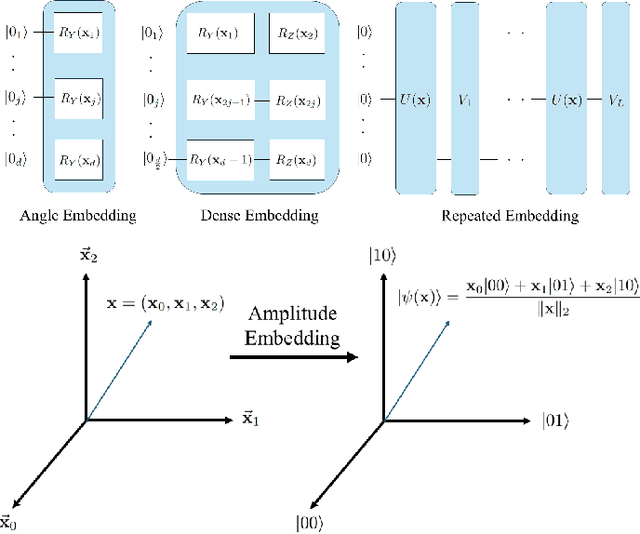
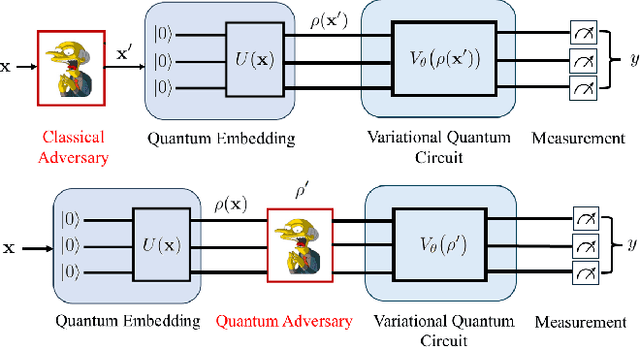
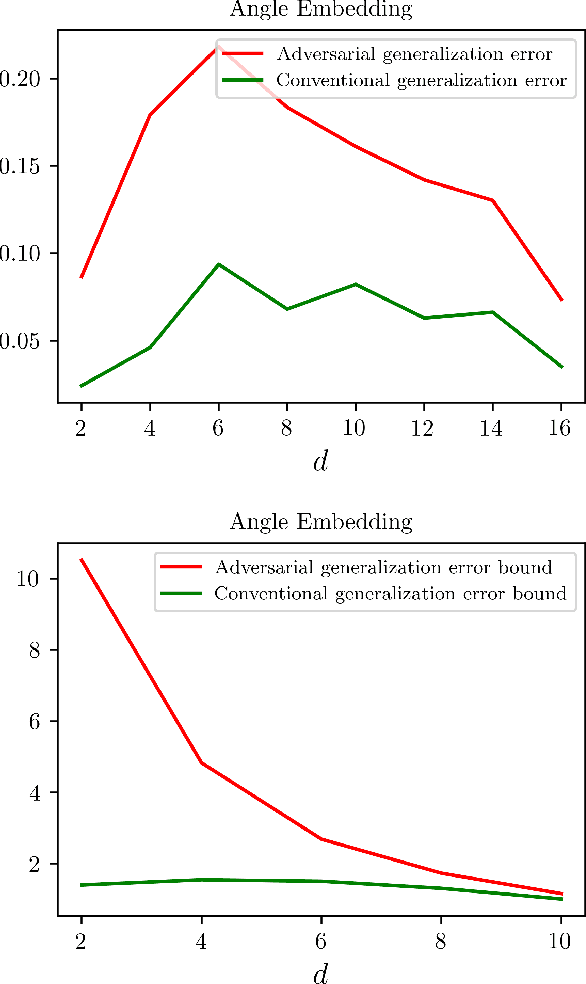
Quantum classifiers are vulnerable to adversarial attacks that manipulate their input classical or quantum data. A promising countermeasure is adversarial training, where quantum classifiers are trained by using an attack-aware, adversarial loss function. This work establishes novel bounds on the generalization error of adversarially trained quantum classifiers when tested in the presence of perturbation-constrained adversaries. The bounds quantify the excess generalization error incurred to ensure robustness to adversarial attacks as scaling with the training sample size $m$ as $1/\sqrt{m}$, while yielding insights into the impact of the quantum embedding. For quantum binary classifiers employing \textit{rotation embedding}, we find that, in the presence of adversarial attacks on classical inputs $\mathbf{x}$, the increase in sample complexity due to adversarial training over conventional training vanishes in the limit of high dimensional inputs $\mathbf{x}$. In contrast, when the adversary can directly attack the quantum state $\rho(\mathbf{x})$ encoding the input $\mathbf{x}$, the excess generalization error depends on the choice of embedding only through its Hilbert space dimension. The results are also extended to multi-class classifiers. We validate our theoretical findings with numerical experiments.
Conformal Calibration: Ensuring the Reliability of Black-Box AI in Wireless Systems
Apr 16, 2025AI is poised to revolutionize telecommunication networks by boosting efficiency, automation, and decision-making. However, the black-box nature of most AI models introduces substantial risk, possibly deterring adoption by network operators. These risks are not addressed by the current prevailing deployment strategy, which typically follows a best-effort train-and-deploy paradigm. This paper reviews conformal calibration, a general framework that moves beyond the state of the art by adopting computationally lightweight, advanced statistical tools that offer formal reliability guarantees without requiring further training or fine-tuning. Conformal calibration encompasses pre-deployment calibration via uncertainty quantification or hyperparameter selection; online monitoring to detect and mitigate failures in real time; and counterfactual post-deployment performance analysis to address "what if" diagnostic questions after deployment. By weaving conformal calibration into the AI model lifecycle, network operators can establish confidence in black-box AI models as a dependable enabling technology for wireless systems.
Conformal Robust Beamforming via Generative Channel Models
Apr 09, 2025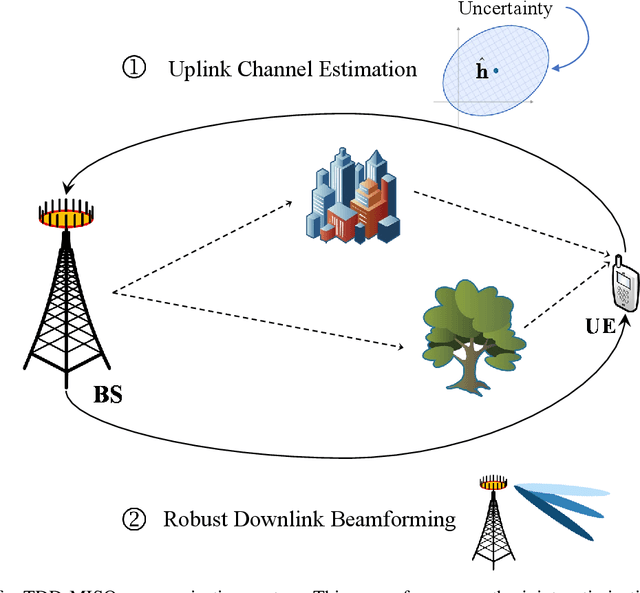
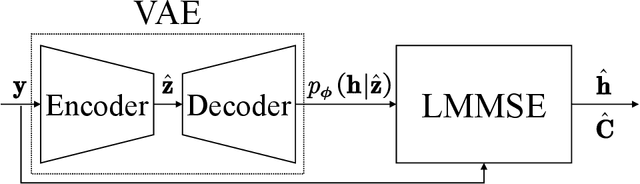
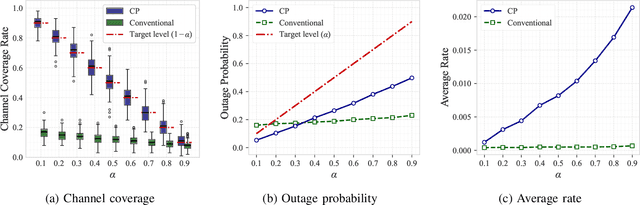
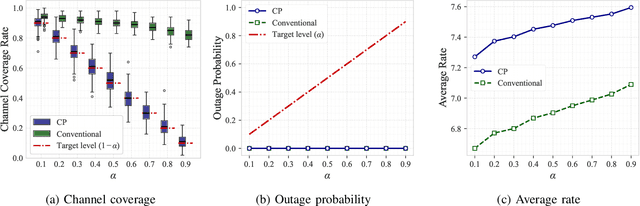
Traditional approaches to outage-constrained beamforming optimization rely on statistical assumptions about channel distributions and estimation errors. However, the resulting outage probability guarantees are only valid when these assumptions accurately reflect reality. This paper tackles the fundamental challenge of providing outage probability guarantees that remain robust regardless of specific channel or estimation error models. To achieve this, we propose a two-stage framework: (i) construction of a channel uncertainty set using a generative channel model combined with conformal prediction, and (ii) robust beamforming via the solution of a min-max optimization problem. The proposed method separates the modeling and optimization tasks, enabling principled uncertainty quantification and robust decision-making. Simulation results confirm the effectiveness and reliability of the framework in achieving model-agnostic outage guarantees.