 Add to Chrome
 Add to Firefox
 Add to Edge
OpenCompass: A Universal Evaluation Platform for Large Language Models
May 19, 2026
In recent years, the field of artificial intelligence has undergone a paradigm shift from task-specific small-scale models to general-purpose large language models (LLMs). With the rapid iteration of LLMs, objective, quantitative, and comprehensive evaluation of their capabilities has become a critical link in advancing technological development. Currently, the mainstream static benchmark dataset-based evaluation methods face challenges such as the diversity of task types, inconsistent evaluation criteria, and fragmentation of data and processing workflows, making it difficult to efficiently conduct cross-domain and large-scale model evaluation. To address the aforementioned issues, this paper proposes and open-sources OpenCompass, a one-stop, scalable, and high-concurrency-supported general-purpose LLM evaluation platform. Adhering to the design philosophy of modularization and component decoupling, the platform boasts three core advantages: high compatibility, flexibility, and high concurrency. The core architecture of OpenCompass comprises five key components: the Configuration System, Task Partitioning Module, Execution and Scheduling Module, Task Execution Unit, and Result Visualization Module. Its workflow provides rule-based, LLM-as-a-Judge, and cascaded evaluators to adapt to the requirements of different task scenarios. Supporting mainstream benchmark datasets across multiple domains, including knowledge, reasoning, computation, science, language, code, etc., the platform offers a unified and efficient LLM evaluation tool for both academia and industry, facilitating the accurate identification of strengths and weaknesses of LLMs as well as their subsequent optimization.

Intern-S1-Pro: Scientific Multimodal Foundation Model at Trillion Scale
Mar 26, 2026We introduce Intern-S1-Pro, the first one-trillion-parameter scientific multimodal foundation model. Scaling to this unprecedented size, the model delivers a comprehensive enhancement across both general and scientific domains. Beyond stronger reasoning and image-text understanding capabilities, its intelligence is augmented with advanced agent capabilities. Simultaneously, its scientific expertise has been vastly expanded to master over 100 specialized tasks across critical science fields, including chemistry, materials, life sciences, and earth sciences. Achieving this massive scale is made possible by the robust infrastructure support of XTuner and LMDeploy, which facilitates highly efficient Reinforcement Learning (RL) training at the 1-trillion parameter level while ensuring strict precision consistency between training and inference. By seamlessly integrating these advancements, Intern-S1-Pro further fortifies the fusion of general and specialized intelligence, working as a Specializable Generalist, demonstrating its position in the top tier of open-source models for general capabilities, while outperforming proprietary models in the depth of specialized scientific tasks.
Long-horizon Reasoning Agent for Olympiad-Level Mathematical Problem Solving
Dec 12, 2025Large Reasoning Models (LRMs) have expanded the mathematical reasoning frontier through Chain-of-Thought (CoT) techniques and Reinforcement Learning with Verifiable Rewards (RLVR), capable of solving AIME-level problems. However, the performance of LRMs is heavily dependent on the extended reasoning context length. For solving ultra-hard problems like those in the International Mathematical Olympiad (IMO), the required reasoning complexity surpasses the space that an LRM can explore in a single round. Previous works attempt to extend the reasoning context of LRMs but remain prompt-based and built upon proprietary models, lacking systematic structures and training pipelines. Therefore, this paper introduces Intern-S1-MO, a long-horizon math agent that conducts multi-round hierarchical reasoning, composed of an LRM-based multi-agent system including reasoning, summary, and verification. By maintaining a compact memory in the form of lemmas, Intern-S1-MO can more freely explore the lemma-rich reasoning spaces in multiple reasoning stages, thereby breaking through the context constraints for IMO-level math problems. Furthermore, we propose OREAL-H, an RL framework for training the LRM using the online explored trajectories to simultaneously bootstrap the reasoning ability of LRM and elevate the overall performance of Intern-S1-MO. Experiments show that Intern-S1-MO can obtain 26 out of 35 points on the non-geometry problems of IMO2025, matching the performance of silver medalists. It also surpasses the current advanced LRMs on inference benchmarks such as HMMT2025, AIME2025, and CNMO2025. In addition, our agent officially participates in CMO2025 and achieves a score of 102/126 under the judgment of human experts, reaching the gold medal level.
RTMPose: Real-Time Multi-Person Pose Estimation based on MMPose
Mar 13, 2023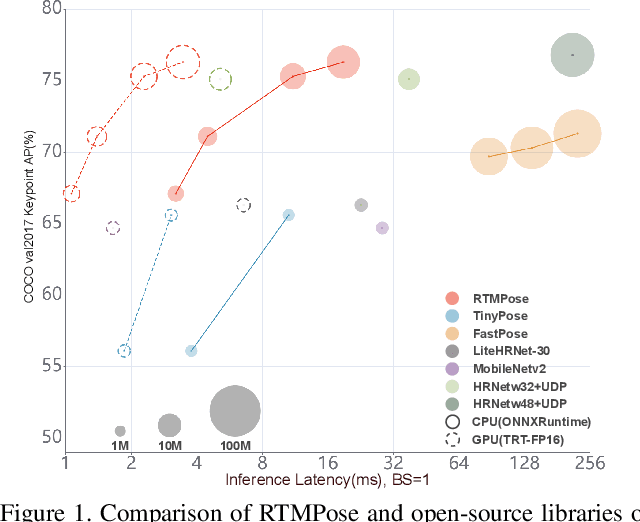
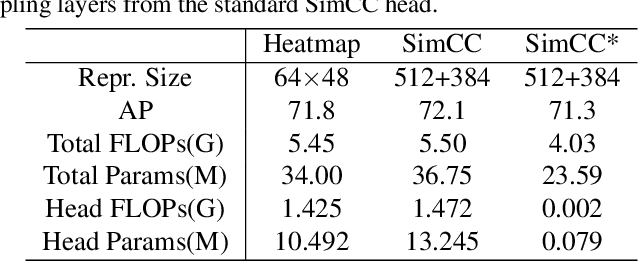
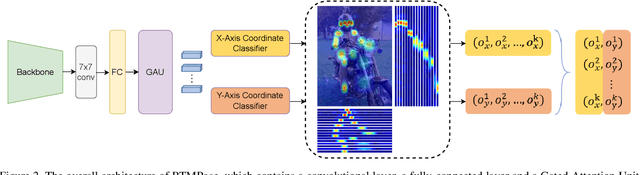
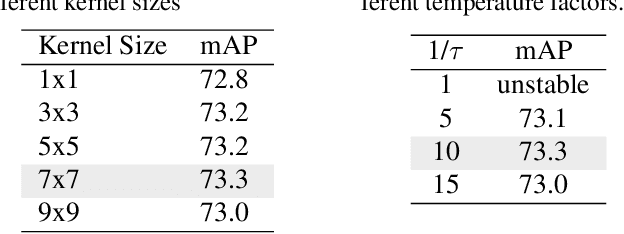
Recent studies on 2D pose estimation have achieved excellent performance on public benchmarks, yet its application in the industrial community still suffers from heavy model parameters and high latency. In order to bridge this gap, we empirically explore key factors in pose estimation including paradigm, model architecture, training strategy, and deployment, and present a high-performance real-time multi-person pose estimation framework, RTMPose, based on MMPose. Our RTMPose-m achieves 75.8% AP on COCO with 90+ FPS on an Intel i7-11700 CPU and 430+ FPS on an NVIDIA GTX 1660 Ti GPU, and RTMPose-l achieves 67.0% AP on COCO-WholeBody with 130+ FPS. To further evaluate RTMPose's capability in critical real-time applications, we also report the performance after deploying on the mobile device. Our RTMPose-s achieves 72.2% AP on COCO with 70+ FPS on a Snapdragon 865 chip, outperforming existing open-source libraries. Code and models are released at https://github.com/open-mmlab/mmpose/tree/1.x/projects/rtmpose.