 Add to Chrome
 Add to Firefox
 Add to Edge
Switching the Loss Reduces the Cost in Batch Reinforcement Learning
Mar 12, 2024


We propose training fitted Q-iteration with log-loss (FQI-LOG) for batch reinforcement learning (RL). We show that the number of samples needed to learn a near-optimal policy with FQI-LOG scales with the accumulated cost of the optimal policy, which is zero in problems where acting optimally achieves the goal and incurs no cost. In doing so, we provide a general framework for proving $\textit{small-cost}$ bounds, i.e. bounds that scale with the optimal achievable cost, in batch RL. Moreover, we empirically verify that FQI-LOG uses fewer samples than FQI trained with squared loss on problems where the optimal policy reliably achieves the goal.

Risk-Sensitive RL with Optimized Certainty Equivalents via Reduction to Standard RL
Mar 10, 2024We study Risk-Sensitive Reinforcement Learning (RSRL) with the Optimized Certainty Equivalent (OCE) risk, which generalizes Conditional Value-at-risk (CVaR), entropic risk and Markowitz's mean-variance. Using an augmented Markov Decision Process (MDP), we propose two general meta-algorithms via reductions to standard RL: one based on optimistic algorithms and another based on policy optimization. Our optimistic meta-algorithm generalizes almost all prior RSRL theory with entropic risk or CVaR. Under discrete rewards, our optimistic theory also certifies the first RSRL regret bounds for MDPs with bounded coverability, e.g., exogenous block MDPs. Under discrete rewards, our policy optimization meta-algorithm enjoys both global convergence and local improvement guarantees in a novel metric that lower bounds the true OCE risk. Finally, we instantiate our framework with PPO, construct an MDP, and show that it learns the optimal risk-sensitive policy while prior algorithms provably fail.
Is Cosine-Similarity of Embeddings Really About Similarity?
Mar 08, 2024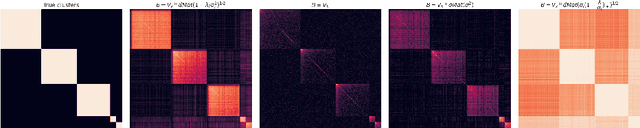
Cosine-similarity is the cosine of the angle between two vectors, or equivalently the dot product between their normalizations. A popular application is to quantify semantic similarity between high-dimensional objects by applying cosine-similarity to a learned low-dimensional feature embedding. This can work better but sometimes also worse than the unnormalized dot-product between embedded vectors in practice. To gain insight into this empirical observation, we study embeddings derived from regularized linear models, where closed-form solutions facilitate analytical insights. We derive analytically how cosine-similarity can yield arbitrary and therefore meaningless `similarities.' For some linear models the similarities are not even unique, while for others they are implicitly controlled by the regularization. We discuss implications beyond linear models: a combination of different regularizations are employed when learning deep models; these have implicit and unintended effects when taking cosine-similarities of the resulting embeddings, rendering results opaque and possibly arbitrary. Based on these insights, we caution against blindly using cosine-similarity and outline alternatives.
* 9 pages
Applied Causal Inference Powered by ML and AI
Mar 04, 2024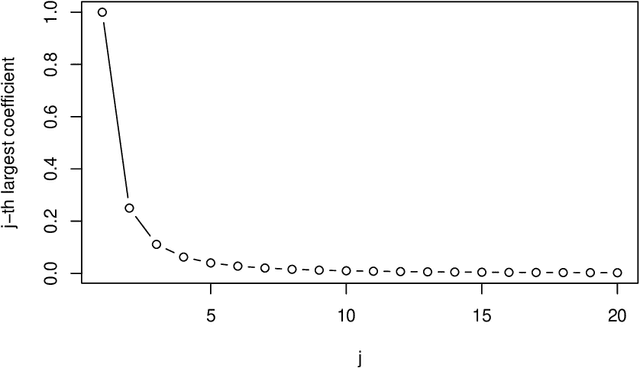
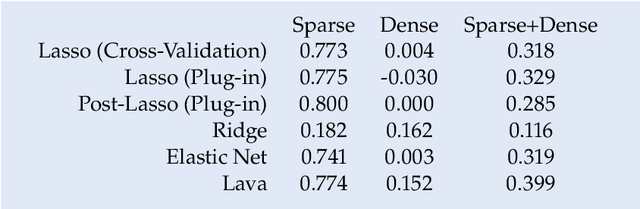
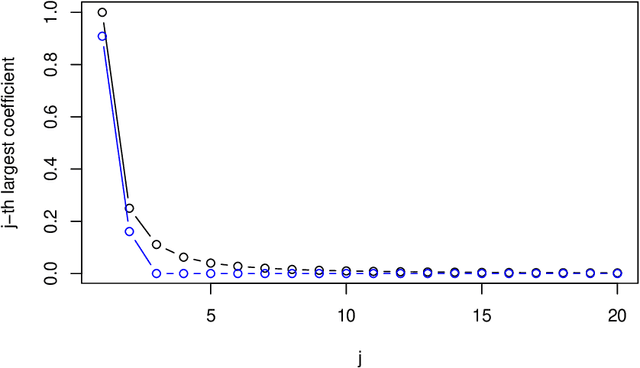
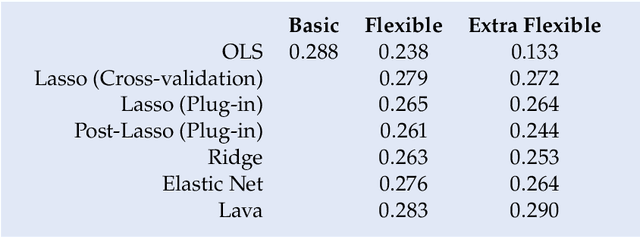
An introduction to the emerging fusion of machine learning and causal inference. The book presents ideas from classical structural equation models (SEMs) and their modern AI equivalent, directed acyclical graphs (DAGs) and structural causal models (SCMs), and covers Double/Debiased Machine Learning methods to do inference in such models using modern predictive tools.
Peeking with PEAK: Sequential, Nonparametric Composite Hypothesis Tests for Means of Multiple Data Streams
Feb 16, 2024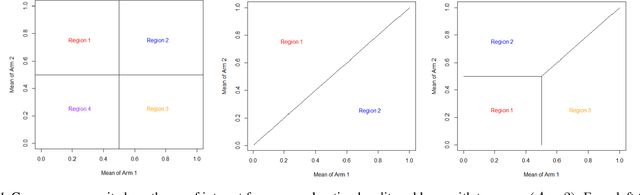
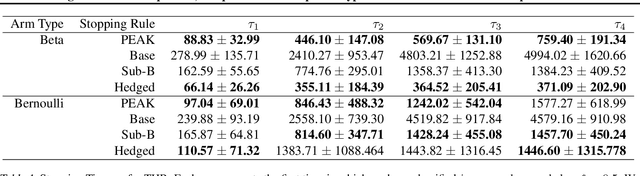
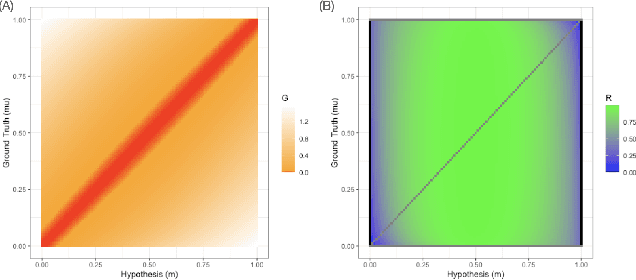
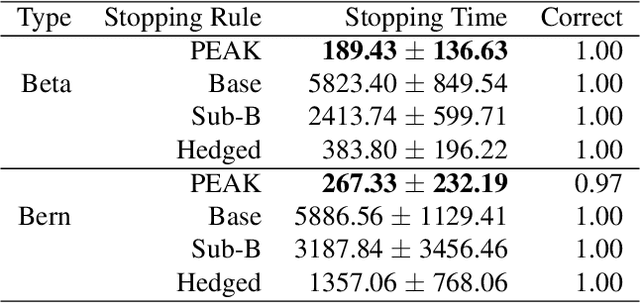
We propose a novel nonparametric sequential test for composite hypotheses for means of multiple data streams. Our proposed method, \emph{peeking with expectation-based averaged capital} (PEAK), builds upon the testing-as-betting framework and provides a non-asymptotic $\alpha$-level test across any stopping time. PEAK is computationally tractable and efficiently rejects hypotheses that are incorrect across all potential distributions that satisfy our nonparametric assumption, enabling joint composite hypothesis testing on multiple streams of data. We numerically validate our theoretical findings under the best arm identification and threshold identification in the bandit setting, illustrating both the competitive performance and the computational efficiency of our method against state-of-the-art testing methods.
More Benefits of Being Distributional: Second-Order Bounds for Reinforcement Learning
Feb 11, 2024In this paper, we prove that Distributional Reinforcement Learning (DistRL), which learns the return distribution, can obtain second-order bounds in both online and offline RL in general settings with function approximation. Second-order bounds are instance-dependent bounds that scale with the variance of return, which we prove are tighter than the previously known small-loss bounds of distributional RL. To the best of our knowledge, our results are the first second-order bounds for low-rank MDPs and for offline RL. When specializing to contextual bandits (one-step RL problem), we show that a distributional learning based optimism algorithm achieves a second-order worst-case regret bound, and a second-order gap dependent bound, simultaneously. We also empirically demonstrate the benefit of DistRL in contextual bandits on real-world datasets. We highlight that our analysis with DistRL is relatively simple, follows the general framework of optimism in the face of uncertainty and does not require weighted regression. Our results suggest that DistRL is a promising framework for obtaining second-order bounds in general RL settings, thus further reinforcing the benefits of DistRL.
Multi-Armed Bandits with Interference
Feb 02, 2024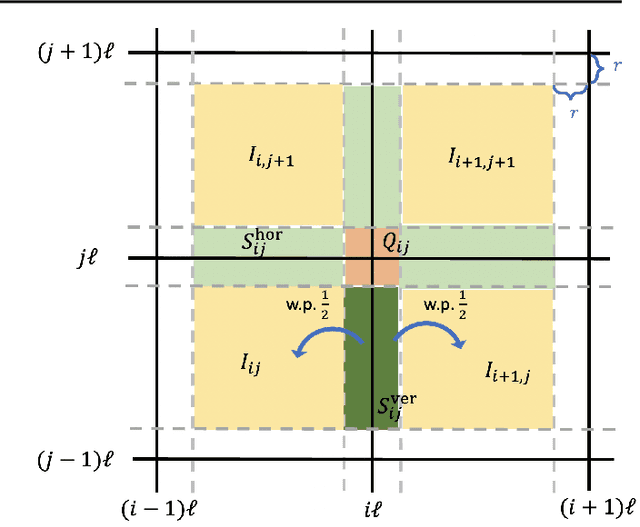
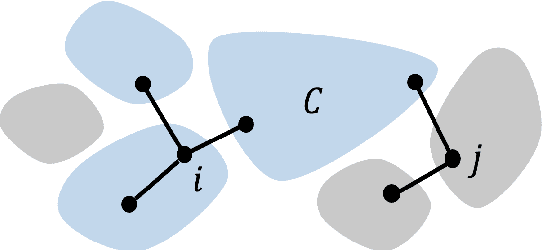
Experimentation with interference poses a significant challenge in contemporary online platforms. Prior research on experimentation with interference has concentrated on the final output of a policy. The cumulative performance, while equally crucial, is less well understood. To address this gap, we introduce the problem of {\em Multi-armed Bandits with Interference} (MABI), where the learner assigns an arm to each of $N$ experimental units over a time horizon of $T$ rounds. The reward of each unit in each round depends on the treatments of {\em all} units, where the influence of a unit decays in the spatial distance between units. Furthermore, we employ a general setup wherein the reward functions are chosen by an adversary and may vary arbitrarily across rounds and units. We first show that switchback policies achieve an optimal {\em expected} regret $\tilde O(\sqrt T)$ against the best fixed-arm policy. Nonetheless, the regret (as a random variable) for any switchback policy suffers a high variance, as it does not account for $N$. We propose a cluster randomization policy whose regret (i) is optimal in {\em expectation} and (ii) admits a high probability bound that vanishes in $N$.
Faster Rates for Switchback Experiments
Dec 25, 2023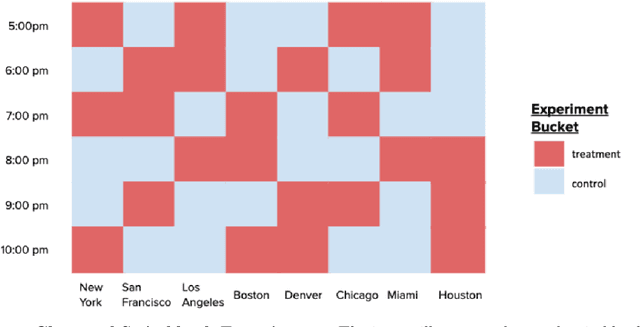
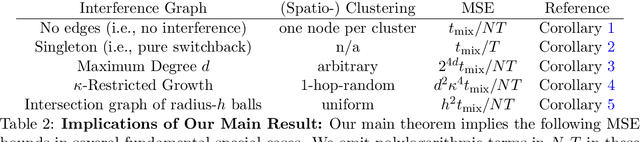
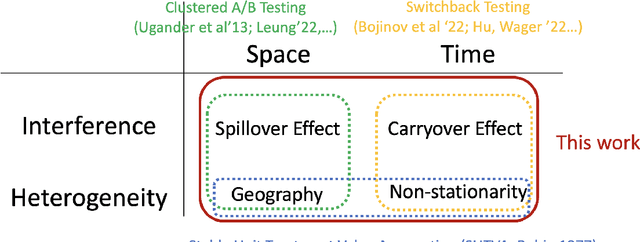
Switchback experimental design, wherein a single unit (e.g., a whole system) is exposed to a single random treatment for interspersed blocks of time, tackles both cross-unit and temporal interference. Hu and Wager (2022) recently proposed a treatment-effect estimator that truncates the beginnings of blocks and established a $T^{-1/3}$ rate for estimating the global average treatment effect (GATE) in a Markov setting with rapid mixing. They claim this rate is optimal and suggest focusing instead on a different (and design-dependent) estimand so as to enjoy a faster rate. For the same design we propose an alternative estimator that uses the whole block and surprisingly show that it in fact achieves an estimation rate of $\sqrt{\log T/T}$ for the original design-independent GATE estimand under the same assumptions.
Low-Rank MDPs with Continuous Action Spaces
Nov 06, 2023Low-Rank Markov Decision Processes (MDPs) have recently emerged as a promising framework within the domain of reinforcement learning (RL), as they allow for provably approximately correct (PAC) learning guarantees while also incorporating ML algorithms for representation learning. However, current methods for low-rank MDPs are limited in that they only consider finite action spaces, and give vacuous bounds as $|\mathcal{A}| \to \infty$, which greatly limits their applicability. In this work, we study the problem of extending such methods to settings with continuous actions, and explore multiple concrete approaches for performing this extension. As a case study, we consider the seminal FLAMBE algorithm (Agarwal et al., 2020), which is a reward-agnostic method for PAC RL with low-rank MDPs. We show that, without any modifications to the algorithm, we obtain similar PAC bound when actions are allowed to be continuous. Specifically, when the model for transition functions satisfies a Holder smoothness condition w.r.t. actions, and either the policy class has a uniformly bounded minimum density or the reward function is also Holder smooth, we obtain a polynomial PAC bound that depends on the order of smoothness.
Off-Policy Evaluation for Large Action Spaces via Policy Convolution
Oct 24, 2023Developing accurate off-policy estimators is crucial for both evaluating and optimizing for new policies. The main challenge in off-policy estimation is the distribution shift between the logging policy that generates data and the target policy that we aim to evaluate. Typically, techniques for correcting distribution shift involve some form of importance sampling. This approach results in unbiased value estimation but often comes with the trade-off of high variance, even in the simpler case of one-step contextual bandits. Furthermore, importance sampling relies on the common support assumption, which becomes impractical when the action space is large. To address these challenges, we introduce the Policy Convolution (PC) family of estimators. These methods leverage latent structure within actions -- made available through action embeddings -- to strategically convolve the logging and target policies. This convolution introduces a unique bias-variance trade-off, which can be controlled by adjusting the amount of convolution. Our experiments on synthetic and benchmark datasets demonstrate remarkable mean squared error (MSE) improvements when using PC, especially when either the action space or policy mismatch becomes large, with gains of up to 5 - 6 orders of magnitude over existing estimators.