 Add to Chrome
 Add to Firefox
 Add to Edge
New Mid-Band (FR3, 6-24 GHz) XL-MIMO for 6G: Channel Modeling, Algorithm Evaluation, and Field Trials
Aug 04, 2026
The new mid-band (FR3, 6-24 GHz) spectrum is expected to play an important role in future 6G networks by providing a favorable balance among coverage, capacity, and deployment feasibility. Meanwhile, extremely large-scale multiple-input multiple-output (XL-MIMO) has emerged as a key enabling technology to exploit the propagation and spatial multiplexing potential of these frequency bands. Firstly, this paper provides a systematic review of spectrum allocation and standardization activities for new mid-band spectrum, together with the 6G spectrum planning strategies of countries and regions. Secondly, the wideband massive MIMO channel sounder is also introduced, which is specially developed for channel measurements of new mid-band with over a thousand elements. Thirdly, propagation characteristics and channel modeling approaches of four representative XL-MIMO architectures, including co-located, cell-free, and intelligent XL-MIMO, are comprehensively reviewed and analyzed, with particular emphasis on near-field propagation, spatial non-stationarity, and capacity performance. Then, recent advances in channel estimation, beamforming, and artificial-intelligence-assisted signal processing are summarized. In addition, the performance of new mid-band XL-MIMO systems equipped with 1536 and 768 antenna elements is comparatively evaluated. Finally, real communication environment prototype system field trials conducted in the Upper 6 GHz (U6GHz) band are used to investigate practical system performance under realistic deployment conditions. The results indicate that the target signal-to-noise ratio is a critical factor affecting XL-MIMO performance in the U6GHz band.

Using Argument-based Features to Predict and Analyse Review Helpfulness
Jul 23, 2017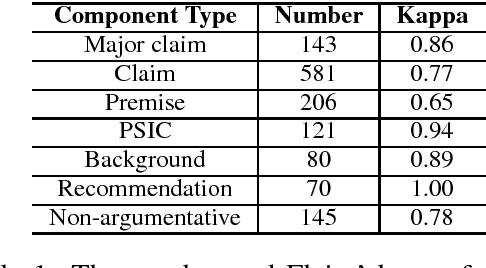
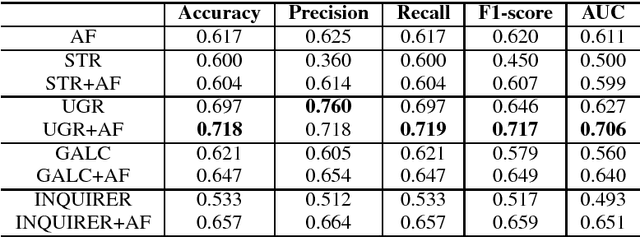
We study the helpful product reviews identification problem in this paper. We observe that the evidence-conclusion discourse relations, also known as arguments, often appear in product reviews, and we hypothesise that some argument-based features, e.g. the percentage of argumentative sentences, the evidences-conclusions ratios, are good indicators of helpful reviews. To validate this hypothesis, we manually annotate arguments in 110 hotel reviews, and investigate the effectiveness of several combinations of argument-based features. Experiments suggest that, when being used together with the argument-based features, the state-of-the-art baseline features can enjoy a performance boost (in terms of F1) of 11.01\% in average.
Crowdsourcing Argumentation Structures in Chinese Hotel Reviews
May 05, 2017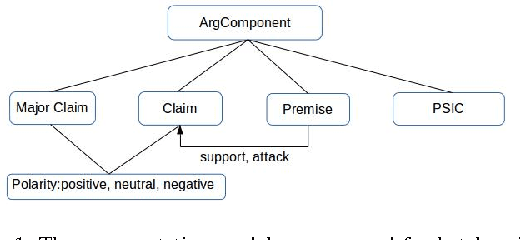
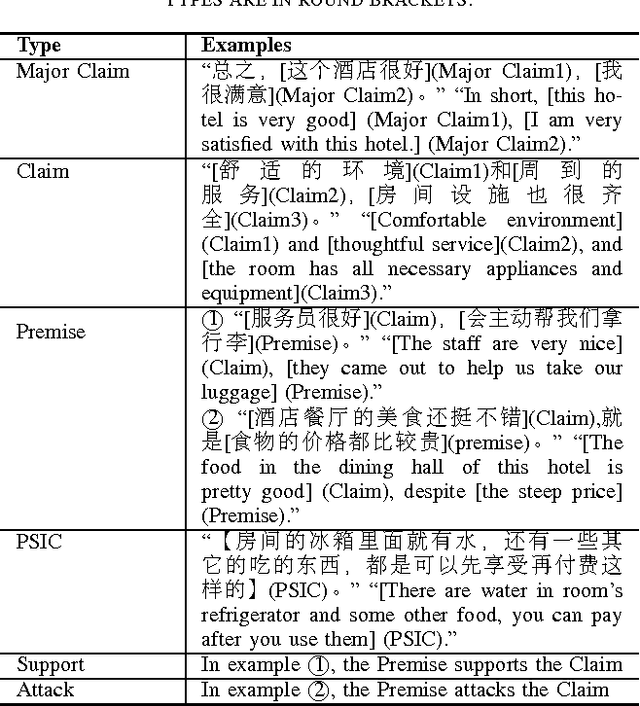
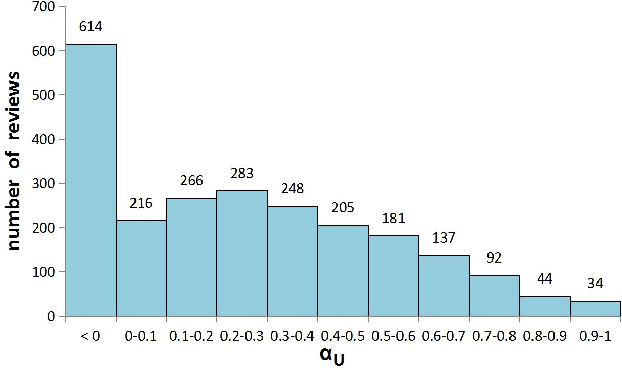
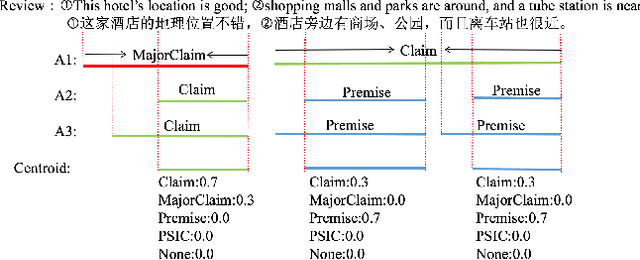
Argumentation mining aims at automatically extracting the premises-claim discourse structures in natural language texts. There is a great demand for argumentation corpora for customer reviews. However, due to the controversial nature of the argumentation annotation task, there exist very few large-scale argumentation corpora for customer reviews. In this work, we novelly use the crowdsourcing technique to collect argumentation annotations in Chinese hotel reviews. As the first Chinese argumentation dataset, our corpus includes 4814 argument component annotations and 411 argument relation annotations, and its annotations qualities are comparable to some widely used argumentation corpora in other languages.