 Add to Chrome
 Add to Firefox
 Add to Edge
An exact information theory of generalization phase transitions in Bayesian diffusion models
Jul 09, 2026
How diffusion models circumvent the curse of dimensionality to learn complex distributions over high dimensional spaces from a finite training set, instead of memorizing it, remains a fundamental mystery. To address this, we introduce analytically tractable Bayesian information restricted diffusion (BIRD) models, in which each pixel observes restricted information about noisy data. A BIRD model time-reverses diffusion by inferring which past training sample produced its current restricted observation using the Bayesian posterior. This model class generalizes existing analytical diffusion models that use spatially local information restriction. We show that spatially local BIRD models closely approximate trained diffusion models \textit{early in training}, across different architectures such as UNets and DiTs. Under minimal assumptions on the data distribution, we identify an information-theoretic phase boundary between memorization and generalization in the joint space of amount of training data, time in the reverse generative process, and amount of information restriction: a BIRD model memorizes when the mutual information between its restricted noisy observations and the training data exceeds the log number of training points, and it generalizes otherwise. Experiments across a range of datasets confirm our theoretically predicted location for the transition. We find that generation proceeds near the edge of memorization: both spatially local BIRD models and early-training diffusion models track the memorization-generalization phase boundary by increasingly restricting information over time. Overall, our results reveal a fundamental role for information restriction in generative AI to circumvent the curse of dimensionality.

There Will Be a Scientific Theory of Deep Learning
Apr 23, 2026In this paper, we make the case that a scientific theory of deep learning is emerging. By this we mean a theory which characterizes important properties and statistics of the training process, hidden representations, final weights, and performance of neural networks. We pull together major strands of ongoing research in deep learning theory and identify five growing bodies of work that point toward such a theory: (a) solvable idealized settings that provide intuition for learning dynamics in realistic systems; (b) tractable limits that reveal insights into fundamental learning phenomena; (c) simple mathematical laws that capture important macroscopic observables; (d) theories of hyperparameters that disentangle them from the rest of the training process, leaving simpler systems behind; and (e) universal behaviors shared across systems and settings which clarify which phenomena call for explanation. Taken together, these bodies of work share certain broad traits: they are concerned with the dynamics of the training process; they primarily seek to describe coarse aggregate statistics; and they emphasize falsifiable quantitative predictions. We argue that the emerging theory is best thought of as a mechanics of the learning process, and suggest the name learning mechanics. We discuss the relationship between this mechanics perspective and other approaches for building a theory of deep learning, including the statistical and information-theoretic perspectives. In particular, we anticipate a symbiotic relationship between learning mechanics and mechanistic interpretability. We also review and address common arguments that fundamental theory will not be possible or is not important. We conclude with a portrait of important open directions in learning mechanics and advice for beginners. We host further introductory materials, perspectives, and open questions at learningmechanics.pub.
An analytic theory of creativity in convolutional diffusion models
Dec 28, 2024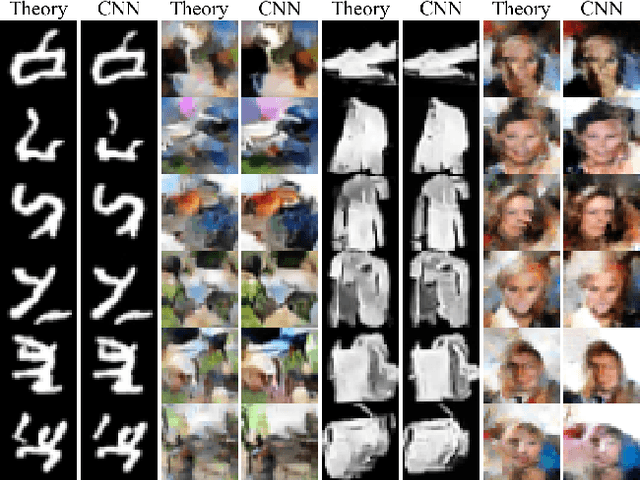
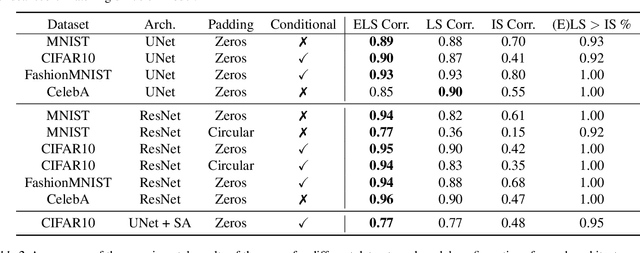
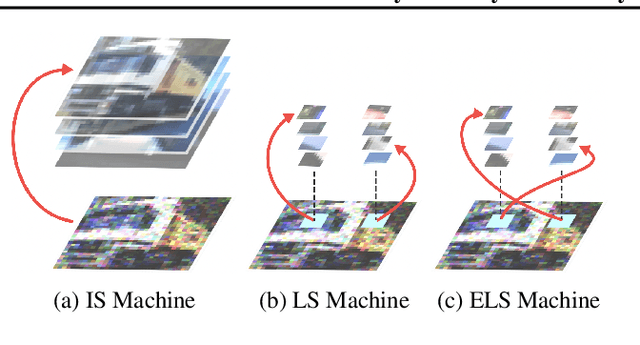
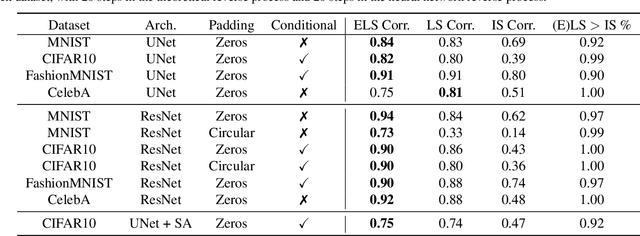
We obtain the first analytic, interpretable and predictive theory of creativity in convolutional diffusion models. Indeed, score-based diffusion models can generate highly creative images that lie far from their training data. But optimal score-matching theory suggests that these models should only be able to produce memorized training examples. To reconcile this theory-experiment gap, we identify two simple inductive biases, locality and equivariance, that: (1) induce a form of combinatorial creativity by preventing optimal score-matching; (2) result in a fully analytic, completely mechanistically interpretable, equivariant local score (ELS) machine that, (3) without any training can quantitatively predict the outputs of trained convolution only diffusion models (like ResNets and UNets) with high accuracy (median $r^2$ of $0.90, 0.91, 0.94$ on CIFAR10, FashionMNIST, and MNIST). Our ELS machine reveals a locally consistent patch mosaic model of creativity, in which diffusion models create exponentially many novel images by mixing and matching different local training set patches in different image locations. Our theory also partially predicts the outputs of pre-trained self-attention enabled UNets (median $r^2 \sim 0.75$ on CIFAR10), revealing an intriguing role for attention in carving out semantic coherence from local patch mosaics.