 Add to Chrome
 Add to Firefox
 Add to Edge
Preliminary Insights in Chronos Frequency Data Understanding and Reconstruction
May 07, 2026
This paper presents a preliminary analysis of the ability of Chronos foundation model to process and internally represent frequency domain information. Foundation models that process time-series data offer practitioners a unified architecture capable of learning generic temporal representations across diverse tasks and domains, reducing the need for task-specific feature engineering and enabling transfer across signal modalities. Despite their growing adoption, the extent to which such models encode fundamental signal properties remains insufficiently characterised. We address this gap by analysing Chronos under controlled conditions, starting from the simplest class of signals: discrete sinusoids generated at fixed frequencies. Using lightweight online minimum description length probes applied to the decoder architecture, we test for the presence and separability of frequency information in the model's internal representations. The results provide insight into how frequential content is captured across the frequency spectrum and highlight regimes in which representation quality may degrade or require particular care. These findings offer practical guidance for users of Chronos in signal processing and information fusion contexts, and contribute to ongoing efforts to improve the interpretability and evaluation of foundation models for temporal data.

Towards Causally Interpretable Wi-Fi CSI-Based Human Activity Recognition with Discrete Latent Compression and LTL Rule Extraction
Apr 24, 2026We address Human Activity Recognition (HAR) utilizing Wi-Fi Channel State Information (CSI) under the joint requirements of causal interpretability, symbolic controllability, and direct operation on high-dimensional raw signals. Deep neural models achieve strong predictive performance on CSI-based HAR (CHAR), yet rely on continuous latent representations that are opaque and difficult to modify; purely symbolic approaches, in contrast, cannot process raw CSI streams. We propose a fully automatic and strictly decoupled pipeline in which CSI magnitude windows are compressed by a categorical variational autoencoder with Gumbel-Softmax latent variables under a capacity-controlled objective, yielding a compact discrete representation. The encoder is then frozen and used as a deterministic mapping to one-hot latent trajectories. Causal discovery is performed on these trajectories to estimate class-conditional temporal dependency graphs. Statistically supported lagged dependencies are translated into Linear Temporal Logic (LTL) rules, producing a fully symbolic and deterministic classifier based solely on rule evaluation and aggregation, without any learned discriminative head. Because rules are defined over discrete latent variables, antenna-specific rule sets can in principle be combined at the symbolic level, enabling structured multi-antenna fusion without retraining the encoder. Results from CHAR Latent Temporal Rule Extraction (CHARL-TRE) indicate competitive performance while preserving explicit temporal and causal structure, showing that deterministic symbolic classification grounded in unsupervised discrete latent representations constitutes a viable alternative to end-to-end black-box models for wireless HAR.
EgoLife: Towards Egocentric Life Assistant
Mar 05, 2025We introduce EgoLife, a project to develop an egocentric life assistant that accompanies and enhances personal efficiency through AI-powered wearable glasses. To lay the foundation for this assistant, we conducted a comprehensive data collection study where six participants lived together for one week, continuously recording their daily activities - including discussions, shopping, cooking, socializing, and entertainment - using AI glasses for multimodal egocentric video capture, along with synchronized third-person-view video references. This effort resulted in the EgoLife Dataset, a comprehensive 300-hour egocentric, interpersonal, multiview, and multimodal daily life dataset with intensive annotation. Leveraging this dataset, we introduce EgoLifeQA, a suite of long-context, life-oriented question-answering tasks designed to provide meaningful assistance in daily life by addressing practical questions such as recalling past relevant events, monitoring health habits, and offering personalized recommendations. To address the key technical challenges of (1) developing robust visual-audio models for egocentric data, (2) enabling identity recognition, and (3) facilitating long-context question answering over extensive temporal information, we introduce EgoButler, an integrated system comprising EgoGPT and EgoRAG. EgoGPT is an omni-modal model trained on egocentric datasets, achieving state-of-the-art performance on egocentric video understanding. EgoRAG is a retrieval-based component that supports answering ultra-long-context questions. Our experimental studies verify their working mechanisms and reveal critical factors and bottlenecks, guiding future improvements. By releasing our datasets, models, and benchmarks, we aim to stimulate further research in egocentric AI assistants.
Approaches to human activity recognition via passive radar
Oct 31, 2024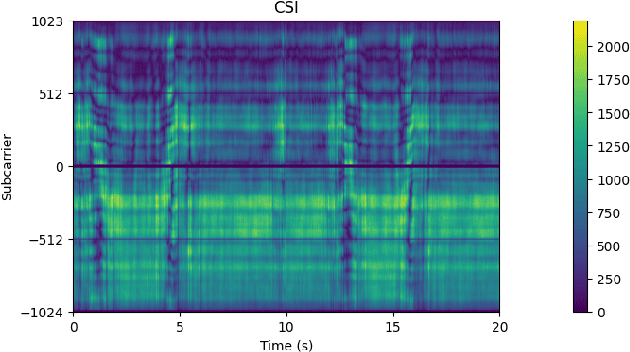
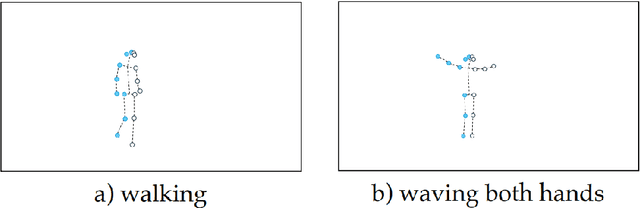
The thesis explores novel methods for Human Activity Recognition (HAR) using passive radar with a focus on non-intrusive Wi-Fi Channel State Information (CSI) data. Traditional HAR approaches often use invasive sensors like cameras or wearables, raising privacy issues. This study leverages the non-intrusive nature of CSI, using Spiking Neural Networks (SNN) to interpret signal variations caused by human movements. These networks, integrated with symbolic reasoning frameworks such as DeepProbLog, enhance the adaptability and interpretability of HAR systems. SNNs offer reduced power consumption, ideal for privacy-sensitive applications. Experimental results demonstrate SNN-based neurosymbolic models achieve high accuracy making them a promising alternative for HAR across various domains.
Neuro-Symbolic Fusion of Wi-Fi Sensing Data for Passive Radar with Inter-Modal Knowledge Transfer
Jul 01, 2024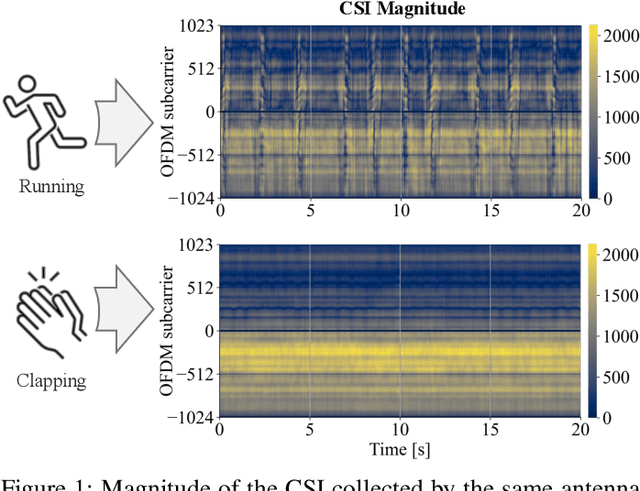
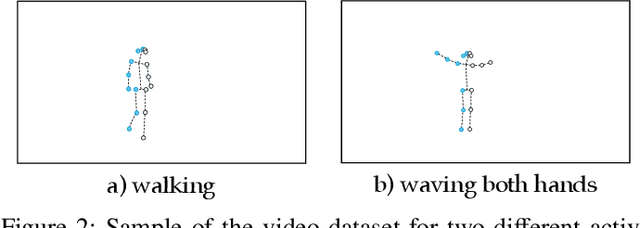
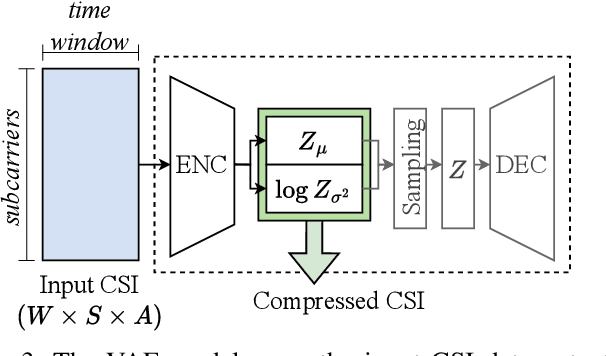
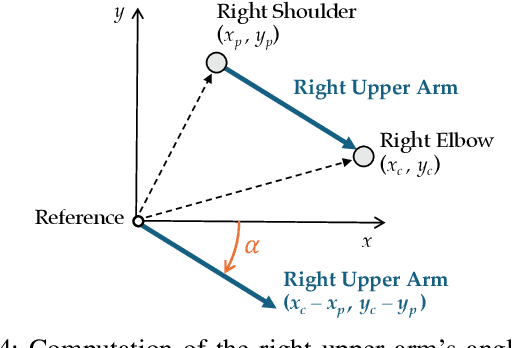
Wi-Fi devices, akin to passive radars, can discern human activities within indoor settings due to the human body's interaction with electromagnetic signals. Current Wi-Fi sensing applications predominantly employ data-driven learning techniques to associate the fluctuations in the physical properties of the communication channel with the human activity causing them. However, these techniques often lack the desired flexibility and transparency. This paper introduces DeepProbHAR, a neuro-symbolic architecture for Wi-Fi sensing, providing initial evidence that Wi-Fi signals can differentiate between simple movements, such as leg or arm movements, which are integral to human activities like running or walking. The neuro-symbolic approach affords gathering such evidence without needing additional specialised data collection or labelling. The training of DeepProbHAR is facilitated by declarative domain knowledge obtained from a camera feed and by fusing signals from various antennas of the Wi-Fi receivers. DeepProbHAR achieves results comparable to the state-of-the-art in human activity recognition. Moreover, as a by-product of the learning process, DeepProbHAR generates specialised classifiers for simple movements that match the accuracy of models trained on finely labelled datasets, which would be particularly costly.
Accurate Passive Radar via an Uncertainty-Aware Fusion of Wi-Fi Sensing Data
Jul 01, 2024Wi-Fi devices can effectively be used as passive radar systems that sense what happens in the surroundings and can even discern human activity. We propose, for the first time, a principled architecture which employs Variational Auto-Encoders for estimating a latent distribution responsible for generating the data, and Evidential Deep Learning for its ability to sense out-of-distribution activities. We verify that the fused data processed by different antennas of the same Wi-Fi receiver results in increased accuracy of human activity recognition compared with the most recent benchmarks, while still being informative when facing out-of-distribution samples and enabling semantic interpretation of latent variables in terms of physical phenomena. The results of this paper are a first contribution toward the ultimate goal of providing a flexible, semantic characterisation of black-swan events, i.e., events for which we have limited to no training data.
Exposing the CSI: A Systematic Investigation of CSI-based Wi-Fi Sensing Capabilities and Limitations
Feb 02, 2023Thanks to the ubiquitous deployment of Wi-Fi hotspots, channel state information (CSI)-based Wi-Fi sensing can unleash game-changing applications in many fields, such as healthcare, security, and entertainment. However, despite one decade of active research on Wi-Fi sensing, most existing work only considers legacy IEEE 802.11n devices, often in particular and strictly-controlled environments. Worse yet, there is a fundamental lack of understanding of the impact on CSI-based sensing of modern Wi-Fi features, such as 160-MHz bandwidth, multiple-input multiple-output (MIMO) transmissions, and increased spectral resolution in IEEE 802.11ax (Wi-Fi 6). This work aims to shed light on the impact of Wi-Fi 6 features on the sensing performance and to create a benchmark for future research on Wi-Fi sensing. To this end, we perform an extensive CSI data collection campaign involving 3 individuals, 3 environments, and 12 activities, using Wi-Fi 6 signals. An anonymized ground truth obtained through video recording accompanies our 80-GB dataset, which contains almost two hours of CSI data from three collectors. We leverage our dataset to dissect the performance of a state-of-the-art sensing framework across different environments and individuals. Our key findings suggest that (i) MIMO transmissions and higher spectral resolution might be more beneficial than larger bandwidth for sensing applications; (ii) there is a pressing need to standardize research on Wi-Fi sensing because the path towards a truly environment-independent framework is still uncertain. To ease the experiments' replicability and address the current lack of Wi-Fi 6 CSI datasets, we release our 80-GB dataset to the community.
Cross-Link Channel Prediction for Massive IoT Networks
Dec 15, 2022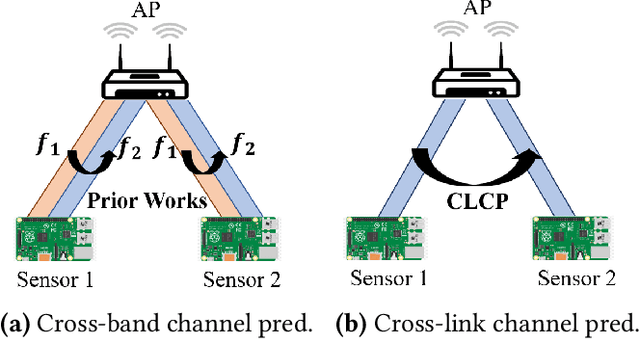
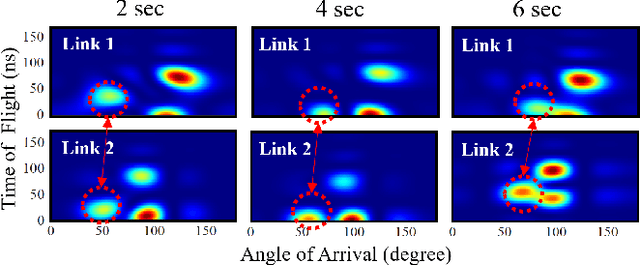
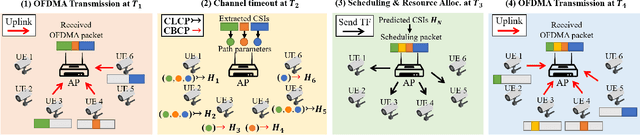
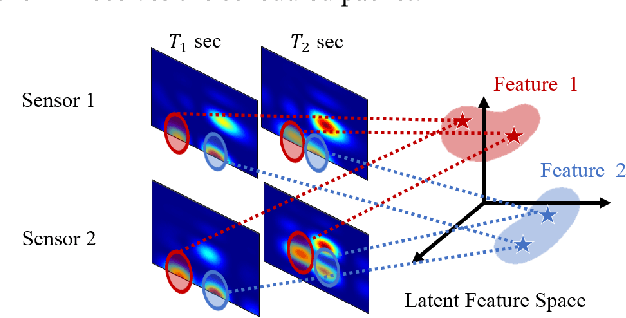
Tomorrow's massive-scale IoT sensor networks are poised to drive uplink traffic demand, especially in areas of dense deployment. To meet this demand, however, network designers leverage tools that often require accurate estimates of Channel State Information (CSI), which incurs a high overhead and thus reduces network throughput. Furthermore, the overhead generally scales with the number of clients, and so is of special concern in such massive IoT sensor networks. While prior work has used transmissions over one frequency band to predict the channel of another frequency band on the same link, this paper takes the next step in the effort to reduce CSI overhead: predict the CSI of a nearby but distinct link. We propose Cross-Link Channel Prediction (CLCP), a technique that leverages multi-view representation learning to predict the channel response of a large number of users, thereby reducing channel estimation overhead further than previously possible. CLCP's design is highly practical, exploiting channel estimates obtained from existing transmissions instead of dedicated channel sounding or extra pilot signals. We have implemented CLCP for two different Wi-Fi versions, namely 802.11n and 802.11ax, the latter being the leading candidate for future IoT networks. We evaluate CLCP in two large-scale indoor scenarios involving both line-of-sight and non-line-of-sight transmissions with up to 144 different 802.11ax users. Moreover, we measure its performance with four different channel bandwidths, from 20 MHz up to 160 MHz. Our results show that CLCP provides a 2x throughput gain over baseline 802.11ax and a 30 percent throughput gain over existing cross-band prediction algorithms.