 Add to Chrome
 Add to Firefox
 Add to Edge
SLAI T-Rex: Full-Parameter Post-training of the DeepSeek-V4 Family on Ascend SuperPOD
Jul 22, 2026
Full-parameter post-training of trillion-parameter-scale MoE models introduces substantial system-level challenges for large-scale distributed training, including severe memory pressure, non-overlapped communication overhead, and inefficient kernel execution. While most large-scale LLM training systems are built around GPU-based clusters, this report presents an end-to-end optimization practice on the Ascend NPU SuperPOD. Using the DeepSeek-V4 model family as the target workload, we develop a hierarchical optimization framework spanning model-level parallelism, computation-communication orchestration, and low-level kernel execution. The resulting system achieves 34.22% Model FLOPs Utilization (MFU) with a 2.93x improvement over the open-source baseline recipe while maintaining training stability. Building on this optimized infrastructure, we further establish a CPT and SFT workflow for complex Operations Research (OR) tasks. We refer to the integrated framework as SLAI T-Rex. Using DeepSeek-V4-Flash, we develop OR-oriented CPT and SFT data pipelines that combine collected domain resources with solver-verified synthetic optimization documents. The resulting dataset contains 10K high-quality SFT samples spanning four task categories and three problem representations. The specialized model achieves the highest average zero-shot Pass@1 score among the evaluated models, reaching 71.81% and outperforming GPT-5.4-Mini and the base DeepSeek-V4-Flash model by 3.98 and 11.27 percentage points, respectively. Overall, this work demonstrates a full-stack pathway from efficient trillion-parameter model post-training on Ascend infra to domain-specialized Flash models for solver-grounded mathematical modeling, advancing frontier-model systems for complex reasoning.

Data Trajectory Alignment for LLM Domain Adaptation: A Two-Phase Synthesis Framework for Telecommunications Mathematics
Nov 10, 2025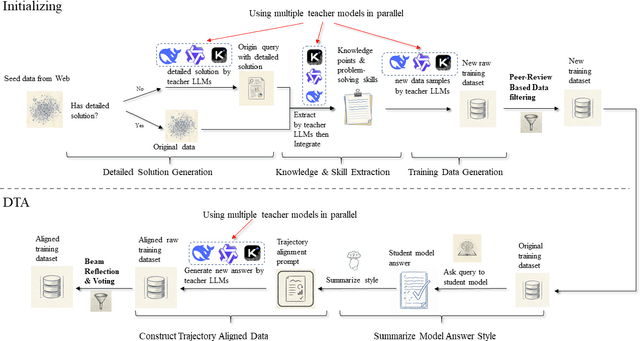
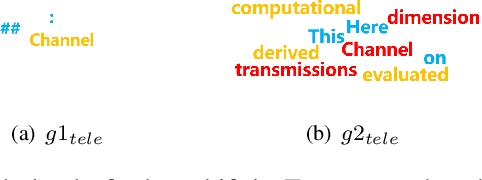
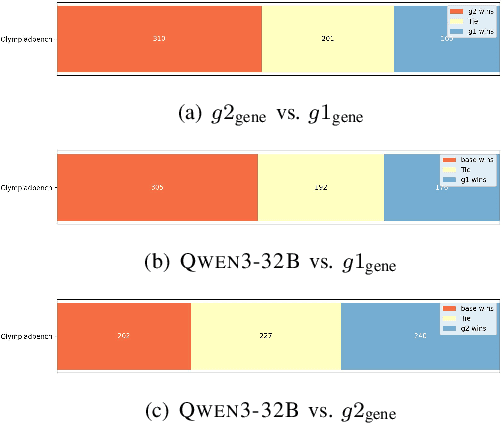
General-purpose large language models (LLMs) are increasingly deployed in verticals such as telecommunications, where adaptation is hindered by scarce, low-information-density corpora and tight mobile/edge constraints. We propose Data Trajectory Alignment (DTA), a two-phase, model-agnostic data curation framework that treats solution processes - not only final answers - as first-class supervision. Phase I (Initializing) synthesizes diverse, high-coverage candidates using an ensemble of strong teachers. Phase II (DTA) rewrites teacher solutions to align intermediate steps and presentation style with the target student's inductive biases and then performs signal-aware exemplar selection via agreement checks and reflection-based judging. Instantiated on telecommunications mathematics (e.g., link budgets, SNR/AMC selection, and power-control feasibility), DTA yields state-of-the-art (SOTA) accuracy on TELEMATH without enabling explicit "thinking" modes: 72.45% pass@1, surpassing distilled-only training by +17.65 points and outperforming a strong baseline (Qwen3-32B with thinking enabled) by +2.94 points. Token-shift analyses indicate that DTA concentrates gains on logical-structural discourse markers rather than merely amplifying domain nouns, indicating improved reasoning scaffolding. Under edge-like inference settings, DTA improves efficiency by reducing reliance on multi-sample voting and disabling expensive reasoning heuristics, cutting energy per output token by ~42% versus Qwen3-32B (thinking mode enabled) and end-to-end latency by ~60% versus Qwen3-32B (thinking mode disabled). These results demonstrate that aligning how solutions are produced enables compact, high-yield supervision that is effective for both accuracy and efficiency, offering a practical recipe for domain adaptation in low-resource verticals beyond telecom.