 Add to Chrome
 Add to Firefox
 Add to Edge
HeartAgent: An Autonomous Agent System for Explainable Differential Diagnosis in Cardiology
Mar 11, 2026
Heart diseases remain a leading cause of morbidity and mortality worldwide, necessitating accurate and trustworthy differential diagnosis. However, existing artificial intelligence-based diagnostic methods are often limited by insufficient cardiology knowledge, inadequate support for complex reasoning, and poor interpretability. Here we present HeartAgent, a cardiology-specific agent system designed to support a reliable and explainable differential diagnosis. HeartAgent integrates customized tools and curated data resources and orchestrates multiple specialized sub-agents to perform complex reasoning while generating transparent reasoning trajectories and verifiable supporting references. Evaluated on the MIMIC dataset and a private electronic health records cohort, HeartAgent achieved over 36% and 20% improvements over established comparative methods, in top-3 diagnostic accuracy, respectively. Additionally, clinicians assisted by HeartAgent demonstrated gains of 26.9% in diagnostic accuracy and 22.7% in explanatory quality compared with unaided experts. These results demonstrate that HeartAgent provides reliable, explainable, and clinically actionable decision support for cardiovascular care.

Data-Adaptive Discriminative Feature Localization with Statistically Guaranteed Interpretation
Nov 18, 2022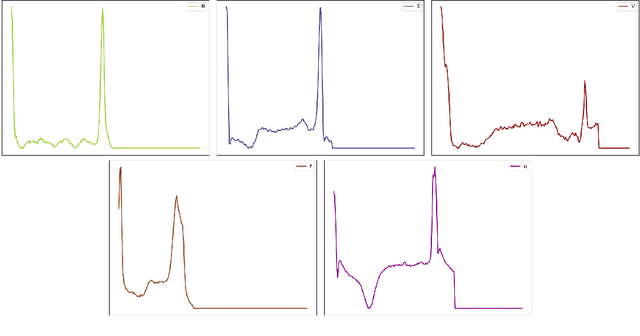
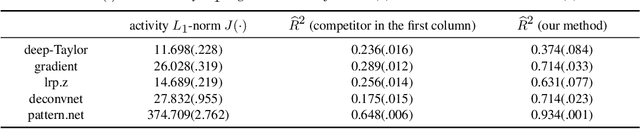
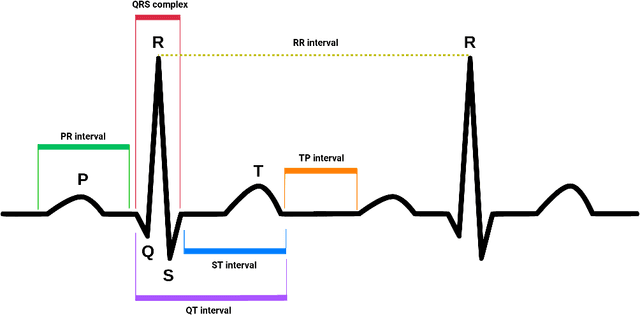

In explainable artificial intelligence, discriminative feature localization is critical to reveal a blackbox model's decision-making process from raw data to prediction. In this article, we use two real datasets, the MNIST handwritten digits and MIT-BIH Electrocardiogram (ECG) signals, to motivate key characteristics of discriminative features, namely adaptiveness, predictive importance and effectiveness. Then, we develop a localization framework based on adversarial attacks to effectively localize discriminative features. In contrast to existing heuristic methods, we also provide a statistically guaranteed interpretability of the localized features by measuring a generalized partial $R^2$. We apply the proposed method to the MNIST dataset and the MIT-BIH dataset with a convolutional auto-encoder. In the first, the compact image regions localized by the proposed method are visually appealing. Similarly, in the second, the identified ECG features are biologically plausible and consistent with cardiac electrophysiological principles while locating subtle anomalies in a QRS complex that may not be discernible by the naked eye. Overall, the proposed method compares favorably with state-of-the-art competitors. Accompanying this paper is a Python library dnn-locate (https://dnn-locate.readthedocs.io/en/latest/) that implements the proposed approach.
* 27 pages, 11 figures