 Add to Chrome
 Add to Firefox
 Add to Edge
RealityBridge: Bridging Editable 3D Gaussian Splatting Driving Simulations and Real-World Videos
Jun 15, 2026
Long-tail hazardous scenarios are essential for safety-oriented autonomous driving, yet they are difficult to collect and reproduce at scale. Editable 3D Gaussian Splatting (3DGS) simulation offers a promising alternative by reconstructing real driving scenes and supporting controllable scene editing. However, edited 3DGS-rendered videos still suffer from a significant Sim-to-Real gap, including rendering artifacts, degraded foreground assets, inconsistent illumination, and temporal flickering. Existing restoration and video generation methods are insufficient for this task, as they often fail to jointly repair 3DGS-specific artifacts, improve visual realism, and ensure temporal consistency. To fill this gap, we propose RealityBridge, a structure-preserving and asset-aware Sim-to-Real framework for edited 3DGS driving videos. RealityBridge uses multimodal controls, including rendered videos, foreground masks, edge maps, and semantic masks, together with a lightweight GateNet for adaptive condition allocation across backbone layers. We further construct targeted training data and introduce autoregressive long-video training with reward-guided post-training to improve restoration quality, temporal stability, and hallucination suppression. Extensive experiments on internal and public driving datasets show that RealityBridge outperforms existing methods in artifact removal, illumination harmonization, and long-sequence temporal consistency.

Learning-Based Joint Antenna Selection and Precoding Design for Cell-Free MIMO Networks
Apr 12, 2024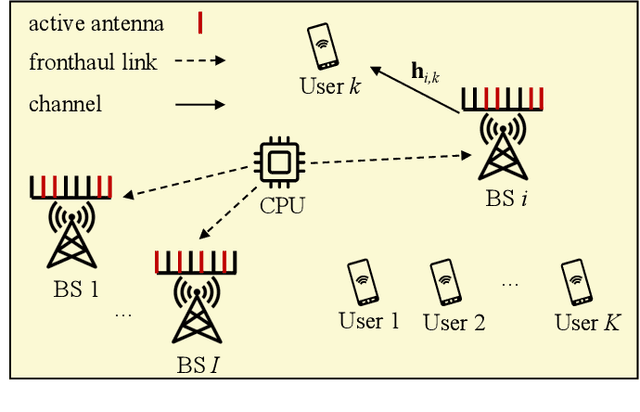
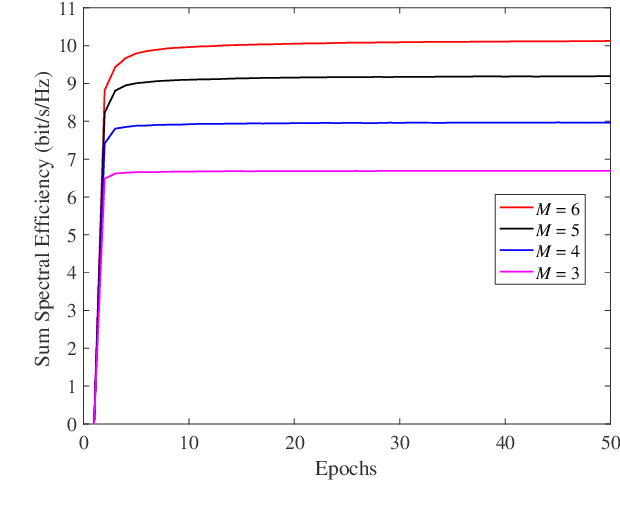
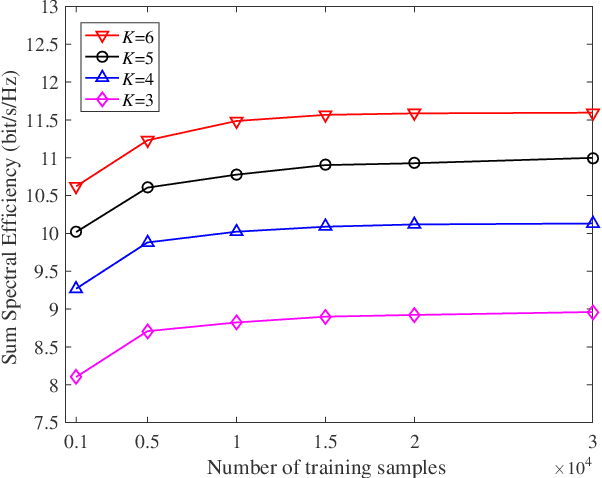
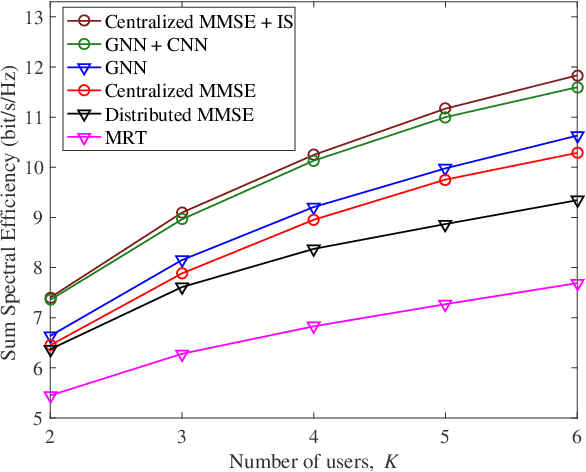
This paper considers a downlink cell-free multiple-input multiple-output (MIMO) network in which multiple multi-antenna base stations (BSs) serve multiple users via coherent joint transmission. In order to reduce the energy consumption by radio frequency components, each BS selects a subset of antennas for downlink data transmission after estimating the channel state information (CSI). We aim to maximize the sum spectral efficiency by jointly optimizing the antenna selection and precoding design. To alleviate the fronthaul overhead and enable real-time network operation, we propose a distributed scalable machine learning algorithm. In particular, at each BS, we deploy a convolutional neural network (CNN) for antenna selection and a graph neural network (GNN) for precoding design. Different from conventional centralized solutions that require a large amount of CSI and signaling exchange among the BSs, the proposed distributed machine learning algorithm takes only locally estimated CSI as input. With well-trained learning models, it is shown that the proposed algorithm significantly outperforms the distributed baseline schemes and achieves a sum spectral efficiency comparable to its centralized counterpart.