 Add to Chrome
 Add to Firefox
 Add to Edge
Spatio-Sequential Recurrent Network for 3-D Tunnel Propagation Modeling
Jun 06, 2026
Fine-mesh parabolic wave equation (PWE) simulations are high-fidelity but time-consuming, which limits real-time tunnel propagation analysis and motivates coarse-to-fine reconstruction. Existing machine learning (ML)-assisted tunnel models typically provide only one-dimensional (1-D) longitudinal refinement or two-dimensional (2-D) cross-sectional refinement, rather than joint 3-D enhancement. Motivated by this gap, this letter proposes a U-shaped gated spatio-sequential recurrent neural network (UG-SSRNN), a spatio-sequential reconstruction model for tunnel electromagnetic fields. UG-SSRNN jointly super-resolves transverse slices and models longitudinal evolution. It uses sliding-window context encoding and a K-layer convolutional recurrent backbone with a shared propagation-context state and diagonal feedback. A prediction-aware upsampling head leverages the previous prediction to improve slice-to-slice consistency. Experiments on four tunnel cross sections, unseen-material and unseen-frequency tests, and validation in the Massif Central tunnel show close agreement with fine-mesh PWE references. The proposed approach significantly reduces tunnel electromagnetic modeling time.

Enhancing Code LLMs with Reinforcement Learning in Code Generation
Dec 29, 2024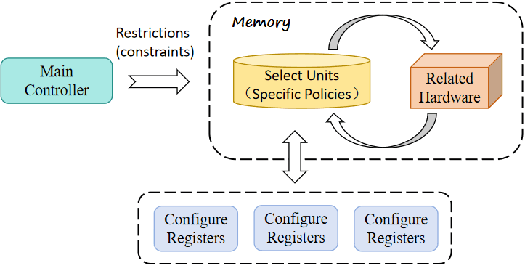
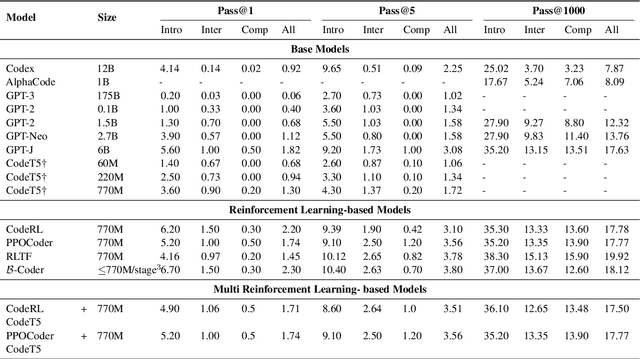
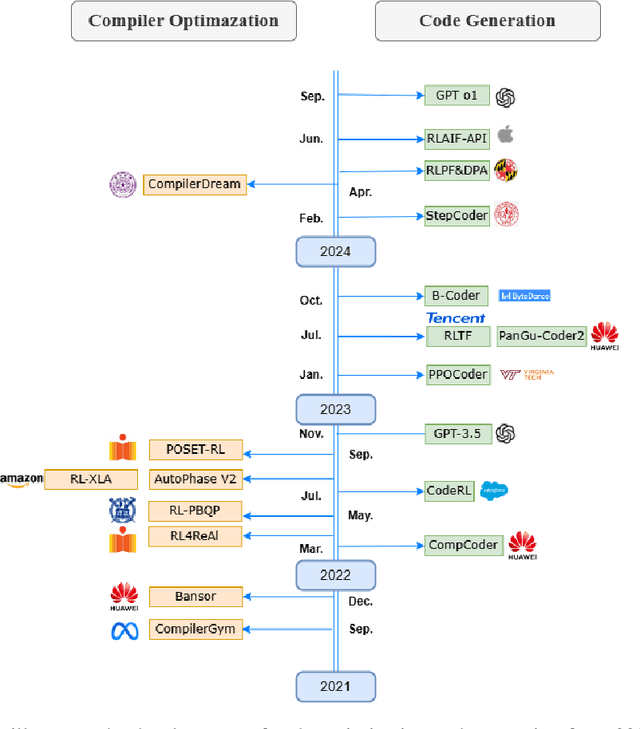
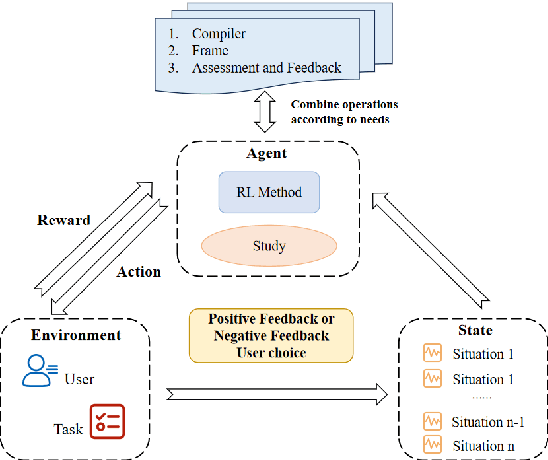
With the rapid evolution of large language models (LLM), reinforcement learning (RL) has emerged as a pivotal technique for code generation and optimization in various domains. This paper presents a systematic survey of the application of RL in code optimization and generation, highlighting its role in enhancing compiler optimization, resource allocation, and the development of frameworks and tools. Subsequent sections first delve into the intricate processes of compiler optimization, where RL algorithms are leveraged to improve efficiency and resource utilization. The discussion then progresses to the function of RL in resource allocation, emphasizing register allocation and system optimization. We also explore the burgeoning role of frameworks and tools in code generation, examining how RL can be integrated to bolster their capabilities. This survey aims to serve as a comprehensive resource for researchers and practitioners interested in harnessing the power of RL to advance code generation and optimization techniques.