 Add to Chrome
 Add to Firefox
 Add to Edge
Collaborative Temporal Feature Generation via Critic-Free Reinforcement Learning for Cross-User Sensor-Based Activity Recognition
Mar 17, 2026
Human Activity Recognition using wearable inertial sensors is foundational to healthcare monitoring, fitness analytics, and context-aware computing, yet its deployment is hindered by cross-user variability arising from heterogeneous physiological traits, motor habits, and sensor placements. Existing domain generalization approaches either neglect temporal dependencies in sensor streams or depend on impractical target-domain annotations. We propose a different paradigm: modeling generalizable feature extraction as a collaborative sequential generation process governed by reinforcement learning. Our framework, CTFG (Collaborative Temporal Feature Generation), employs a Transformer-based autoregressive generator that incrementally constructs feature token sequences, each conditioned on prior context and the encoded sensor input. The generator is optimized via Group-Relative Policy Optimization, a critic-free algorithm that evaluates each generated sequence against a cohort of alternatives sampled from the same input, deriving advantages through intra-group normalization rather than learned value estimation. This design eliminates the distribution-dependent bias inherent in critic-based methods and provides self-calibrating optimization signals that remain stable across heterogeneous user distributions. A tri-objective reward comprising class discrimination, cross-user invariance, and temporal fidelity jointly shapes the feature space to separate activities, align user distributions, and preserve fine-grained temporal content. Evaluations on the DSADS and PAMAP2 benchmarks demonstrate state-of-the-art cross-user accuracy (88.53\% and 75.22\%), substantial reduction in inter-task training variance, accelerated convergence, and robust generalization under varying action-space dimensionalities.

Domain-Adversarial Anatomical Graph Networks for Cross-User Human Activity Recognition
May 08, 2025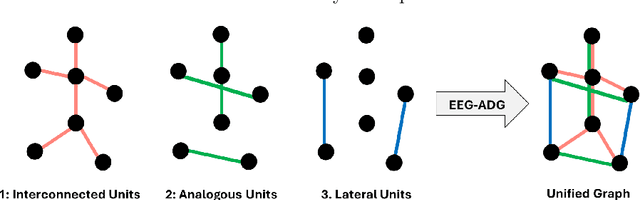
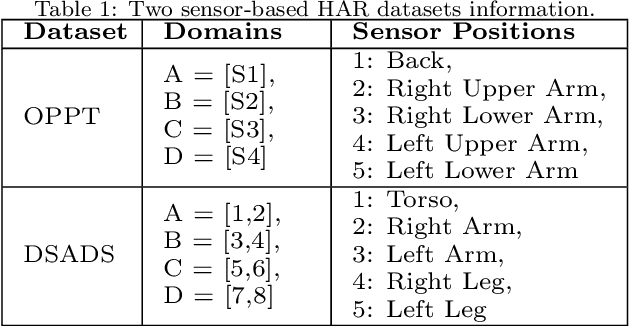
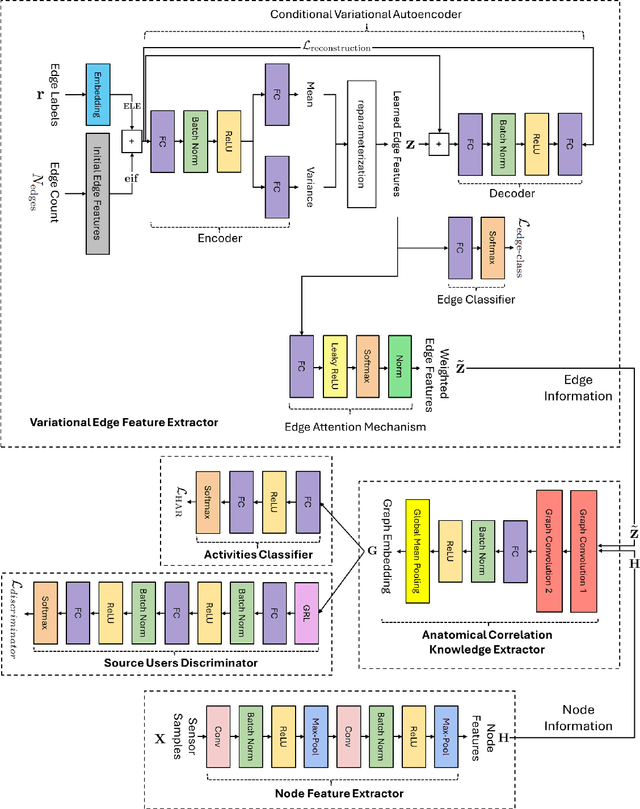
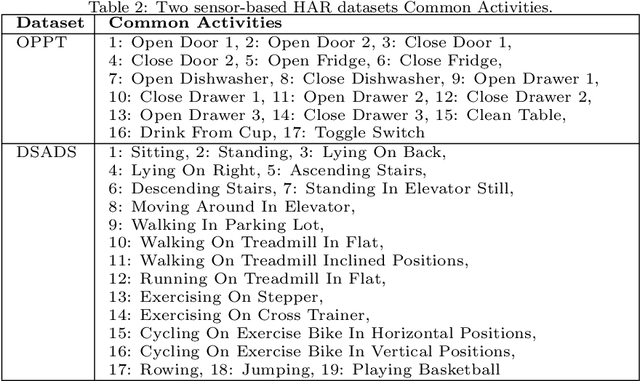
Cross-user variability in Human Activity Recognition (HAR) remains a critical challenge due to differences in sensor placement, body dynamics, and behavioral patterns. Traditional methods often fail to capture biomechanical invariants that persist across users, limiting their generalization capability. We propose an Edge-Enhanced Graph-Based Adversarial Domain Generalization (EEG-ADG) framework that integrates anatomical correlation knowledge into a unified graph neural network (GNN) architecture. By modeling three biomechanically motivated relationships together-Interconnected Units, Analogous Units, and Lateral Units-our method encodes domain-invariant features while addressing user-specific variability through Variational Edge Feature Extractor. A Gradient Reversal Layer (GRL) enforces adversarial domain generalization, ensuring robustness to unseen users. Extensive experiments on OPPORTUNITY and DSADS datasets demonstrate state-of-the-art performance. Our work bridges biomechanical principles with graph-based adversarial learning by integrating information fusion techniques. This fusion of information underpins our unified and generalized model for cross-user HAR.
HAR-DoReMi: Optimizing Data Mixture for Self-Supervised Human Activity Recognition Across Heterogeneous IMU Datasets
Mar 16, 2025Cross-dataset Human Activity Recognition (HAR) suffers from limited model generalization, hindering its practical deployment. To address this critical challenge, inspired by the success of DoReMi in Large Language Models (LLMs), we introduce a data mixture optimization strategy for pre-training HAR models, aiming to improve the recognition performance across heterogeneous datasets. However, directly applying DoReMi to the HAR field encounters new challenges due to the continuous, multi-channel and intrinsic heterogeneous characteristics of IMU sensor data. To overcome these limitations, we propose a novel framework HAR-DoReMi, which introduces a masked reconstruction task based on Mean Squared Error (MSE) loss. By raplacing the discrete language sequence prediction task, which relies on the Negative Log-Likelihood (NLL) loss, in the original DoReMi framework, the proposed framework is inherently more appropriate for handling the continuous and multi-channel characteristics of IMU data. In addition, HAR-DoReMi integrates the Mahony fusion algorithm into the self-supervised HAR pre-training, aiming to mitigate the heterogeneity of varying sensor orientation. This is achieved by estimating the sensor orientation within each dataset and facilitating alignment with a unified coordinate system, thereby improving the cross-dataset generalization ability of the HAR model. Experimental evaluation on multiple cross-dataset HAR transfer tasks demonstrates that HAR-DoReMi improves the accuracy by an average of 6.51%, compared to the current state-of-the-art method with only approximately 30% to 50% of the data usage. These results confirm the effectiveness of HAR-DoReMi in improving the generalization and data efficiency of pre-training HAR models, underscoring its significant potential to facilitate the practical deployment of HAR technology.
Trustworthy Federated Learning: Privacy, Security, and Beyond
Nov 03, 2024

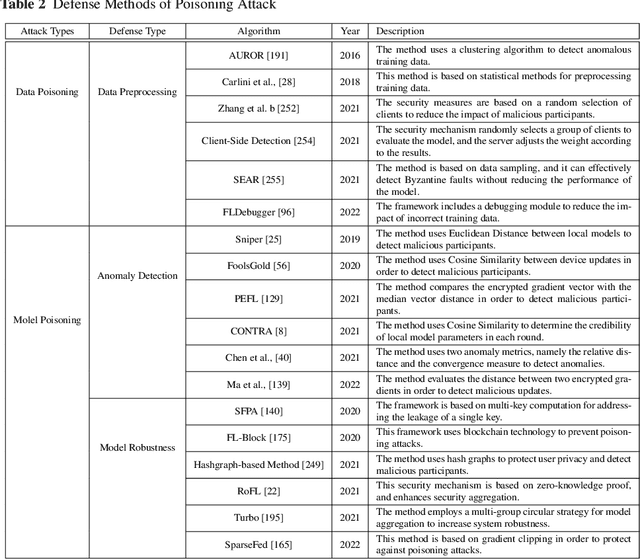

While recent years have witnessed the advancement in big data and Artificial Intelligence (AI), it is of much importance to safeguard data privacy and security. As an innovative approach, Federated Learning (FL) addresses these concerns by facilitating collaborative model training across distributed data sources without transferring raw data. However, the challenges of robust security and privacy across decentralized networks catch significant attention in dealing with the distributed data in FL. In this paper, we conduct an extensive survey of the security and privacy issues prevalent in FL, underscoring the vulnerability of communication links and the potential for cyber threats. We delve into various defensive strategies to mitigate these risks, explore the applications of FL across different sectors, and propose research directions. We identify the intricate security challenges that arise within the FL frameworks, aiming to contribute to the development of secure and efficient FL systems.
Adversarial Domain Adaptation for Cross-user Activity Recognition Using Diffusion-based Noise-centred Learning
Aug 06, 2024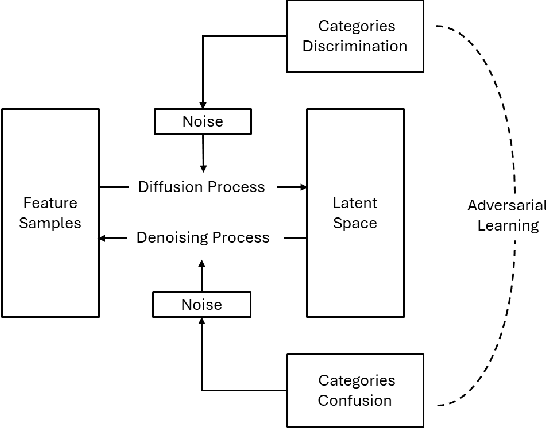
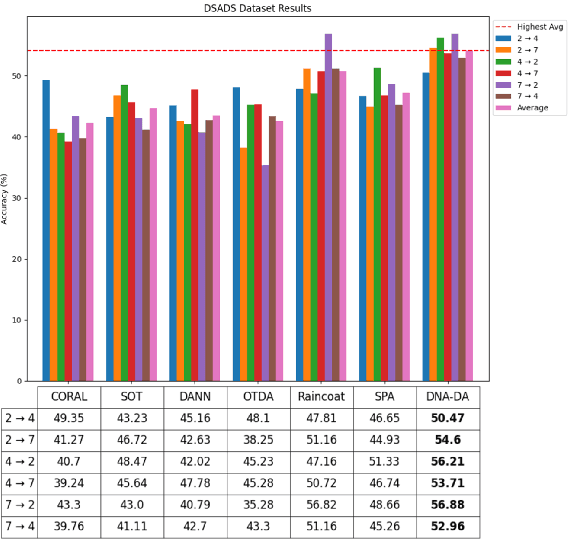
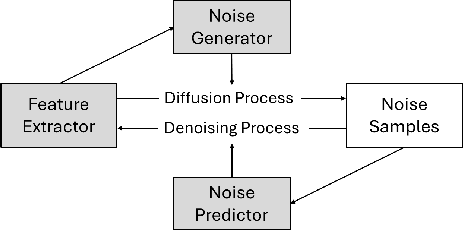
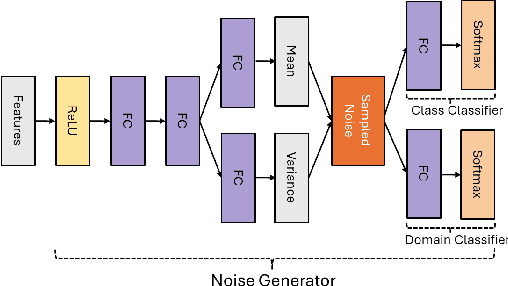
Human Activity Recognition (HAR) plays a crucial role in various applications such as human-computer interaction and healthcare monitoring. However, challenges persist in HAR models due to the data distribution differences between training and real-world data distributions, particularly evident in cross-user scenarios. This paper introduces a novel framework, termed Diffusion-based Noise-centered Adversarial Learning Domain Adaptation (Diff-Noise-Adv-DA), designed to address these challenges by leveraging generative diffusion modeling and adversarial learning techniques. Traditional HAR models often struggle with the diversity of user behaviors and sensor data distributions. Diff-Noise-Adv-DA innovatively integrates the inherent noise within diffusion models, harnessing its latent information to enhance domain adaptation. Specifically, the framework transforms noise into a critical carrier of activity and domain class information, facilitating robust classification across different user domains. Experimental evaluations demonstrate the effectiveness of Diff-Noise-Adv-DA in improving HAR model performance across different users, surpassing traditional domain adaptation methods. The framework not only mitigates distribution mismatches but also enhances data quality through noise-based denoising techniques.