 Add to Chrome
 Add to Firefox
 Add to Edge
Controlling Implicit Shortcut Reliance in L2 Spoken English Auto-markers
Jul 17, 2026
Increasingly, speech and language processing tasks take either audio or text directly rather than extracting features from these as the input to the classifier or regressor. Often these systems make use of complex, for example transformer-based, processes that have the ability to derive highly non-linear mappings between the input and the output. Unfortunately these systems can also learn ''shortcuts'' where the classifier is overly reliant on particular aspects of the input to yield the output. For the task of language proficiency assessment, this over-reliance can enable learners to increase their score by exploiting the shortcut rather than improving their ability. This paper introduces a novel training criterion that is able to reduce the classifier's reliance on shortcuts, thus for example limiting this option for malpractice in language assessment. This process is illustrated on two forms of assessment system, one based on the audio the other on the speech recognition text. The results show that, for both systems, there is higher correlations with features that could be exploited for malpractice than expected from the human reference, indicating an over-reliance on these features. By introducing the modified training criterion, this correlation can be reduced to be closer to the reference correlation.

Data Augmentation for L2 English Speaking Assessment using TTS
Jul 12, 2026Automated assessment of second language (L2) speaking proficiency relies on large-scale annotated speech data, which remains scarce compared to widely available written learner corpora. A promising direction for addressing this imbalance is to use text-to-speech (TTS) and voice cloning to convert written L2 production into synthetic speech. However, written and spoken L2 differ fundamentally: spontaneous speech includes disfluencies and discourse markers, while writing is more planned and complex. This raises the question of what is required to generate synthetic L2 speech suitable for assessment. We address this through a systematic analysis of speaker-text relationships using COREFL, a publicly available corpus containing paired spoken and written responses from the same L2 learners to the same questions across modalities. In our proposed framework, we first address the structural differences between written and spoken language by transforming written responses into spoken-style transcripts ("speechification") using a large language model. These transcripts are then converted into speech using a TTS/voice-cloning model. To assign a voice to each synthetic response, we investigate different speaker-text pairing strategies based on shared learner attributes (proficiency level, first language, both, or neither). We evaluate our data augmentation techniques on the language assessment task, with improvements shown in both wav2vec2 (audio-based) and ModernBERT (text-based) scoring systems. Results show that matching speakers and texts by proficiency level yields the most robust synthetic speech. Moreover, raw written text leads to a strong mismatch with spoken language, while speechification substantially reduces this gap and improves grading performance.
Who can we trust? LLM-as-a-jury for Comparative Assessment
Feb 18, 2026Large language models (LLMs) are increasingly applied as automatic evaluators for natural language generation assessment often using pairwise comparative judgements. Existing approaches typically rely on single judges or aggregate multiple judges assuming equal reliability. In practice, LLM judges vary substantially in performance across tasks and aspects, and their judgment probabilities may be biased and inconsistent. Furthermore, human-labelled supervision for judge calibration may be unavailable. We first empirically demonstrate that inconsistencies in LLM comparison probabilities exist and show that it limits the effectiveness of direct probability-based ranking. To address this, we study the LLM-as-a-jury setting and propose BT-sigma, a judge-aware extension of the Bradley-Terry model that introduces a discriminator parameter for each judge to jointly infer item rankings and judge reliability from pairwise comparisons alone. Experiments on benchmark NLG evaluation datasets show that BT-sigma consistently outperforms averaging-based aggregation methods, and that the learned discriminator strongly correlates with independent measures of the cycle consistency of LLM judgments. Further analysis reveals that BT-sigma can be interpreted as an unsupervised calibration mechanism that improves aggregation by modelling judge reliability.
Scaling and Prompting for Improved End-to-End Spoken Grammatical Error Correction
May 27, 2025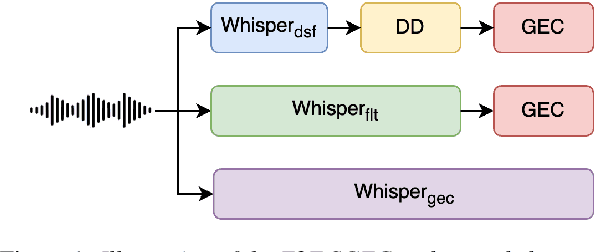
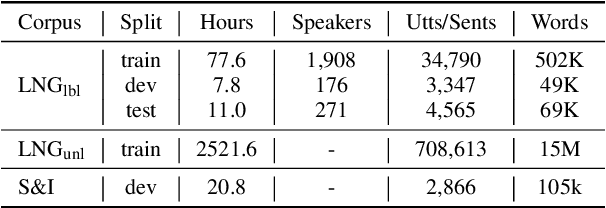
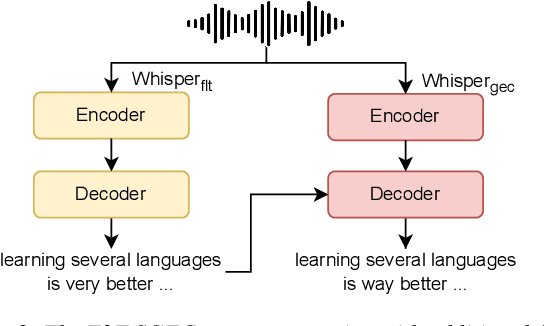
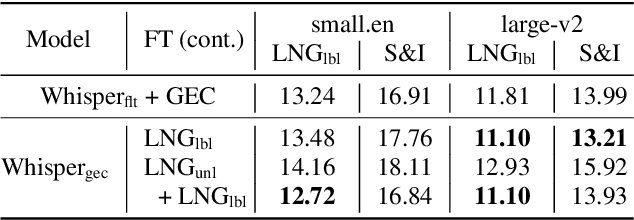
Spoken Grammatical Error Correction (SGEC) and Feedback (SGECF) are crucial for second language learners, teachers and test takers. Traditional SGEC systems rely on a cascaded pipeline consisting of an ASR, a module for disfluency detection (DD) and removal and one for GEC. With the rise of end-to-end (E2E) speech foundation models, we investigate their effectiveness in SGEC and feedback generation. This work introduces a pseudo-labelling process to address the challenge of limited labelled data, expanding the training data size from 77 hours to approximately 2500 hours, leading to improved performance. Additionally, we prompt an E2E Whisper-based SGEC model with fluent transcriptions, showing a slight improvement in SGEC performance, with more significant gains in feedback generation. Finally, we assess the impact of increasing model size, revealing that while pseudo-labelled data does not yield performance gain for a larger Whisper model, training with prompts proves beneficial.
Assessment of L2 Oral Proficiency using Speech Large Language Models
May 27, 2025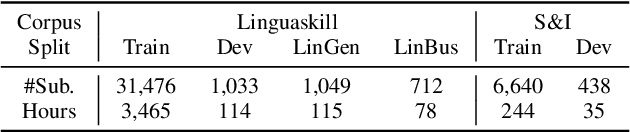
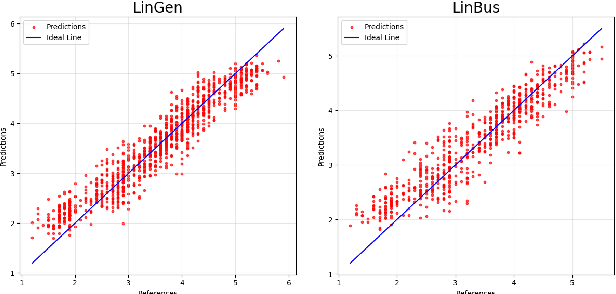
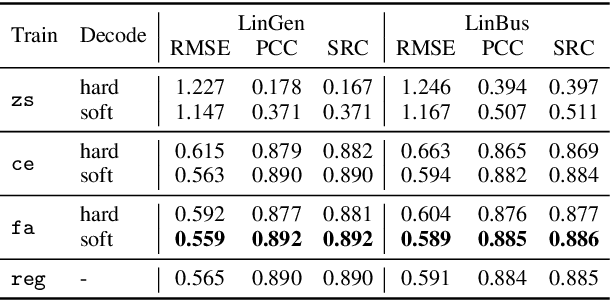

The growing population of L2 English speakers has increased the demand for developing automatic graders for spoken language assessment (SLA). Historically, statistical models, text encoders, and self-supervised speech models have been utilised for this task. However, cascaded systems suffer from the loss of information, while E2E graders also have limitations. With the recent advancements of multi-modal large language models (LLMs), we aim to explore their potential as L2 oral proficiency graders and overcome these issues. In this work, we compare various training strategies using regression and classification targets. Our results show that speech LLMs outperform all previous competitive baselines, achieving superior performance on two datasets. Furthermore, the trained grader demonstrates strong generalisation capabilities in the cross-part or cross-task evaluation, facilitated by the audio understanding knowledge acquired during LLM pre-training.
Training Articulatory Inversion Models for Inter-Speaker Consistency
May 26, 2025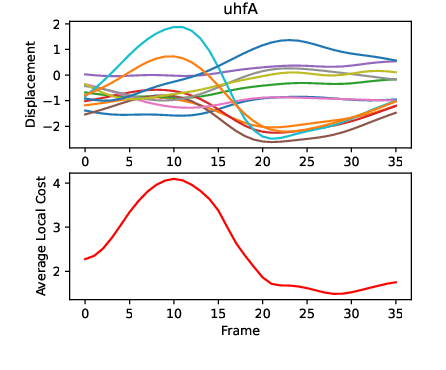
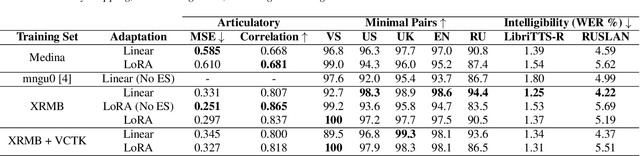
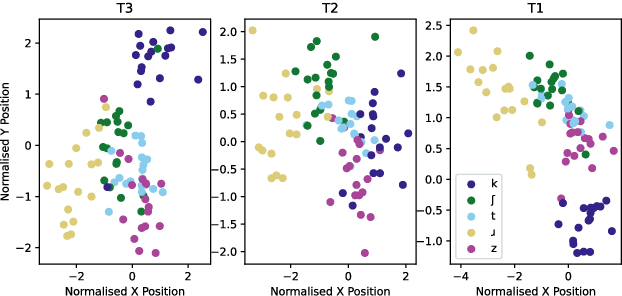
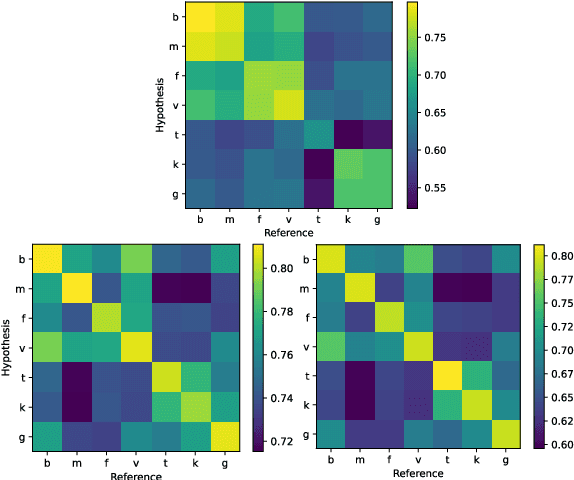
Acoustic-to-Articulatory Inversion (AAI) attempts to model the inverse mapping from speech to articulation. Exact articulatory prediction from speech alone may be impossible, as speakers can choose different forms of articulation seemingly without reference to their vocal tract structure. However, once a speaker has selected an articulatory form, their productions vary minimally. Recent works in AAI have proposed adapting Self-Supervised Learning (SSL) models to single-speaker datasets, claiming that these single-speaker models provide a universal articulatory template. In this paper, we investigate whether SSL-adapted models trained on single and multi-speaker data produce articulatory targets which are consistent across speaker identities for English and Russian. We do this through the use of a novel evaluation method which extracts articulatory targets using minimal pair sets. We also present a training method which can improve inter-speaker consistency using only speech data.
Learn and Don't Forget: Adding a New Language to ASR Foundation Models
Jul 09, 2024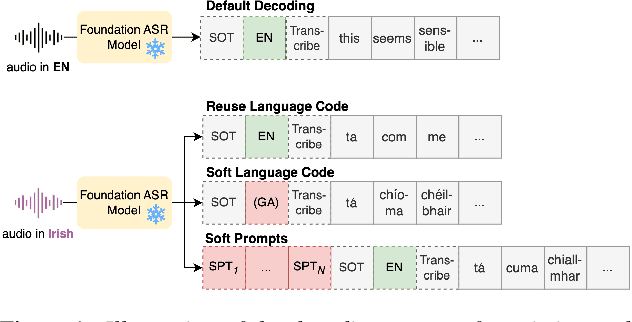


Foundation ASR models often support many languages, e.g. 100 languages in Whisper. However, there has been limited work on integrating an additional, typically low-resource, language, while maintaining performance on the original language set. Fine-tuning, while simple, may degrade the accuracy of the original set. We compare three approaches that exploit adaptation parameters: soft language code tuning, train only the language code; soft prompt tuning, train prepended tokens; and LoRA where a small set of additional parameters are optimised. Elastic Weight Consolidation (EWC) offers an alternative compromise with the potential to maintain performance in specific target languages. Results show that direct fine-tuning yields the best performance for the new language but degrades existing language capabilities. EWC can address this issue for specific languages. If only adaptation parameters are used, the language capabilities are maintained but at the cost of performance in the new language.
Can GPT-4 do L2 analytic assessment?
Apr 29, 2024Automated essay scoring (AES) to evaluate second language (L2) proficiency has been a firmly established technology used in educational contexts for decades. Although holistic scoring has seen advancements in AES that match or even exceed human performance, analytic scoring still encounters issues as it inherits flaws and shortcomings from the human scoring process. The recent introduction of large language models presents new opportunities for automating the evaluation of specific aspects of L2 writing proficiency. In this paper, we perform a series of experiments using GPT-4 in a zero-shot fashion on a publicly available dataset annotated with holistic scores based on the Common European Framework of Reference and aim to extract detailed information about their underlying analytic components. We observe significant correlations between the automatically predicted analytic scores and multiple features associated with the individual proficiency components.
Investigating the Emergent Audio Classification Ability of ASR Foundation Models
Nov 15, 2023


Text and vision foundation models can perform many tasks in a zero-shot setting, a desirable property that enables these systems to be applied in general and low-resource settings. However, there has been significantly less work on the zero-shot abilities of ASR foundation models, with these systems typically fine-tuned to specific tasks or constrained to applications that match their training criterion and data annotation. In this work we investigate the ability of Whisper and MMS, ASR foundation models trained primarily for speech recognition, to perform zero-shot audio classification. We use simple template-based text prompts at the decoder and use the resulting decoding probabilities to generate zero-shot predictions. Without training the model on extra data or adding any new parameters, we demonstrate that Whisper shows promising zero-shot classification performance on a range of 8 audio-classification datasets, outperforming existing state-of-the-art zero-shot baseline's accuracy by an average of 9%. One important step to unlock the emergent ability is debiasing, where a simple unsupervised reweighting method of the class probabilities yields consistent significant performance gains. We further show that performance increases with model size, implying that as ASR foundation models scale up, they may exhibit improved zero-shot performance.
Towards End-to-End Spoken Grammatical Error Correction
Nov 09, 2023Grammatical feedback is crucial for L2 learners, teachers, and testers. Spoken grammatical error correction (GEC) aims to supply feedback to L2 learners on their use of grammar when speaking. This process usually relies on a cascaded pipeline comprising an ASR system, disfluency removal, and GEC, with the associated concern of propagating errors between these individual modules. In this paper, we introduce an alternative "end-to-end" approach to spoken GEC, exploiting a speech recognition foundation model, Whisper. This foundation model can be used to replace the whole framework or part of it, e.g., ASR and disfluency removal. These end-to-end approaches are compared to more standard cascaded approaches on the data obtained from a free-speaking spoken language assessment test, Linguaskill. Results demonstrate that end-to-end spoken GEC is possible within this architecture, but the lack of available data limits current performance compared to a system using large quantities of text-based GEC data. Conversely, end-to-end disfluency detection and removal, which is easier for the attention-based Whisper to learn, does outperform cascaded approaches. Additionally, the paper discusses the challenges of providing feedback to candidates when using end-to-end systems for spoken GEC.