 Add to Chrome
 Add to Firefox
 Add to Edge
Cortex 2.0: Grounding World Models in Real-World Industrial Deployment
Apr 22, 2026
Industrial robotic manipulation demands reliable long-horizon execution across embodiments, tasks, and changing object distributions. While Vision-Language-Action models have demonstrated strong generalization, they remain fundamentally reactive. By optimizing the next action given the current observation without evaluating potential futures, they are brittle to the compounding failure modes of long-horizon tasks. Cortex 2.0 shifts from reactive control to plan-and-act by generating candidate future trajectories in visual latent space, scoring them for expected success and efficiency, then committing only to the highest-scoring candidate. We evaluate Cortex 2.0 on a single-arm and dual-arm manipulation platform across four tasks of increasing complexity: pick and place, item and trash sorting, screw sorting, and shoebox unpacking. Cortex 2.0 consistently outperforms state-of-the-art Vision-Language-Action baselines, achieving the best results across all tasks. The system remains reliable in unstructured environments characterized by heavy clutter, frequent occlusions, and contact-rich manipulation, where reactive policies fail. These results demonstrate that world-model-based planning can operate reliably in complex industrial environments.

Physically-Based Photometric Bundle Adjustment in Non-Lambertian Environments
Sep 18, 2024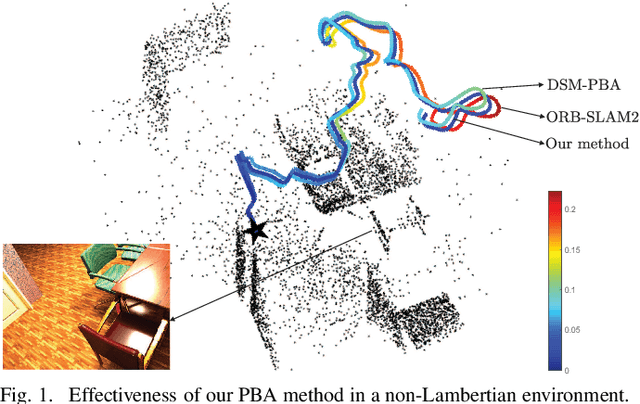
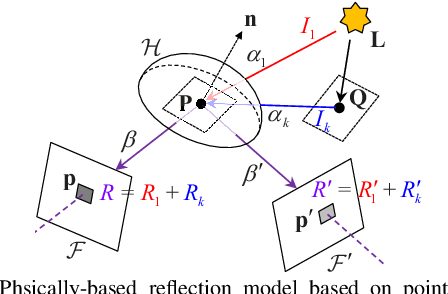
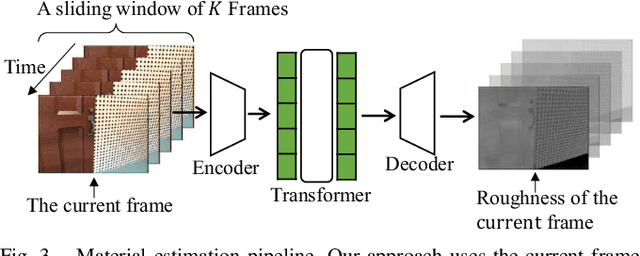
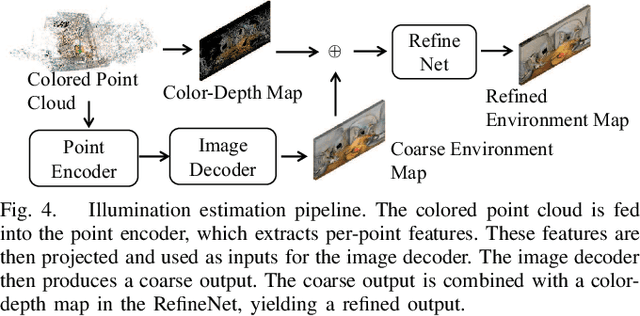
Photometric bundle adjustment (PBA) is widely used in estimating the camera pose and 3D geometry by assuming a Lambertian world. However, the assumption of photometric consistency is often violated since the non-diffuse reflection is common in real-world environments. The photometric inconsistency significantly affects the reliability of existing PBA methods. To solve this problem, we propose a novel physically-based PBA method. Specifically, we introduce the physically-based weights regarding material, illumination, and light path. These weights distinguish the pixel pairs with different levels of photometric inconsistency. We also design corresponding models for material estimation based on sequential images and illumination estimation based on point clouds. In addition, we establish the first SLAM-related dataset of non-Lambertian scenes with complete ground truth of illumination and material. Extensive experiments demonstrated that our PBA method outperforms existing approaches in accuracy.
Spatio-Temporal Neural Network for Fitting and Forecasting COVID-19
Mar 22, 2021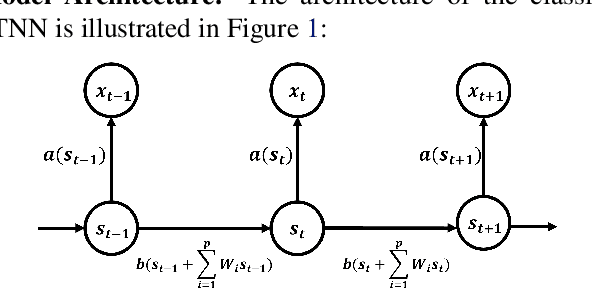
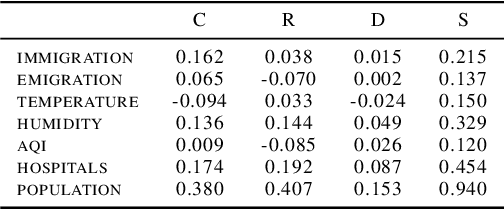
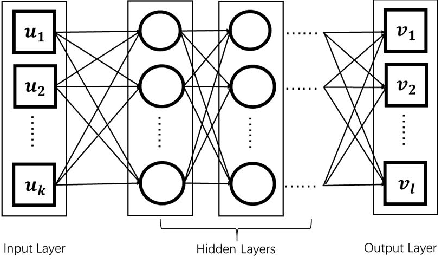
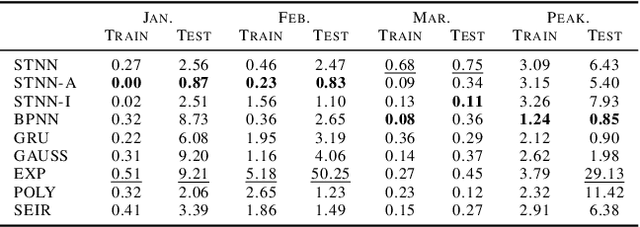
We established a Spatio-Temporal Neural Network, namely STNN, to forecast the spread of the coronavirus COVID-19 outbreak worldwide in 2020. The basic structure of STNN is similar to the Recurrent Neural Network (RNN) incorporating with not only temporal data but also spatial features. Two improved STNN architectures, namely the STNN with Augmented Spatial States (STNN-A) and the STNN with Input Gate (STNN-I), are proposed, which ensure more predictability and flexibility. STNN and its variants can be trained using Stochastic Gradient Descent (SGD) algorithm and its improved variants (e.g., Adam, AdaGrad and RMSProp). Our STNN models are compared with several classical epidemic prediction models, including the fully-connected neural network (BPNN), and the recurrent neural network (RNN), the classical curve fitting models, as well as the SEIR dynamical system model. Numerical simulations demonstrate that STNN models outperform many others by providing more accurate fitting and prediction, and by handling both spatial and temporal data.
A Difference-of-Convex Programming Approach With Parallel Branch-and-Bound For Sentence Compression Via A Hybrid Extractive Model
Feb 02, 2020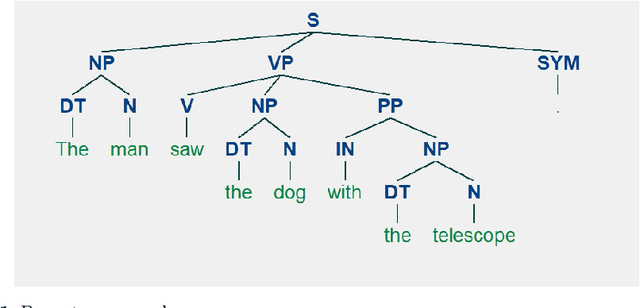

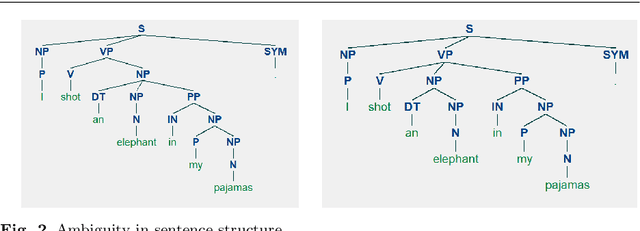
Sentence compression is an important problem in natural language processing with wide applications in text summarization, search engine and human-AI interaction system etc. In this paper, we design a hybrid extractive sentence compression model combining a probability language model and a parse tree language model for compressing sentences by guaranteeing the syntax correctness of the compression results. Our compression model is formulated as an integer linear programming problem, which can be rewritten as a Difference-of-Convex (DC) programming problem based on the exact penalty technique. We use a well known efficient DC algorithm -- DCA to handle the penalized problem for local optimal solutions. Then a hybrid global optimization algorithm combining DCA with a parallel branch-and-bound framework, namely PDCABB, is used for finding global optimal solutions. Numerical results demonstrate that our sentence compression model can provide excellent compression results evaluated by F-score, and indicate that PDCABB is a promising algorithm for solving our sentence compression model.