 Add to Chrome
 Add to Firefox
 Add to Edge
CC-OCR V2: Benchmarking Large Multimodal Models for Literacy in Real-world Document Processing
May 05, 2026
Large Multimodal Models (LMMs) have recently shown strong performance on Optical Character Recognition (OCR) tasks, demonstrating their promising capability in document literacy. However, their effectiveness in real-world applications remains underexplored, as existing benchmarks adopt task scopes misaligned with practical applications and assume homogeneous acquisition conditions. To address this gap, we introduce CC-OCR V2, a comprehensive and challenging OCR benchmark tailored to real-world document processing. CC-OCR V2 focuses on practical enterprise document processing tasks and incorporates hard and corner cases that are critical yet underrepresented in prior benchmarks, covering 5 major OCR-centric tracks: text recognition, document parsing, document grounding, key information extraction, and document question answering, comprising 7,093 high-difficulty samples. Extensive experiments on 14 advanced LMMs reveal that current models fall short of real-world application requirements. Even state-of-the-art LMMs exhibit substantial performance degradation across diverse tasks and scenarios. These findings reveal a significant gap between performance on current benchmarks and effectiveness in real-world applications. We release the full dataset and evaluation toolkit at https://github.com/eioss/CC-OCR-V2.

SemDP: Semantic-level Differential Privacy Protection for Face Datasets
Dec 20, 2024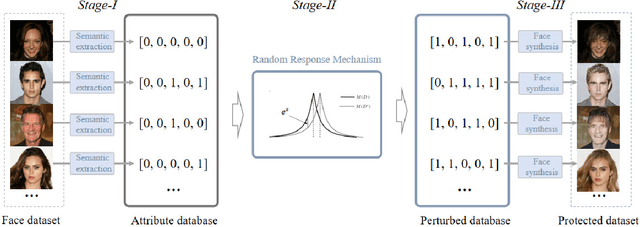
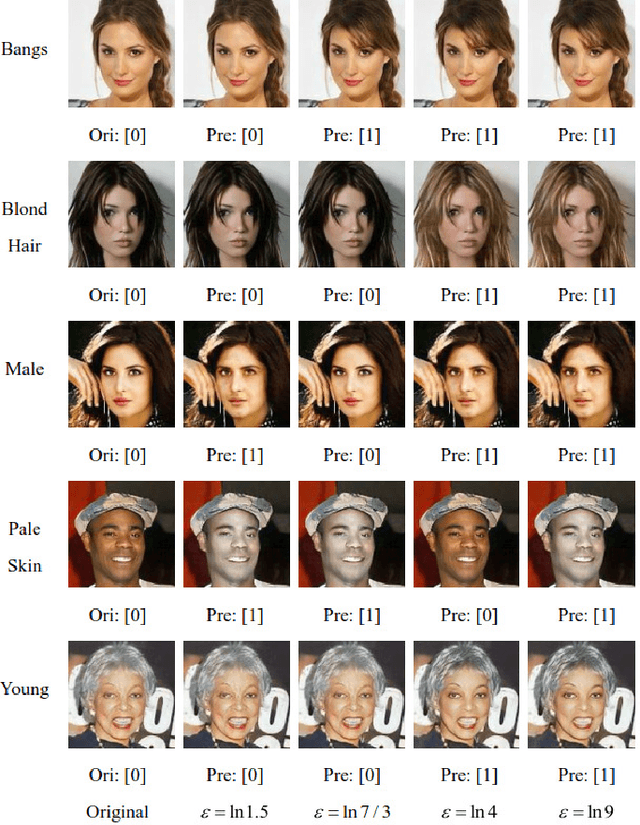
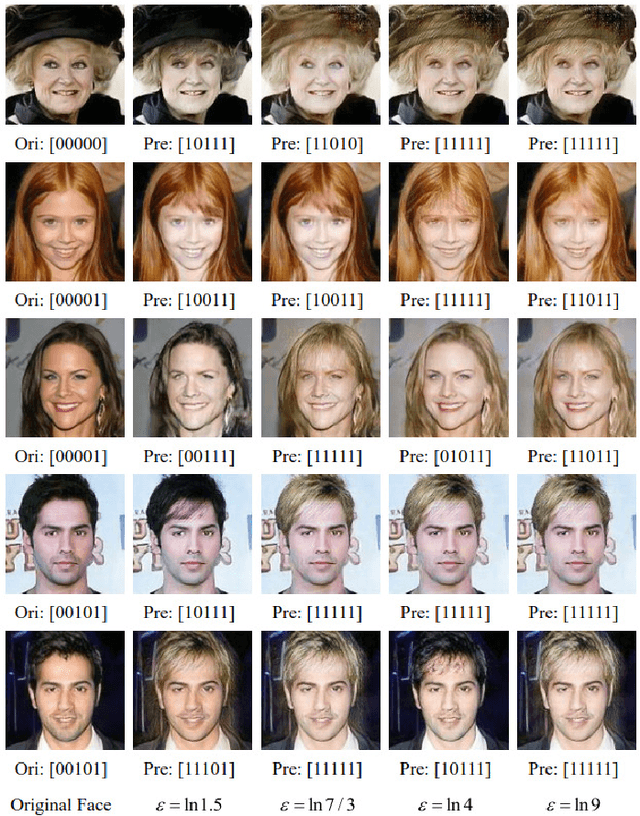
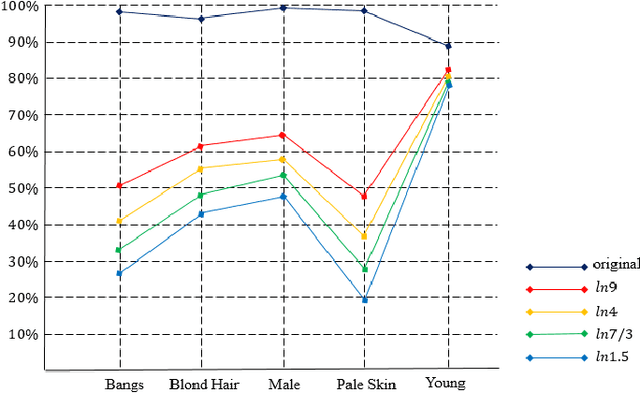
While large-scale face datasets have advanced deep learning-based face analysis, they also raise privacy concerns due to the sensitive personal information they contain. Recent schemes have implemented differential privacy to protect face datasets. However, these schemes generally treat each image as a separate database, which does not fully meet the core requirements of differential privacy. In this paper, we propose a semantic-level differential privacy protection scheme that applies to the entire face dataset. Unlike pixel-level differential privacy approaches, our scheme guarantees that semantic privacy in faces is not compromised. The key idea is to convert unstructured data into structured data to enable the application of differential privacy. Specifically, we first extract semantic information from the face dataset to build an attribute database, then apply differential perturbations to obscure this attribute data, and finally use an image synthesis model to generate a protected face dataset. Extensive experimental results show that our scheme can maintain visual naturalness and balance the privacy-utility trade-off compared to the mainstream schemes.