 Add to Chrome
 Add to Firefox
 Add to Edge
Pretraining EHR Foundation Models with Patient-Aware Sampling
Jul 24, 2026
Autoregressive foundation models for electronic health records (EHRs) typically inherit pretraining methods from language modeling, where patient trajectories are concatenated into a single token stream and windows are sampled from that stream. In EHR data, this choice is consequential: windows may mix multiple patients, and patients with longer records contribute more optimization updates, potentially introducing bias. We propose Patient Sampling, a pretraining sequence-construction method that allows us to control how training signal is distributed across patients. We compare this method to the standard approach, which we refer to as Global Stream. We show that stochastic Patient Sampling with controllable weighting improves performance on real-world EHR data. Across downstream clinical tasks on MIMIC-IV v2.2 and v3.1, Patient Sampling improves Macro AUROC and AUPRC over the Global Stream baseline. These results identify training and validation sequence construction as important and underexplored design choices for autoregressive EHR foundation models.

Autoregressive EHR Foundation Models with Multimodal Inputs
Jul 24, 2026Autoregressive foundation models trained on tokenized electronic health records (EHRs) can support zero-shot clinical prediction, yet most operate on structured event codes alone, and do not incorporate multiple modalities in a principled way. We present a framework for conditioning such models on auxiliary clinical modalities, including ECG waveforms, chest X-ray images, and clinical notes, using modality-specific latent compression and gated cross-attention with temporal alignment. We investigate two key design choices: (1) how to compress long per-modality sequences (e.g., ECG time series) before they enter the multi-modal cross-attention. This feature may be essential to reduce compute overheads and may be beneficial for generalization; (2) how the choice of pretrained encoder for each modality impacts downstream performance. Through controlled ablations on MIMIC-IV, we show that the best latent-compression configurations outperforms both uncompressed cross-attention and mean pooling. Encoder choice has a clear within-modality effect, with stronger pretrained encoders consistently outperforming weaker alternatives. We further show that merely adding auxiliary modalities does not guarantee improvement on ICU mortality prediction over an EHR-only baseline. This implies that careful design of the fusion architecture and an appropriate evaluation in the clinical context are required.
SIGMA: A Physics-Based Benchmark for Gas Chimney Understanding in Seismic Images
Mar 24, 2026Seismic images reconstruct subsurface reflectivity from field recordings, guiding exploration and reservoir monitoring. Gas chimneys are vertical anomalies caused by subsurface fluid migration. Understanding these phenomena is crucial for assessing hydrocarbon potential and avoiding drilling hazards. However, accurate detection is challenging due to strong seismic attenuation and scattering. Traditional physics-based methods are computationally expensive and sensitive to model errors, while deep learning offers efficient alternatives, yet lacks labeled datasets. In this work, we introduce \textbf{SIGMA}, a new physics-based dataset for gas chimney understanding in seismic images, featuring (i) pixel-level gas-chimney mask for detection and (ii) paired degraded and ground-truth image for enhancement. We employed physics-based methods that cover a wide range of geological settings and data acquisition conditions. Comprehensive experiments demonstrate that SIGMA serves as a challenging benchmark for gas chimney interpretation and benefits general seismic understanding.
Graph Neural Networks Uncover Geometric Neural Representations in Reinforcement-Based Motor Learning
Oct 31, 2024

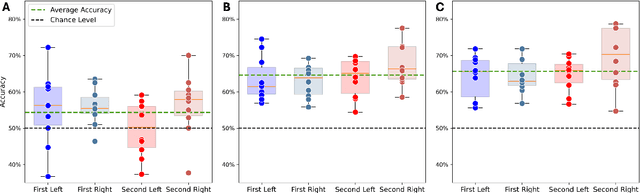
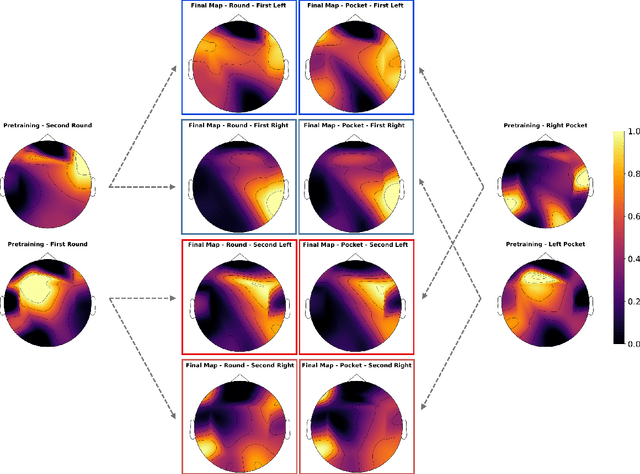
Graph Neural Networks (GNN) can capture the geometric properties of neural representations in EEG data. Here we utilise those to study how reinforcement-based motor learning affects neural activity patterns during motor planning, leveraging the inherent graph structure of EEG channels to capture the spatial relationships in brain activity. By exploiting task-specific symmetries, we define different pretraining strategies that not only improve model performance across all participant groups but also validate the robustness of the geometric representations. Explainability analysis based on the graph structures reveals consistent group-specific neural signatures that persist across pretraining conditions, suggesting stable geometric structures in the neural representations associated with motor learning and feedback processing. These geometric patterns exhibit partial invariance to certain task space transformations, indicating symmetries that enable generalisation across conditions while maintaining specificity to individual learning strategies. This work demonstrates how GNNs can uncover the effects of previous outcomes on motor planning, in a complex real-world task, providing insights into the geometric principles governing neural representations. Our experimental design bridges the gap between controlled experiments and ecologically valid scenarios, offering new insights into the organisation of neural representations during naturalistic motor learning, which may open avenues for exploring fundamental principles governing brain activity in complex tasks.
Noise-Free Explanation for Driving Action Prediction
Jul 08, 2024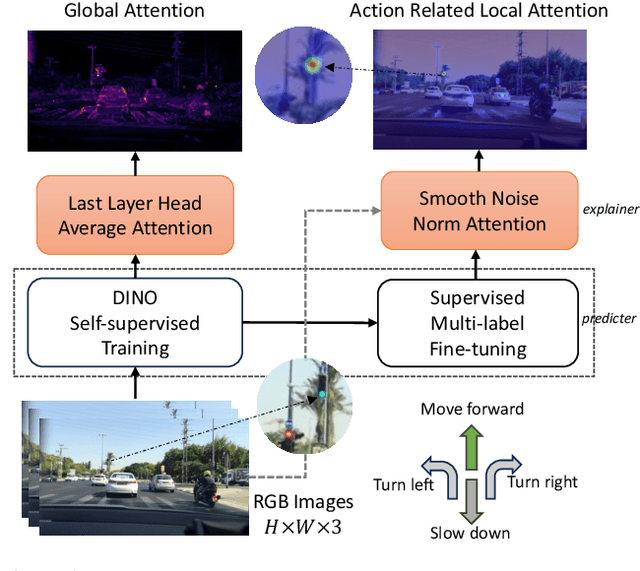

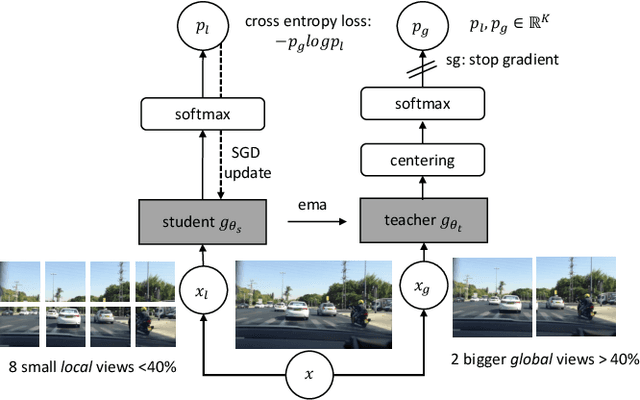
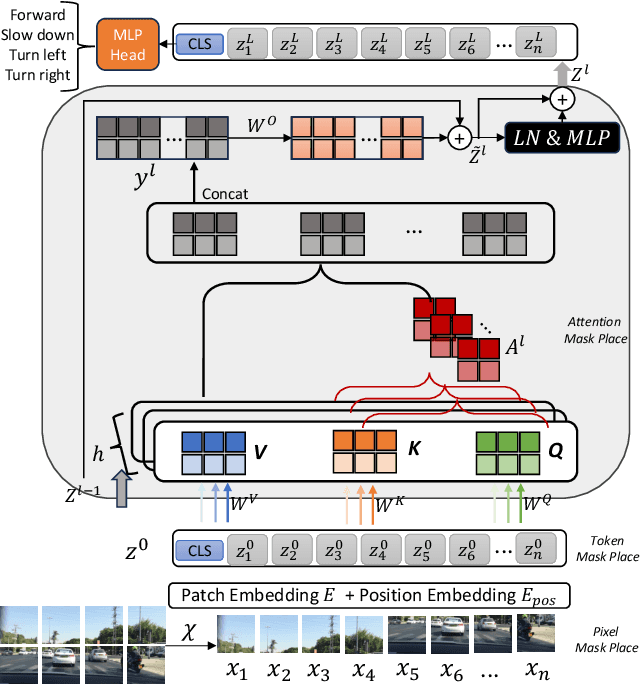
Although attention mechanisms have achieved considerable progress in Transformer-based architectures across various Artificial Intelligence (AI) domains, their inner workings remain to be explored. Existing explainable methods have different emphases but are rather one-sided. They primarily analyse the attention mechanisms or gradient-based attribution while neglecting the magnitudes of input feature values or the skip-connection module. Moreover, they inevitably bring spurious noisy pixel attributions unrelated to the model's decision, hindering humans' trust in the spotted visualization result. Hence, we propose an easy-to-implement but effective way to remedy this flaw: Smooth Noise Norm Attention (SNNA). We weigh the attention by the norm of the transformed value vector and guide the label-specific signal with the attention gradient, then randomly sample the input perturbations and average the corresponding gradients to produce noise-free attribution. Instead of evaluating the explanation method on the binary or multi-class classification tasks like in previous works, we explore the more complex multi-label classification scenario in this work, i.e., the driving action prediction task, and trained a model for it specifically. Both qualitative and quantitative evaluation results show the superiority of SNNA compared to other SOTA attention-based explainable methods in generating a clearer visual explanation map and ranking the input pixel importance.
EEG Decoding for Datasets with Heterogenous Electrode Configurations using Transfer Learning Graph Neural Networks
Jun 20, 2023Brain-Machine Interfacing (BMI) has greatly benefited from adopting machine learning methods for feature learning that require extensive data for training, which are often unavailable from a single dataset. Yet, it is difficult to combine data across labs or even data within the same lab collected over the years due to the variation in recording equipment and electrode layouts resulting in shifts in data distribution, changes in data dimensionality, and altered identity of data dimensions. Our objective is to overcome this limitation and learn from many different and diverse datasets across labs with different experimental protocols. To tackle the domain adaptation problem, we developed a novel machine learning framework combining graph neural networks (GNNs) and transfer learning methodologies for non-invasive Motor Imagery (MI) EEG decoding, as an example of BMI. Empirically, we focus on the challenges of learning from EEG data with different electrode layouts and varying numbers of electrodes. We utilise three MI EEG databases collected using very different numbers of EEG sensors (from 22 channels to 64) and layouts (from custom layouts to 10-20). Our model achieved the highest accuracy with lower standard deviations on the testing datasets. This indicates that the GNN-based transfer learning framework can effectively aggregate knowledge from multiple datasets with different electrode layouts, leading to improved generalization in subject-independent MI EEG classification. The findings of this study have important implications for Brain-Computer-Interface (BCI) research, as they highlight a promising method for overcoming the limitations posed by non-unified experimental setups. By enabling the integration of diverse datasets with varying electrode layouts, our proposed approach can help advance the development and application of BMI technologies.