 Add to Chrome
 Add to Firefox
 Add to Edge
TreeProbe : A Tibetan Medicine Benchmark for Cultural Bias in LLMs
Aug 01, 2026
Large language models are increasingly viewed as a potential means of mitigating global health inequities, yet their outputs often reflect dominant high-resource medical traditions and provide limited coverage of traditional medical knowledge systems. Tibetan medicine, one of the world's four major traditional medical systems, has an independent and highly structured theoretical framework. When models lack grounded understanding of Tibetan medicine, they may fall back on dominant epistemic systems and distort the native knowledge structure during reasoning. However, quantitative tools for evaluating cultural bias in Tibetan medicine remain largely absent. To address this gap, we introduce TreeProbe, the first cultural-bias benchmark organized around the native Tree of Medicine framework in Tibetan medicine. It contains 4,719 expert-adjudicated items covering 467 diseases and 10 subtasks along the three roots. Experiments on representative LLMs show that current models remain limited in native Tibetan medical contexts and exhibit systematic external ontology drift. Further analysis reveals that models diverge in whether they drift toward biomedical or TCM reasoning, shaped by pretraining data composition and surface resemblance between TCM and Tibetan medicine. TreeProbe provides a diagnostic benchmark for developing medical AI systems that are both linguistically inclusive and epistemically fair. Code and data are available in an anonymous repository at https://anonymous.4open.science/r/TreeProbe/.

Trends in Vehicle Re-identification Past, Present, and Future: A Comprehensive Review
Feb 19, 2021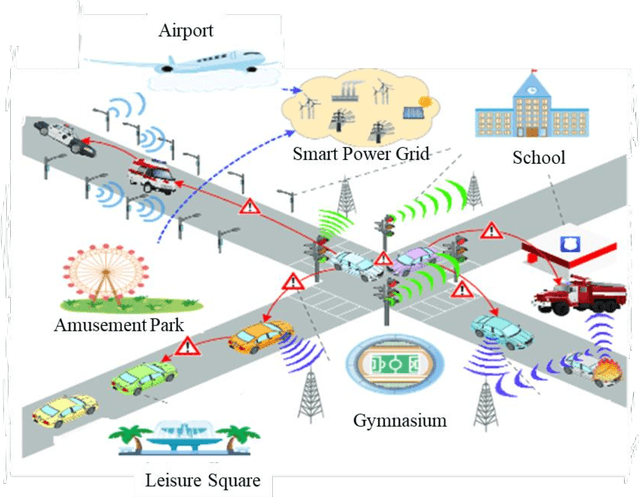
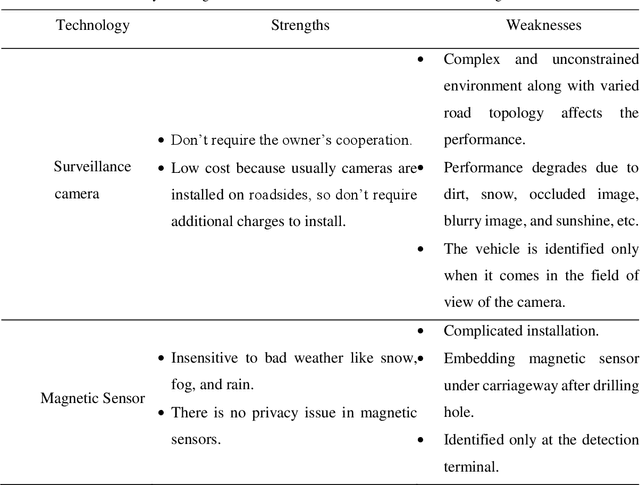
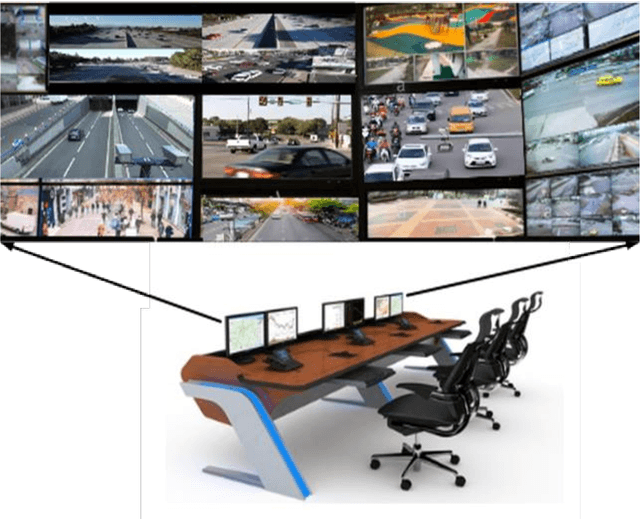
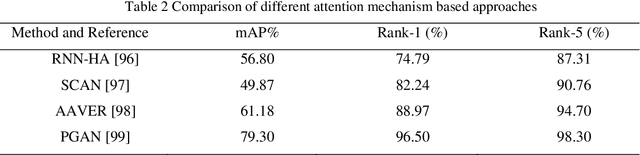
Vehicle Re-identification (re-id) over surveillance camera network with non-overlapping field of view is an exciting and challenging task in intelligent transportation systems (ITS). Due to its versatile applicability in metropolitan cities, it gained significant attention. Vehicle re-id matches targeted vehicle over non-overlapping views in multiple camera network. However, it becomes more difficult due to inter-class similarity, intra-class variability, viewpoint changes, and spatio-temporal uncertainty. In order to draw a detailed picture of vehicle re-id research, this paper gives a comprehensive description of the various vehicle re-id technologies, applicability, datasets, and a brief comparison of different methodologies. Our paper specifically focuses on vision-based vehicle re-id approaches, including vehicle appearance, license plate, and spatio-temporal characteristics. In addition, we explore the main challenges as well as a variety of applications in different domains. Lastly, a detailed comparison of current state-of-the-art methods performances over VeRi-776 and VehicleID datasets is summarized with future directions. We aim to facilitate future research by reviewing the work being done on vehicle re-id till to date.