 Add to Chrome
 Add to Firefox
 Add to Edge
Learning Coordinated Preference for Multi-Objective Multi-Agent Reinforcement Learning
Jun 12, 2026
Cooperative multi-objective multi-agent reinforcement learning (MOMARL) models team decision making under multiple, potentially conflicting objectives. In this setting, conflicts arise not only across objectives but also across agents with different observations, roles, and contributions. We propose Preference Coordinated Multi-agent Policy Optimization (PCMA), which learns coordinated agent-specific preferences to enable complementary trade-offs among agents. Theoretically, we formulate cooperative MOMARL as a team-optimal game and show that, under suitable conditions, preference diversity can induce team improvement through a first-order improvement decomposition. Experiments on multiple cooperative MOMA environments and a practical traffic-control scenario show that PCMA improves both performance and trade-off coordination.

VISTA: An End-to-End Benchmark for Visual Spec-to-Web-App Coding Agents
May 22, 2026We present VISTA (VIsual Spec-To-App Benchmark), a benchmark for evaluating the end-to-end web-app generation capabilities of LLM-based agents. Unlike prior code generation benchmarks that focus on algorithmic tasks, VISTA targets realistic UI-centric development, where agents must produce functional, visually coherent applications from underspecified inputs. We define five prompt-information conditions that vary along two axes, visual/structural fidelity and stack constraint: (1) text only with free stack choice, (2) text with reference screenshots under three specified stacks, (3) text with reference screenshots under free stack choice, (4) text with screenshots and pruned Figma structure under a single specified stack, and (5) text with screenshots and pruned Figma structure under free stack choice. To enable robust evaluation, each page in the benchmark is manually annotated with interactive UI components and around three visual anchor points, addressing the well-known limitations of script-based testing tools such as Playwright in open-ended code generation settings. Evaluation combines DOM-grounded reference matching, behavior-specific browser tests, and CLIP-based visual similarity, jointly measuring structural alignment, behavioral completeness, and overall visual fidelity. We use VISTA to assess four agent systems drawn from two model families and two harnesses, finding that visual fidelity and functional correctness are partially decoupled across both input conditions and agents, and that agent editing style varies sharply but is largely orthogonal to task quality. VISTA establishes a rigorous and reproducible foundation for advancing agent-based software engineering research.
DIG to Heal: Scaling General-purpose Agent Collaboration via Explainable Dynamic Decision Paths
Feb 27, 2026The increasingly popular agentic AI paradigm promises to harness the power of multiple, general-purpose large language model (LLM) agents to collaboratively complete complex tasks. While many agentic AI systems utilize predefined workflows or agent roles in order to reduce complexity, ideally these agents would be truly autonomous, able to achieve emergent collaboration even as the number of collaborating agents increases. Yet in practice, such unstructured interactions can lead to redundant work and cascading failures that are difficult to interpret or correct. In this work, we study multi-agent systems composed of general-purpose LLM agents that operate without predefined roles, control flow, or communication constraints, relying instead on emergent collaboration to solve problems. We introduce the Dynamic Interaction Graph (DIG), which captures emergent collaboration as a time-evolving causal network of agent activations and interactions. DIG makes emergent collaboration observable and explainable for the first time, enabling real-time identification, explanation, and correction of collaboration-induced error patterns directly from agents' collaboration paths. Thus, DIG fills a critical gap in understanding how general LLM agents solve problems together in truly agentic multi-agent systems. The project webpage can be found at: https://happyeureka.github.io/dig.
EmCoop: A Framework and Benchmark for Embodied Cooperation Among LLM Agents
Feb 27, 2026Real-world scenarios increasingly require multiple embodied agents to collaborate in dynamic environments under embodied constraints, as many tasks exceed the capabilities of any single agent. Recent advances in large language models (LLMs) enable high-level cognitive coordination through reasoning, planning, and natural language communication. However, fine-grained analyses of how such collaboration emerges, unfolds, and contributes to task success in embodied multi-agent systems are difficult to conduct with existing benchmarks. In this paper, we introduce EmCoop, a benchmark framework for studying cooperation in LLM-based embodied multi-agent systems. Our framework separates a high-level cognitive layer from a low-level embodied interaction layer, allowing us to characterize agent cooperation through their interleaved dynamics over time. Given a cooperation-constrained embodied task, we propose generalizable, process-level metrics that diagnose collaboration quality and failure modes, beyond final task success. We instantiate our framework in two embodied environments that scale to arbitrary numbers of agents and support diverse communication topologies, and use these instantiations to demonstrate how EmCoop enables systematic analysis of cooperation dynamics across team sizes and task settings. The project web page can be found at: https://happyeureka.github.io/emcoop.
The Five Ws of Multi-Agent Communication: Who Talks to Whom, When, What, and Why -- A Survey from MARL to Emergent Language and LLMs
Feb 12, 2026Multi-agent sequential decision-making powers many real-world systems, from autonomous vehicles and robotics to collaborative AI assistants. In dynamic, partially observable environments, communication is often what reduces uncertainty and makes collaboration possible. This survey reviews multi-agent communication (MA-Comm) through the Five Ws: who communicates with whom, what is communicated, when communication occurs, and why communication is beneficial. This framing offers a clean way to connect ideas across otherwise separate research threads. We trace how communication approaches have evolved across three major paradigms. In Multi-Agent Reinforcement Learning (MARL), early methods used hand-designed or implicit protocols, followed by end-to-end learned communication optimized for reward and control. While successful, these protocols are frequently task-specific and hard to interpret, motivating work on Emergent Language (EL), where agents can develop more structured or symbolic communication through interaction. EL methods, however, still struggle with grounding, generalization, and scalability, which has fueled recent interest in large language models (LLMs) that bring natural language priors for reasoning, planning, and collaboration in more open-ended settings. Across MARL, EL, and LLM-based systems, we highlight how different choices shape communication design, where the main trade-offs lie, and what remains unsolved. We distill practical design patterns and open challenges to support future hybrid systems that combine learning, language, and control for scalable and interpretable multi-agent collaboration.
LLM-Powered Decentralized Generative Agents with Adaptive Hierarchical Knowledge Graph for Cooperative Planning
Feb 08, 2025Developing intelligent agents for long-term cooperation in dynamic open-world scenarios is a major challenge in multi-agent systems. Traditional Multi-agent Reinforcement Learning (MARL) frameworks like centralized training decentralized execution (CTDE) struggle with scalability and flexibility. They require centralized long-term planning, which is difficult without custom reward functions, and face challenges in processing multi-modal data. CTDE approaches also assume fixed cooperation strategies, making them impractical in dynamic environments where agents need to adapt and plan independently. To address decentralized multi-agent cooperation, we propose Decentralized Adaptive Knowledge Graph Memory and Structured Communication System (DAMCS) in a novel Multi-agent Crafter environment. Our generative agents, powered by Large Language Models (LLMs), are more scalable than traditional MARL agents by leveraging external knowledge and language for long-term planning and reasoning. Instead of fully sharing information from all past experiences, DAMCS introduces a multi-modal memory system organized as a hierarchical knowledge graph and a structured communication protocol to optimize agent cooperation. This allows agents to reason from past interactions and share relevant information efficiently. Experiments on novel multi-agent open-world tasks show that DAMCS outperforms both MARL and LLM baselines in task efficiency and collaboration. Compared to single-agent scenarios, the two-agent scenario achieves the same goal with 63% fewer steps, and the six-agent scenario with 74% fewer steps, highlighting the importance of adaptive memory and structured communication in achieving long-term goals. We publicly release our project at: https://happyeureka.github.io/damcs.
RGMDT: Return-Gap-Minimizing Decision Tree Extraction in Non-Euclidean Metric Space
Oct 21, 2024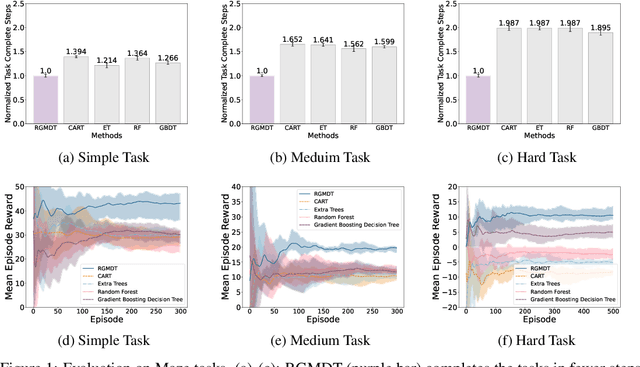
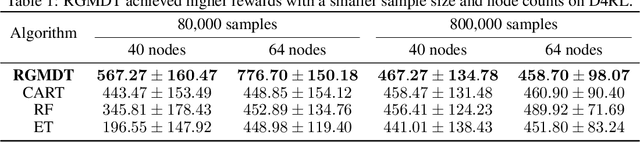
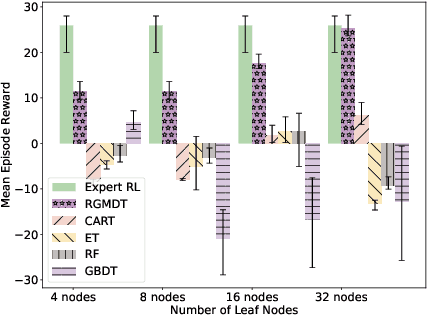
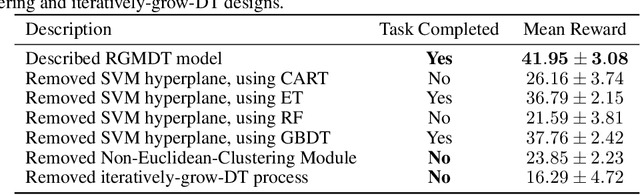
Deep Reinforcement Learning (DRL) algorithms have achieved great success in solving many challenging tasks while their black-box nature hinders interpretability and real-world applicability, making it difficult for human experts to interpret and understand DRL policies. Existing works on interpretable reinforcement learning have shown promise in extracting decision tree (DT) based policies from DRL policies with most focus on the single-agent settings while prior attempts to introduce DT policies in multi-agent scenarios mainly focus on heuristic designs which do not provide any quantitative guarantees on the expected return. In this paper, we establish an upper bound on the return gap between the oracle expert policy and an optimal decision tree policy. This enables us to recast the DT extraction problem into a novel non-euclidean clustering problem over the local observation and action values space of each agent, with action values as cluster labels and the upper bound on the return gap as clustering loss. Both the algorithm and the upper bound are extended to multi-agent decentralized DT extractions by an iteratively-grow-DT procedure guided by an action-value function conditioned on the current DTs of other agents. Further, we propose the Return-Gap-Minimization Decision Tree (RGMDT) algorithm, which is a surprisingly simple design and is integrated with reinforcement learning through the utilization of a novel Regularized Information Maximization loss. Evaluations on tasks like D4RL show that RGMDT significantly outperforms heuristic DT-based baselines and can achieve nearly optimal returns under given DT complexity constraints (e.g., maximum number of DT nodes).
Real-time Network Intrusion Detection via Decision Transformers
Dec 17, 2023Many cybersecurity problems that require real-time decision-making based on temporal observations can be abstracted as a sequence modeling problem, e.g., network intrusion detection from a sequence of arriving packets. Existing approaches like reinforcement learning may not be suitable for such cybersecurity decision problems, since the Markovian property may not necessarily hold and the underlying network states are often not observable. In this paper, we cast the problem of real-time network intrusion detection as casual sequence modeling and draw upon the power of the transformer architecture for real-time decision-making. By conditioning a causal decision transformer on past trajectories, consisting of the rewards, network packets, and detection decisions, our proposed framework will generate future detection decisions to achieve the desired return. It enables decision transformers to be applied to real-time network intrusion detection, as well as a novel tradeoff between the accuracy and timeliness of detection. The proposed solution is evaluated on public network intrusion detection datasets and outperforms several baseline algorithms using reinforcement learning and sequence modeling, in terms of detection accuracy and timeliness.
RIDE: Real-time Intrusion Detection via Explainable Machine Learning Implemented in a Memristor Hardware Architecture
Nov 27, 2023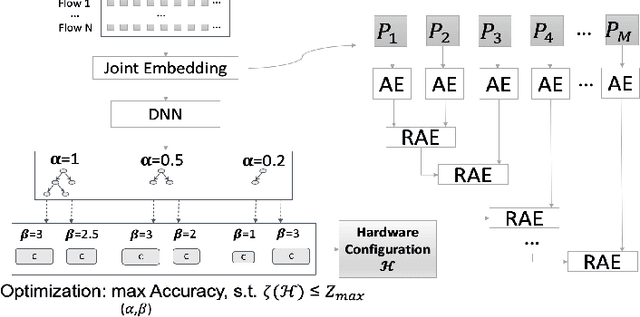
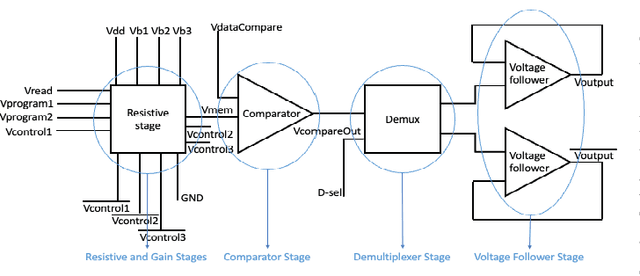
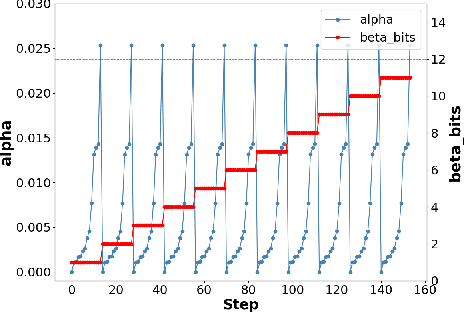
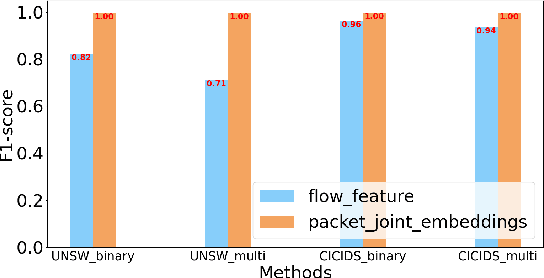
Deep Learning (DL) based methods have shown great promise in network intrusion detection by identifying malicious network traffic behavior patterns with high accuracy, but their applications to real-time, packet-level detections in high-speed communication networks are challenging due to the high computation time and resource requirements of Deep Neural Networks (DNNs), as well as lack of explainability. To this end, we propose a packet-level network intrusion detection solution that makes novel use of Recurrent Autoencoders to integrate an arbitrary-length sequence of packets into a more compact joint feature embedding, which is fed into a DNN-based classifier. To enable explainability and support real-time detections at micro-second speed, we further develop a Software-Hardware Co-Design approach to efficiently realize the proposed solution by converting the learned detection policies into decision trees and implementing them using an emerging architecture based on memristor devices. By jointly optimizing associated software and hardware constraints, we show that our approach leads to an extremely efficient, real-time solution with high detection accuracy at the packet level. Evaluation results on real-world datasets (e.g., UNSW and CIC-IDS datasets) demonstrate nearly three-nines detection accuracy with a substantial speedup of nearly four orders of magnitude.
Discrete Message via Online Clustering Labels in Decentralized POMDP
Aug 14, 2023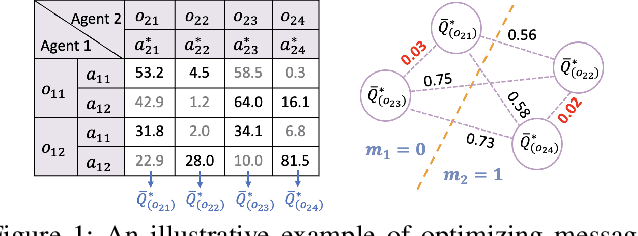
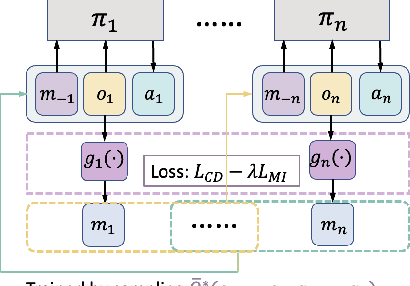
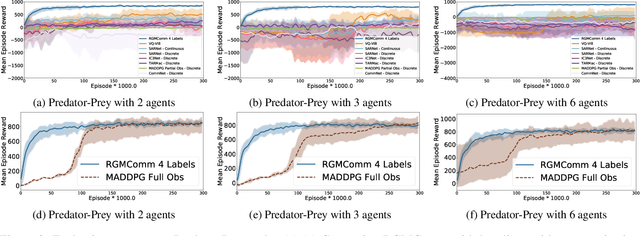
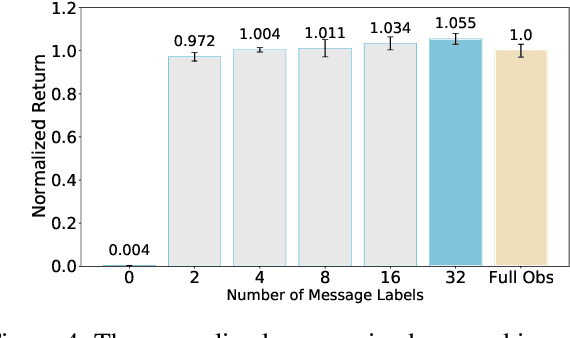
Communication is crucial for solving cooperative Multi-Agent Reinforcement Learning tasks in Partially-Observable Markov Decision Processes. Existing works often rely on black-box methods to encode local information/features into messages shared with other agents. However, such black-box approaches are unable to provide any quantitative guarantees on the expected return and often lead to the generation of continuous messages with high communication overhead and poor interpretability. In this paper, we establish an upper bound on the return gap between an ideal policy with full observability and an optimal partially-observable policy with discrete communication. This result enables us to recast multi-agent communication into a novel online clustering problem over the local observations at each agent, with messages as cluster labels and the upper bound on the return gap as clustering loss. By minimizing the upper bound, we propose a surprisingly simple design of message generation functions in multi-agent communication and integrate it with reinforcement learning using a Regularized Information Maximization loss function. Evaluations show that the proposed discrete communication significantly outperforms state-of-the-art multi-agent communication baselines and can achieve nearly-optimal returns with few-bit messages that are naturally interpretable.