 Add to Chrome
 Add to Firefox
 Add to Edge
LLM-Guided Heuristic Design from Simulation Traces: A Case Study in Dynamic Production and AGV Scheduling
Aug 10, 2026
Simulation-based optimization (SBO) evaluates executable policies under stochastic dynamics, but most methods treat the simulator as a black box: aggregate scores rank candidates without revealing why they fail or which policy logic should change. We present an LLM-guided heuristic design framework that uses repeated simulation for selection and event-level traces for diagnosis. Each incumbent is assessed through multiple replications, while replaying its lowest-scoring one produces a queryable trace. A manager agent formulates bottleneck hypotheses from this evidence, and editing agents implement parallel code-level revisions. After execution checks and repeated evaluation, best-so-far selection retains only improvements. LLM revision occurs between evaluation batches, while a fixed policy controls each simulation run. We evaluate the framework in a discrete-event simulation of dynamic production and automated guided vehicle (AGV) scheduling. Across five independent optimization runs with Gemini-3.1-Pro, final mean scores averaged 77.51 on the simulator's 0-100 scale. In the highest-scoring run, trace-based diagnoses motivated proactive charging, distance-aware AGV assignment, and rebalanced dispatch priorities, raising the best-so-far mean score from 62.49 to 78.61. On 100 matched seeds, the best final policy outscored representative rolling-MILP, rule-based, and metaheuristic policies on every seed and retained its advantage under random faults without re-optimization. After separate re-optimization for a longer horizon and variable order interarrival times, the resulting policies again outscored all baselines. Ablations with two LLM backbones showed that removing either parallel candidate generation or trace-database access reduced final mean scores. These results show that simulation traces can guide targeted code-level policy improvement in complex simulation-based scheduling.

Code-MIE: A Code-style Model for Multimodal Information Extraction with Scene Graph and Entity Attribute Knowledge Enhancement
Mar 21, 2026With the rapid development of large language models (LLMs), more and more researchers have paid attention to information extraction based on LLMs. However, there are still some spaces to improve in the existing related methods. First, existing multimodal information extraction (MIE) methods usually employ natural language templates as the input and output of LLMs, which mismatch with the characteristics of information tasks that mostly include structured information such as entities and relations. Second, although a few methods have adopted structured and more IE-friendly code-style templates, they just explored their methods on text-only IE rather than multimodal IE. Moreover, their methods are more complex in design, requiring separate templates to be designed for each task. In this paper, we propose a Code-style Multimodal Information Extraction framework (Code-MIE) which formalizes MIE as unified code understanding and generation. Code-MIE has the following novel designs: (1) Entity attributes such as gender, affiliation are extracted from the text to guide the model to understand the context and role of entities. (2) Images are converted into scene graphs and visual features to incorporate rich visual information into the model. (3) The input template is constructed as a Python function, where entity attributes, scene graphs and raw text compose of the function parameters. In contrast, the output template is formalized as Python dictionaries containing all extraction results such as entities, relations, etc. To evaluate Code-MIE, we conducted extensive experiments on the M$^3$D, Twitter-15, Twitter-17, and MNRE datasets. The results show that our method achieves state-of-the-art performance compared to six competing baseline models, with 61.03\% and 60.49\% on the English and Chinese datasets of M$^3$D, and 76.04\%, 88.07\%, and 73.94\% on the other three datasets.
An Integrated Fusion Framework for Ensemble Learning Leveraging Gradient Boosting and Fuzzy Rule-Based Models
Nov 11, 2025The integration of different learning paradigms has long been a focus of machine learning research, aimed at overcoming the inherent limitations of individual methods. Fuzzy rule-based models excel in interpretability and have seen widespread application across diverse fields. However, they face challenges such as complex design specifications and scalability issues with large datasets. The fusion of different techniques and strategies, particularly Gradient Boosting, with Fuzzy Rule-Based Models offers a robust solution to these challenges. This paper proposes an Integrated Fusion Framework that merges the strengths of both paradigms to enhance model performance and interpretability. At each iteration, a Fuzzy Rule-Based Model is constructed and controlled by a dynamic factor to optimize its contribution to the overall ensemble. This control factor serves multiple purposes: it prevents model dominance, encourages diversity, acts as a regularization parameter, and provides a mechanism for dynamic tuning based on model performance, thus mitigating the risk of overfitting. Additionally, the framework incorporates a sample-based correction mechanism that allows for adaptive adjustments based on feedback from a validation set. Experimental results substantiate the efficacy of the presented gradient boosting framework for fuzzy rule-based models, demonstrating performance enhancement, especially in terms of mitigating overfitting and complexity typically associated with many rules. By leveraging an optimal factor to govern the contribution of each model, the framework improves performance, maintains interpretability, and simplifies the maintenance and update of the models.
Clustering-based Anomaly Detection in Multivariate Time Series Data
Nov 11, 2025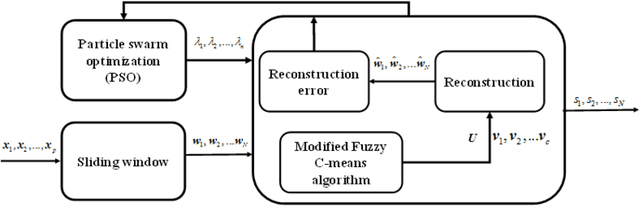
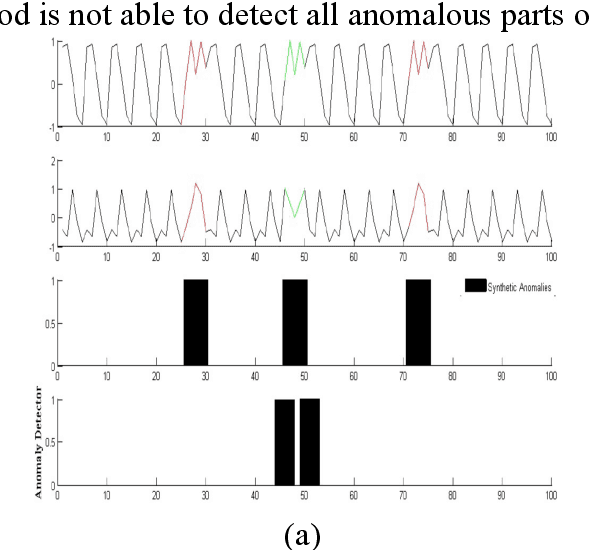
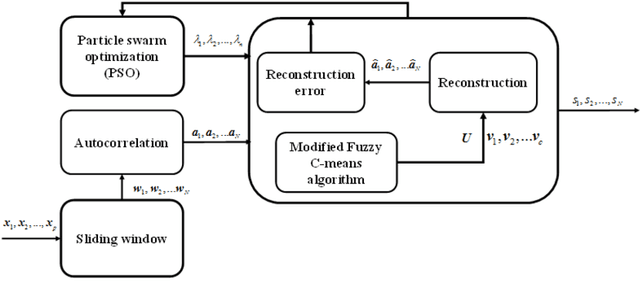
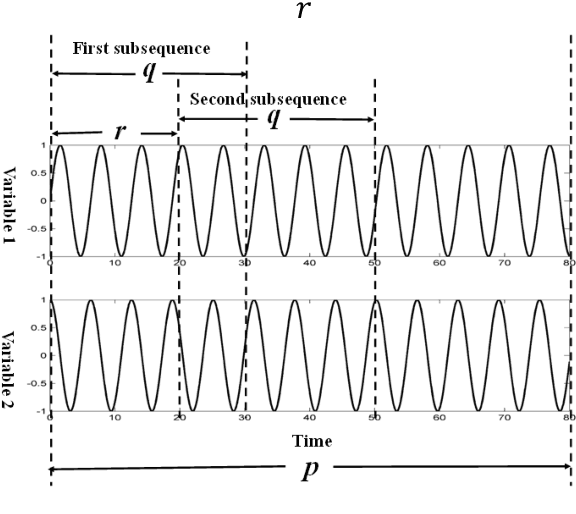
Multivariate time series data come as a collection of time series describing different aspects of a certain temporal phenomenon. Anomaly detection in this type of data constitutes a challenging problem yet with numerous applications in science and engineering because anomaly scores come from the simultaneous consideration of the temporal and variable relationships. In this paper, we propose a clustering-based approach to detect anomalies concerning the amplitude and the shape of multivariate time series. First, we use a sliding window to generate a set of multivariate subsequences and thereafter apply an extended fuzzy clustering to reveal a structure present within the generated multivariate subsequences. Finally, a reconstruction criterion is employed to reconstruct the multivariate subsequences with the optimal cluster centers and the partition matrix. We construct a confidence index to quantify a level of anomaly detected in the series and apply Particle Swarm Optimization as an optimization vehicle for the problem of anomaly detection. Experimental studies completed on several synthetic and six real-world datasets suggest that the proposed methods can detect the anomalies in multivariate time series. With the help of available clusters revealed by the extended fuzzy clustering, the proposed framework can detect anomalies in the multivariate time series and is suitable for identifying anomalous amplitude and shape patterns in various application domains such as health care, weather data analysis, finance, and disease outbreak detection.
* 33 pages, 20 figures
Multivariate Time series Anomaly Detection:A Framework of Hidden Markov Models
Nov 11, 2025In this study, we develop an approach to multivariate time series anomaly detection focused on the transformation of multivariate time series to univariate time series. Several transformation techniques involving Fuzzy C-Means (FCM) clustering and fuzzy integral are studied. In the sequel, a Hidden Markov Model (HMM), one of the commonly encountered statistical methods, is engaged here to detect anomalies in multivariate time series. We construct HMM-based anomaly detectors and in this context compare several transformation methods. A suite of experimental studies along with some comparative analysis is reported.
* 25 pages, 8 figures, 6 tables
GPTON: Generative Pre-trained Transformers enhanced with Ontology Narration for accurate annotation of biological data
Oct 12, 2024

By leveraging GPT-4 for ontology narration, we developed GPTON to infuse structured knowledge into LLMs through verbalized ontology terms, achieving accurate text and ontology annotations for over 68% of gene sets in the top five predictions. Manual evaluations confirm GPTON's robustness, highlighting its potential to harness LLMs and structured knowledge to significantly advance biomedical research beyond gene set annotation.