 Add to Chrome
 Add to Firefox
 Add to Edge
SIVA-RL: Sensitivity-Invariance Visual Alignment for Multimodal Reinforcement Learning
Jul 15, 2026
Reinforcement learning with verifiable rewards (RLVR) drives multimodal reasoning, but answer-level correctness does not guarantee that a vision-language model grounds its predictions in visual evidence. Existing visual-intervention methods contrast policy behavior on original and modified images, yet assign supervision by the type of intervention rather than its observed effect. This assumption fails: identical operators produce heterogeneous outcomes across samples. We propose SIVA-RL, a Sensitivity-Invariance Visual Alignment framework that replaces operator-conditioned regularization with sample-wise, outcome-conditioned supervision. SIVA-RL constructs localized interventions through token-aligned, distance-constrained within-image PatchSwap. A frozen audit policy then scores each clean-intervention pair, and the observed reward drop becomes soft routing weights. Large-drop pairs drive sensitivity alignment, low-drop pairs drive clean-anchored invariance alignment, and ambiguous pairs are down-weighted. This design decouples intervention construction from supervision assignment and is compatible with both GRPO and DAPO backbones. Across nine multimodal reasoning benchmarks spanning mathematical, logical, and vision-dependent tasks, SIVA-RL improves 3B and 7B models over matched RL baselines in every setting. It yields an 8.79 percentage-point gain on vision-dependent reasoning and up to 14.9% relative overall improvement across all four GRPO- and DAPO-based configurations.

MedProbeBench: Systematic Benchmarking at Deep Evidence Integration for Expert-level Medical Guideline
Apr 20, 2026Recent advances in deep research systems enable large language models to retrieve, synthesize, and reason over large-scale external knowledge. In medicine, developing clinical guidelines critically depends on such deep evidence integration. However, existing benchmarks fail to evaluate this capability in realistic workflows requiring multi-step evidence integration and expert-level judgment. To address this gap, we introduce MedProbeBench, the first benchmark leveraging high-quality clinical guidelines as expert-level references. Medical guidelines, with their rigorous standards in neutrality and verifiability, represent the pinnacle of medical expertise and pose substantial challenges for deep research agents. For evaluation, we propose MedProbe-Eval, a comprehensive evaluation framework featuring: (1) Holistic Rubrics with 1,200+ task-adaptive rubric criteria for comprehensive quality assessment, and (2) Fine-grained Evidence Verification for rigorous validation of evidence precision, grounded in 5,130+ atomic claims. Evaluation of 17 LLMs and deep research agents reveals critical gaps in evidence integration and guideline generation, underscoring the substantial distance between current capabilities and expert-level clinical guideline development. Project: https://github.com/uni-medical/MedProbeBench
Weighted Diversified Sampling for Efficient Data-Driven Single-Cell Gene-Gene Interaction Discovery
Oct 21, 2024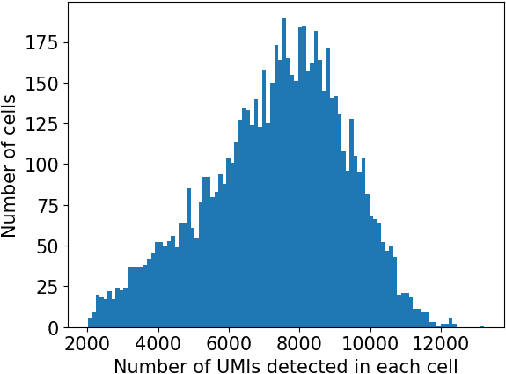


Gene-gene interactions play a crucial role in the manifestation of complex human diseases. Uncovering significant gene-gene interactions is a challenging task. Here, we present an innovative approach utilizing data-driven computational tools, leveraging an advanced Transformer model, to unearth noteworthy gene-gene interactions. Despite the efficacy of Transformer models, their parameter intensity presents a bottleneck in data ingestion, hindering data efficiency. To mitigate this, we introduce a novel weighted diversified sampling algorithm. This algorithm computes the diversity score of each data sample in just two passes of the dataset, facilitating efficient subset generation for interaction discovery. Our extensive experimentation demonstrates that by sampling a mere 1\% of the single-cell dataset, we achieve performance comparable to that of utilizing the entire dataset.
GPTON: Generative Pre-trained Transformers enhanced with Ontology Narration for accurate annotation of biological data
Oct 12, 2024

By leveraging GPT-4 for ontology narration, we developed GPTON to infuse structured knowledge into LLMs through verbalized ontology terms, achieving accurate text and ontology annotations for over 68% of gene sets in the top five predictions. Manual evaluations confirm GPTON's robustness, highlighting its potential to harness LLMs and structured knowledge to significantly advance biomedical research beyond gene set annotation.