 Add to Chrome
 Add to Firefox
 Add to Edge
Targeted Counterfactual Fingerprinting for Black-Box LLM Ownership Verification
Aug 08, 2026
Large language models (LLMs) are high-value assets that can be derived through redeployment, fine-tuning, quantization, or further alignment. Because deployed LLMs are commonly exposed only through query APIs, ownership verification must often rely on black-box text responses. This setting is difficult: generations are open-ended and can vary across repeated queries, while existing black-box fingerprints rely on signals that are fragile under a final-response interface, including full-text matching, soft behavioral features, or model-specific prompts designed not to transfer. We propose TCF (Targeted Counterfactual Fingerprinting), a black-box LLM fingerprinting framework that converts open-ended generation comparison into constrained-answer targeted counterfactual transfer. TCF restricts each verification query to a finite answer space, reducing the surface-form ambiguity that enters the verification score, and optimizes a prompt perturbation toward a counterfactual target different from the protected model's clean answer on the original prompt. Verification reduces to checking whether the suspect model's parsed final answer matches the recorded target. We introduce the source-model counterfactual margin (SCM), a protected-model-only quantity that certifies the target is unlikely before the perturbation and likely after it; SCM controls target selection, perturbation stopping, and fingerprint filtering. Under explicit derived-preservation and independent-transfer budgets motivated by local behavioral closeness, we derive a target-accuracy gap between derived and independent models. Across four LLM families, TCF achieves an average AUC of 0.9861, improving over TRAP, ProFLingo, and ZeroPrint by 0.07 to 0.19.

Navigating Public Sentiment in the Circular Economy through Topic Modelling and Hyperparameter Optimisation
May 16, 2024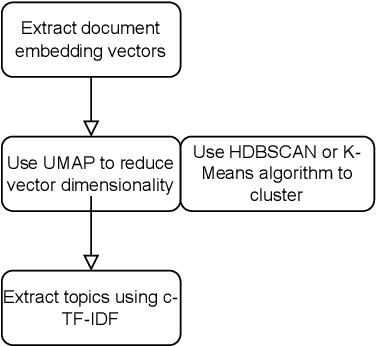
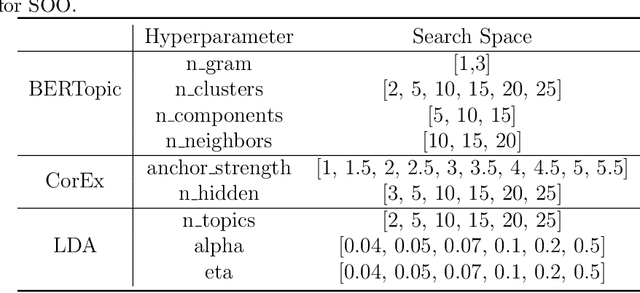
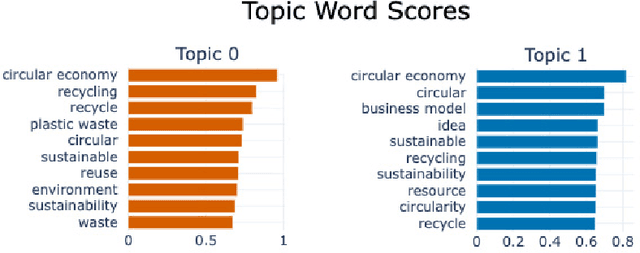
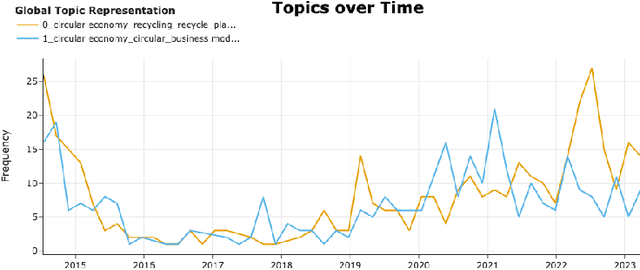
To advance the circular economy (CE), it is crucial to gain insights into the evolution of public sentiments, cognitive pathways of the masses concerning circular products and digital technology, and recognise the primary concerns. To achieve this, we collected data related to the CE from diverse platforms including Twitter, Reddit, and The Guardian. This comprehensive data collection spanned across three distinct strata of the public: the general public, professionals, and official sources. Subsequently, we utilised three topic models on the collected data. Topic modelling represents a type of data-driven and machine learning approach for text mining, capable of automatically categorising a large number of documents into distinct semantic groups. Simultaneously, these groups are described by topics, and these topics can aid in understanding the semantic content of documents at a high level. However, the performance of topic modelling may vary depending on different hyperparameter values. Therefore, in this study, we proposed a framework for topic modelling with hyperparameter optimisation for CE and conducted a series of systematic experiments to ensure that topic models are set with appropriate hyperparameters and to gain insights into the correlations between the CE and public opinion based on well-established models. The results of this study indicate that concerns about sustainability and economic impact persist across all three datasets. Official sources demonstrate a higher level of engagement with the application and regulation of CE. To the best of our knowledge, this study is pioneering in investigating various levels of public opinions concerning CE through topic modelling with the exploration of hyperparameter optimisation.