 Add to Chrome
 Add to Firefox
 Add to Edge
High-Fidelity Single-Image Head Modeling with Industry-Grade Topology
May 06, 2026
We present a single-image head mesh reconstruction framework that addresses the longstanding challenge of simultaneously preserving facial identity and producing industry-grade topology. Our framework adopts a coarse-to-fine optimization pipeline that refines a rigged template across three stages -- rig, joint, and vertex -- achieving stable convergence and consistent topology. To mitigate the ill-posed nature of single-image 3D face reconstruction and ensure identity preservation, we employ a normal consistency objective jointly with landmark alignment. To further preserve local surface structure and enforce topological regularity, we introduce geometry-aware constraints based on Gaussian curvature and conformal consistency, along with auxiliary regularizations that correct fine artifacts such as lip seams and eyelid discontinuities. Our hierarchical optimization with geometry-aware regularization yields meshes with semantically meaningful edge flow and industry-grade topology. After geometry reconstruction, we extract UV-space texture and normal maps to preserve appearance details for visualization and downstream use. In a user study with 22 professional technical artists, our results were assessed as approaching industry-grade usability, and 95% of participants ranked our method as the top-performing approach, underscoring its effectiveness for real-world digital human production.

Skeleton2Stage: Reward-Guided Fine-Tuning for Physically Plausible Dance Generation
Feb 14, 2026Despite advances in dance generation, most methods are trained in the skeletal domain and ignore mesh-level physical constraints. As a result, motions that look plausible as joint trajectories often exhibit body self-penetration and Foot-Ground Contact (FGC) anomalies when visualized with a human body mesh, reducing the aesthetic appeal of generated dances and limiting their real-world applications. We address this skeleton-to-mesh gap by deriving physics-based rewards from the body mesh and applying Reinforcement Learning Fine-Tuning (RLFT) to steer the diffusion model toward physically plausible motion synthesis under mesh visualization. Our reward design combines (i) an imitation reward that measures a motion's general plausibility by its imitability in a physical simulator (penalizing penetration and foot skating), and (ii) a Foot-Ground Deviation (FGD) reward with test-time FGD guidance to better capture the dynamic foot-ground interaction in dance. However, we find that the physics-based rewards tend to push the model to generate freezing motions for fewer physical anomalies and better imitability. To mitigate it, we propose an anti-freezing reward to preserve motion dynamics while maintaining physical plausibility. Experiments on multiple dance datasets consistently demonstrate that our method can significantly improve the physical plausibility of generated motions, yielding more realistic and aesthetically pleasing dances. The project page is available at: https://jjd1123.github.io/Skeleton2Stage/
A Real-Time Voice Activity Detection Based On Lightweight Neural
May 27, 2024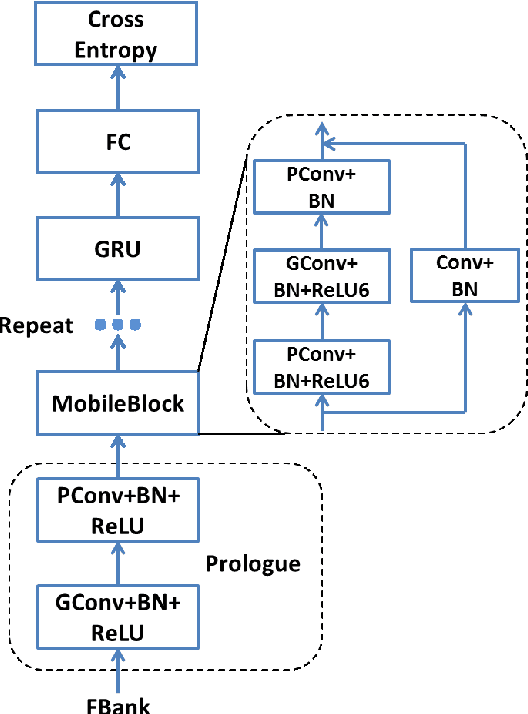
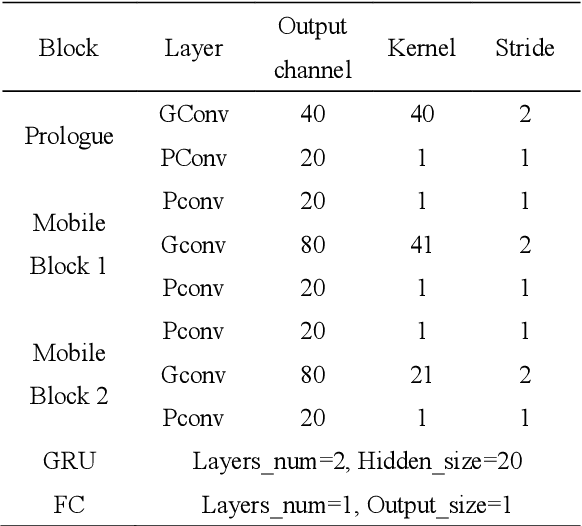
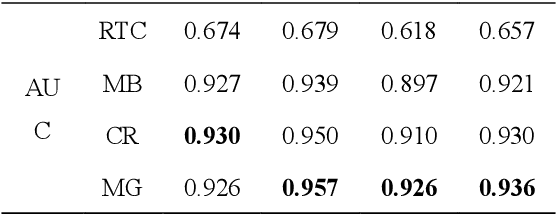
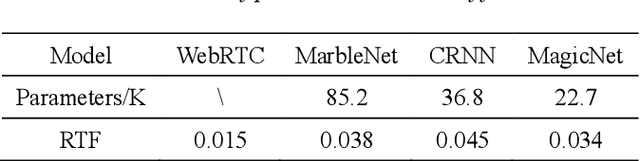
Voice activity detection (VAD) is the task of detecting speech in an audio stream, which is challenging due to numerous unseen noises and low signal-to-noise ratios in real environments. Recently, neural network-based VADs have alleviated the degradation of performance to some extent. However, the majority of existing studies have employed excessively large models and incorporated future context, while neglecting to evaluate the operational efficiency and latency of the models. In this paper, we propose a lightweight and real-time neural network called MagicNet, which utilizes casual and depth separable 1-D convolutions and GRU. Without relying on future features as input, our proposed model is compared with two state-of-the-art algorithms on synthesized in-domain and out-domain test datasets. The evaluation results demonstrate that MagicNet can achieve improved performance and robustness with fewer parameter costs.