 Add to Chrome
 Add to Firefox
 Add to Edge
Can LLM-Generated Text Empower Surgical Vision-Language Pre-training?
Apr 20, 2026
Recent advancements in self-supervised learning have led to powerful surgical vision encoders capable of spatiotemporal understanding. However, extending these visual foundations to multi-modal reasoning tasks is severely bottlenecked by the prohibitive cost of expert textual annotations. To overcome this scalability limitation, we introduce \textbf{LIME}, a large-scale multi-modal dataset derived from open-access surgical videos using human-free, Large Language Model (LLM)-generated narratives. While LIME offers immense scalability, unverified generated texts may contain errors, including hallucinations, that could potentially lead to catastrophically degraded pre-trained medical priors in standard contrastive pipelines. To mitigate this, we propose \textbf{SurgLIME}, a parameter-efficient Vision-Language Pre-training (VLP) framework designed to learn reliable cross-modal alignments using noisy narratives. SurgLIME preserves foundational medical priors using a LoRA-adapted dual-encoder architecture and introduces an automated confidence estimation mechanism that dynamically down-weights uncertain text during contrastive alignment. Evaluations on the AutoLaparo and Cholec80 benchmarks show that SurgLIME achieves competitive zero-shot cross-modal alignment while preserving the robust linear probing performance of the visual foundation model. Dataset, code, and models are publicly available at \href{https://github.com/visurg-ai/SurgLIME}{https://github.com/visurg-ai/SurgLIME}.

SurgicalVLM-Agent: Towards an Interactive AI Co-Pilot for Pituitary Surgery
Mar 12, 2025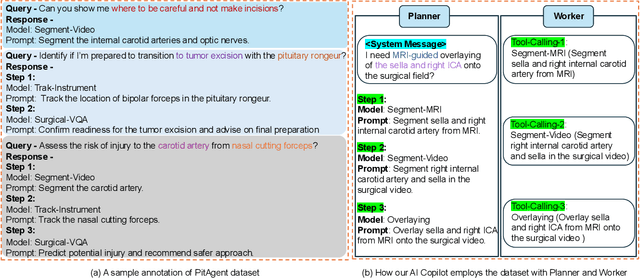
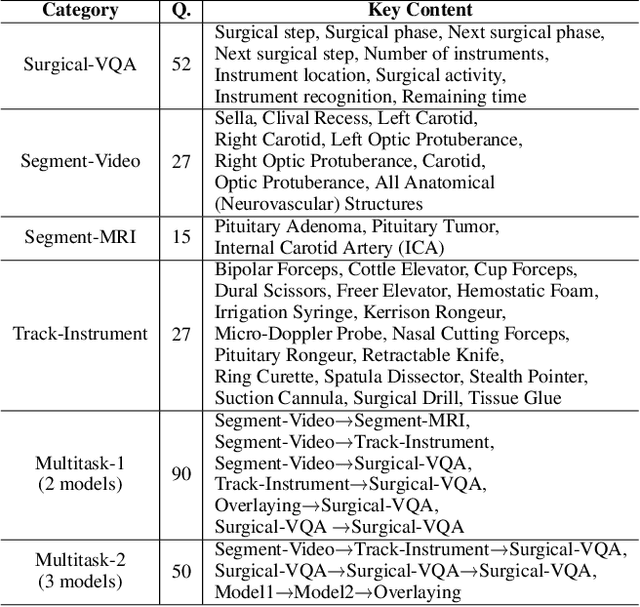
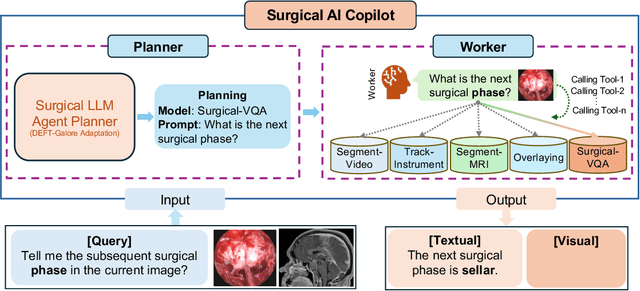
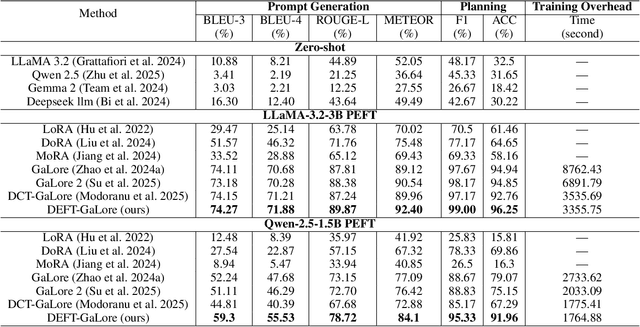
Image-guided surgery demands adaptive, real-time decision support, yet static AI models struggle with structured task planning and providing interactive guidance. Large vision-language models (VLMs) offer a promising solution by enabling dynamic task planning and predictive decision support. We introduce SurgicalVLM-Agent, an AI co-pilot for image-guided pituitary surgery, capable of conversation, planning, and task execution. The agent dynamically processes surgeon queries and plans the tasks such as MRI tumor segmentation, endoscope anatomy segmentation, overlaying preoperative imaging with intraoperative views, instrument tracking, and surgical visual question answering (VQA). To enable structured task planning, we develop the PitAgent dataset, a surgical context-aware dataset covering segmentation, overlaying, instrument localization, tool tracking, tool-tissue interactions, phase identification, and surgical activity recognition. Additionally, we propose FFT-GaLore, a fast Fourier transform (FFT)-based gradient projection technique for efficient low-rank adaptation, optimizing fine-tuning for LLaMA 3.2 in surgical environments. We validate SurgicalVLM-Agent by assessing task planning and prompt generation on our PitAgent dataset and evaluating zero-shot VQA using a public pituitary dataset. Results demonstrate state-of-the-art performance in task planning and query interpretation, with highly semantically meaningful VQA responses, advancing AI-driven surgical assistance.
Variational Deep Survival Machines: Survival Regression with Censored Outcomes
Apr 24, 2024

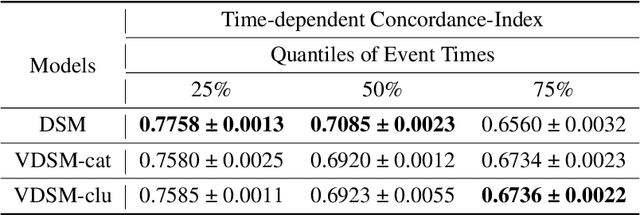

Survival regression aims to predict the time when an event of interest will take place, typically a death or a failure. A fully parametric method [18] is proposed to estimate the survival function as a mixture of individual parametric distributions in the presence of censoring. In this paper, We present a novel method to predict the survival time by better clustering the survival data and combine primitive distributions. We propose two variants of variational auto-encoder (VAE), discrete and continuous, to generate the latent variables for clustering input covariates. The model is trained end to end by jointly optimizing the VAE loss and regression loss. Thorough experiments on dataset SUPPORT and FLCHAIN show that our method can effectively improve the clustering result and reach competitive scores with previous methods. We demonstrate the superior result of our model prediction in the long-term. Our code is available at https://github.com/qinzzz/auton-survival-785.
Poisoning Attacks on Federated Learning-based Wireless Traffic Prediction
Apr 22, 2024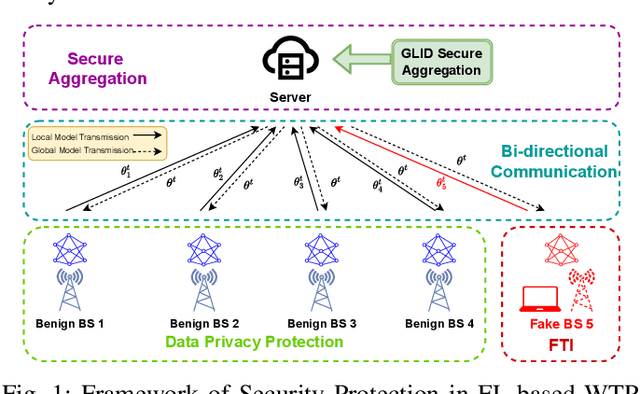

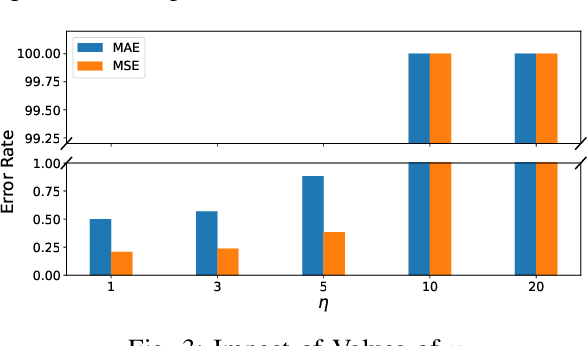
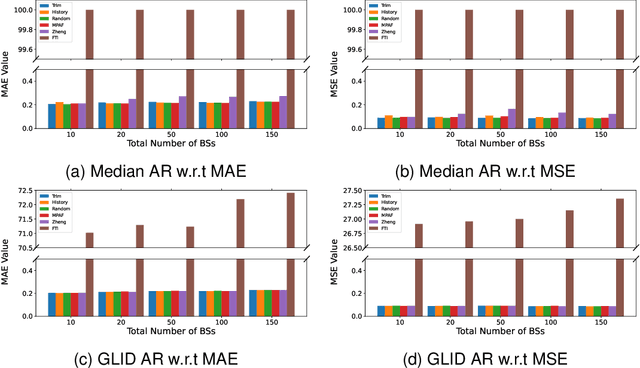
Federated Learning (FL) offers a distributed framework to train a global control model across multiple base stations without compromising the privacy of their local network data. This makes it ideal for applications like wireless traffic prediction (WTP), which plays a crucial role in optimizing network resources, enabling proactive traffic flow management, and enhancing the reliability of downstream communication-aided applications, such as IoT devices, autonomous vehicles, and industrial automation systems. Despite its promise, the security aspects of FL-based distributed wireless systems, particularly in regression-based WTP problems, remain inadequately investigated. In this paper, we introduce a novel fake traffic injection (FTI) attack, designed to undermine the FL-based WTP system by injecting fabricated traffic distributions with minimal knowledge. We further propose a defense mechanism, termed global-local inconsistency detection (GLID), which strategically removes abnormal model parameters that deviate beyond a specific percentile range estimated through statistical methods in each dimension. Extensive experimental evaluations, performed on real-world wireless traffic datasets, demonstrate that both our attack and defense strategies significantly outperform existing baselines.