 Add to Chrome
 Add to Firefox
 Add to Edge
Continual Learning with Elastic Regularization and Synthetic Replay for Federated MLLM Fine-Tuning
Jul 13, 2026
Federated fine-tuning of Multimodal Large Language Models (MLLMs) across distributed networks enables privacy-sensitive adaptation to evolving data streams, yet a fundamental obstacle prevents robust deployment in dynamic environments: catastrophic forgetting, wherein sequential task updates erase previously acquired knowledge across visual, linguistic, and cross-modal representations. Addressing this challenge is especially critical for autonomous networked AI operating in safety-sensitive domains, such as content moderation, where reliable retention of prior knowledge underpins system integrity. To overcome this, we propose Federated Continual Multimodal Learning (FedCMM), a framework that embeds continual-learning safeguards into the federated optimization loop at three complementary levels. At the parameter level, modality-aware elastic weight consolidation computes separate Fisher information matrices for the vision encoder, language backbone, and cross-modal projector, providing granular, asymmetry-aware protection against modality-specific forgetting. At the data level, each client trains a lightweight local generative replay module to synthesize raw-data-free embedding-level multimodal replay tuples without any raw data sharing. At the aggregation level, Task-similarity-aware gradient aggregation autonomously filters and reweights client updates by gradient cosine similarity, suppressing conflicting directions and stabilizing the global learning trajectory. Extensive experiments on two benchmarks demonstrate that FedCMM consistently outperforms recent baselines on accuracy and backward transfer, confirming that holistic, modality-aware optimization enables robust evolutive adaptation across heterogeneous networked AI deployments.

PAPM: A Physics-aware Proxy Model for Process Systems
Jul 07, 2024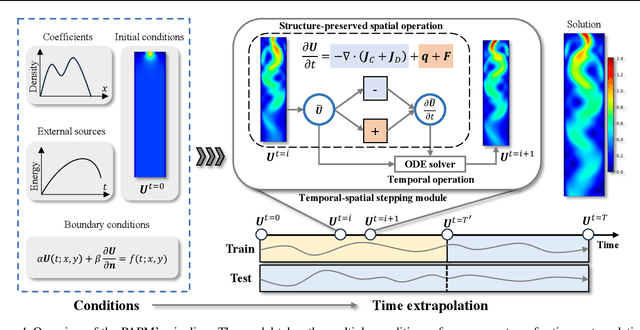
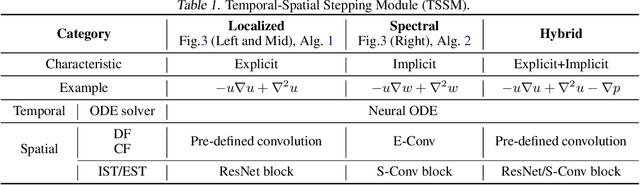
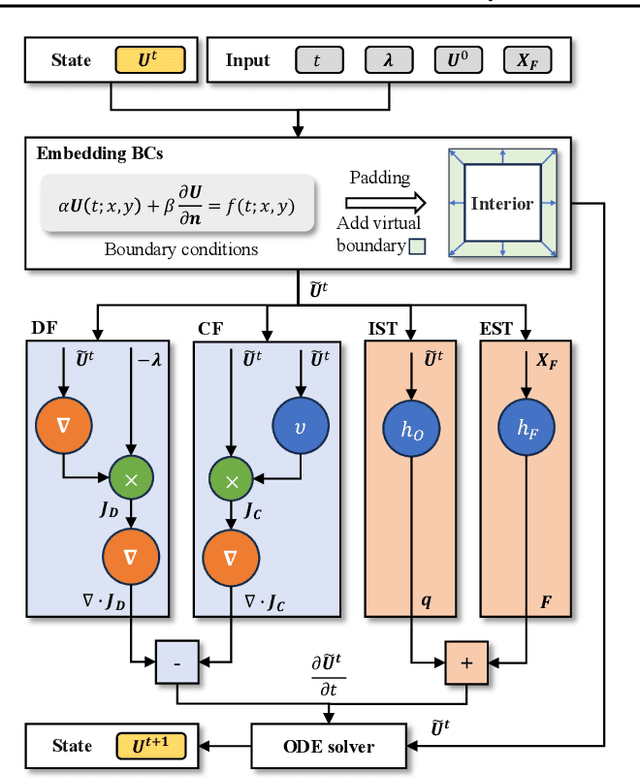
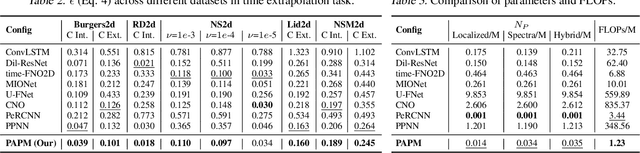
In the context of proxy modeling for process systems, traditional data-driven deep learning approaches frequently encounter significant challenges, such as substantial training costs induced by large amounts of data, and limited generalization capabilities. As a promising alternative, physics-aware models incorporate partial physics knowledge to ameliorate these challenges. Although demonstrating efficacy, they fall short in terms of exploration depth and universality. To address these shortcomings, we introduce a physics-aware proxy model (PAPM) that fully incorporates partial prior physics of process systems, which includes multiple input conditions and the general form of conservation relations, resulting in better out-of-sample generalization. Additionally, PAPM contains a holistic temporal-spatial stepping module for flexible adaptation across various process systems. Through systematic comparisons with state-of-the-art pure data-driven and physics-aware models across five two-dimensional benchmarks in nine generalization tasks, PAPM notably achieves an average performance improvement of 6.7%, while requiring fewer FLOPs, and just 1% of the parameters compared to the prior leading method. The code is available at https://github.com/pengwei07/PAPM.
A GPU-Accelerated Moving-Horizon Algorithm for Training Deep Classification Trees on Large Datasets
Nov 12, 2023


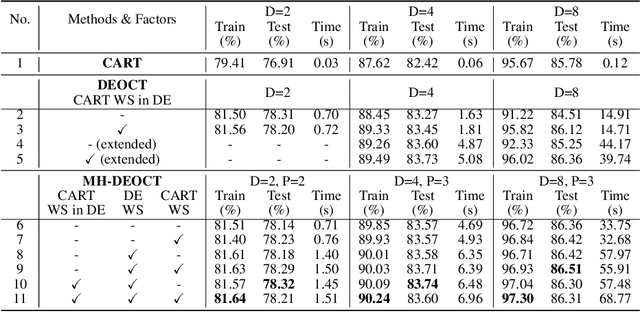
Decision trees are essential yet NP-complete to train, prompting the widespread use of heuristic methods such as CART, which suffers from sub-optimal performance due to its greedy nature. Recently, breakthroughs in finding optimal decision trees have emerged; however, these methods still face significant computational costs and struggle with continuous features in large-scale datasets and deep trees. To address these limitations, we introduce a moving-horizon differential evolution algorithm for classification trees with continuous features (MH-DEOCT). Our approach consists of a discrete tree decoding method that eliminates duplicated searches between adjacent samples, a GPU-accelerated implementation that significantly reduces running time, and a moving-horizon strategy that iteratively trains shallow subtrees at each node to balance the vision and optimizer capability. Comprehensive studies on 68 UCI datasets demonstrate that our approach outperforms the heuristic method CART on training and testing accuracy by an average of 3.44% and 1.71%, respectively. Moreover, these numerical studies empirically demonstrate that MH-DEOCT achieves near-optimal performance (only 0.38% and 0.06% worse than the global optimal method on training and testing, respectively), while it offers remarkable scalability for deep trees (e.g., depth=8) and large-scale datasets (e.g., ten million samples).
A Global Optimization Algorithm for K-Center Clustering of One Billion Samples
Dec 30, 2022This paper presents a practical global optimization algorithm for the K-center clustering problem, which aims to select K samples as the cluster centers to minimize the maximum within-cluster distance. This algorithm is based on a reduced-space branch and bound scheme and guarantees convergence to the global optimum in a finite number of steps by only branching on the regions of centers. To improve efficiency, we have designed a two-stage decomposable lower bound, the solution of which can be derived in a closed form. In addition, we also propose several acceleration techniques to narrow down the region of centers, including bounds tightening, sample reduction, and parallelization. Extensive studies on synthetic and real-world datasets have demonstrated that our algorithm can solve the K-center problems to global optimal within 4 hours for ten million samples in the serial mode and one billion samples in the parallel mode. Moreover, compared with the state-of-the-art heuristic methods, the global optimum obtained by our algorithm can averagely reduce the objective function by 25.8% on all the synthetic and real-world datasets.