 Add to Chrome
 Add to Firefox
 Add to Edge
Is Fairness Truly Fair? Towards Reliable Lipschitz Fairness in Multi-Task Learning via Fixed-\texorpdfstring{$δ$}{delta} Alignment
Jun 09, 2026
Lipschitz-style individual fairness formalizes the idea that semantically similar examples should receive similar predictions, but its evaluation in multi-task learning (MTL) can be confounded by method-induced representation scales. This paper identifies threshold confounding: when the auditing tolerance is derived from each model's own representation distances, different algorithms are compared under different semantic thresholds. A threshold-drift analysis further shows how Bias rankings can change and identifies sufficient conditions for ranking preservation. We propose \textbf{ReLiF}, a reliability-aware framework that separates evaluation-time fixed-$δ$ auditing from training-time controlled regularization. ReLiF uses a shared reference tolerance for comparable auditing and a violation-rate feedback controller to keep the Lipschitz surrogate active without letting it dominate stochastic training. This work also develops supporting analysis for threshold drift, reference-tolerance selection, and the relationship between the huberized training surrogate and its unsmoothed positive-margin counterpart. Experiments on clinical time-series benchmarks and NYUv2 (NYU Depth V2) dense prediction show that fixed-$δ$ auditing exposes utility--fairness trade-offs that method-dependent thresholds can obscure. On NYUv2 with a ResNet50 backbone, ReLiF achieves competitive utility while substantially reducing aligned bias under shared fixed thresholds. On clinical benchmarks, ReLiF yields controlled fairness-regularized trade-offs, while fixed-$δ$ auditing reveals that task-balancing baselines can sometimes achieve lower bias and that genuine utility--fairness trade-offs persist. These results support fixed-$δ$ auditing as a semantically consistent protocol for evaluating Lipschitz fairness in MTL.

Is Nano Banana Pro a Low-Level Vision All-Rounder? A Comprehensive Evaluation on 14 Tasks and 40 Datasets
Dec 19, 2025The rapid evolution of text-to-image generation models has revolutionized visual content creation. While commercial products like Nano Banana Pro have garnered significant attention, their potential as generalist solvers for traditional low-level vision challenges remains largely underexplored. In this study, we investigate the critical question: Is Nano Banana Pro a Low-Level Vision All-Rounder? We conducted a comprehensive zero-shot evaluation across 14 distinct low-level tasks spanning 40 diverse datasets. By utilizing simple textual prompts without fine-tuning, we benchmarked Nano Banana Pro against state-of-the-art specialist models. Our extensive analysis reveals a distinct performance dichotomy: while \textbf{Nano Banana Pro demonstrates superior subjective visual quality}, often hallucinating plausible high-frequency details that surpass specialist models, it lags behind in traditional reference-based quantitative metrics. We attribute this discrepancy to the inherent stochasticity of generative models, which struggle to maintain the strict pixel-level consistency required by conventional metrics. This report identifies Nano Banana Pro as a capable zero-shot contender for low-level vision tasks, while highlighting that achieving the high fidelity of domain specialists remains a significant hurdle.
In-sensor Computing ANN Capacitive Sensors
May 27, 2024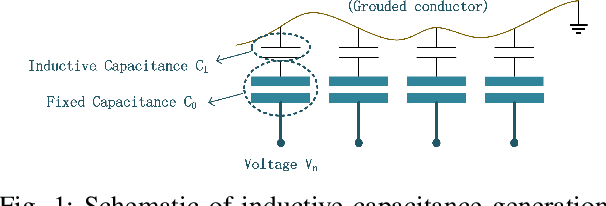

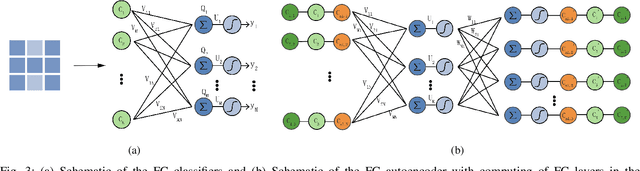
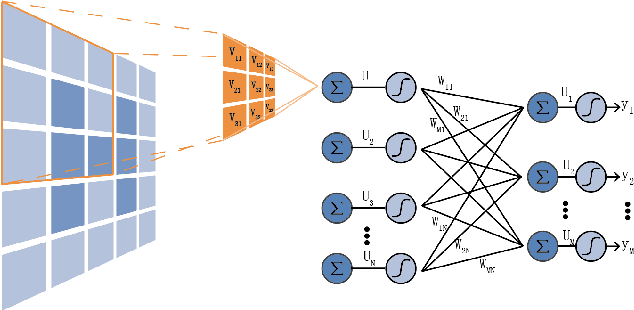
This letter proposes an in-sensor computing multiply-and-accumulate (MAC) circuit based on capacitance. The MAC circuits can constitute an artificial neural network(ANN) layer and be operated as ANN classifiers and autoencoders. The proposed circuit is a promising scheme for capacitive ANN image sensors, showing competitively high efficiency and lower power.