 Add to Chrome
 Add to Firefox
 Add to Edge
Is Fairness Truly Fair? Towards Reliable Lipschitz Fairness in Multi-Task Learning via Fixed-\texorpdfstring{$δ$}{delta} Alignment
Jun 09, 2026
Lipschitz-style individual fairness formalizes the idea that semantically similar examples should receive similar predictions, but its evaluation in multi-task learning (MTL) can be confounded by method-induced representation scales. This paper identifies threshold confounding: when the auditing tolerance is derived from each model's own representation distances, different algorithms are compared under different semantic thresholds. A threshold-drift analysis further shows how Bias rankings can change and identifies sufficient conditions for ranking preservation. We propose \textbf{ReLiF}, a reliability-aware framework that separates evaluation-time fixed-$δ$ auditing from training-time controlled regularization. ReLiF uses a shared reference tolerance for comparable auditing and a violation-rate feedback controller to keep the Lipschitz surrogate active without letting it dominate stochastic training. This work also develops supporting analysis for threshold drift, reference-tolerance selection, and the relationship between the huberized training surrogate and its unsmoothed positive-margin counterpart. Experiments on clinical time-series benchmarks and NYUv2 (NYU Depth V2) dense prediction show that fixed-$δ$ auditing exposes utility--fairness trade-offs that method-dependent thresholds can obscure. On NYUv2 with a ResNet50 backbone, ReLiF achieves competitive utility while substantially reducing aligned bias under shared fixed thresholds. On clinical benchmarks, ReLiF yields controlled fairness-regularized trade-offs, while fixed-$δ$ auditing reveals that task-balancing baselines can sometimes achieve lower bias and that genuine utility--fairness trade-offs persist. These results support fixed-$δ$ auditing as a semantically consistent protocol for evaluating Lipschitz fairness in MTL.

Over-the-Air Computation with Spatial-and-Temporal Correlated Signals
Feb 01, 2021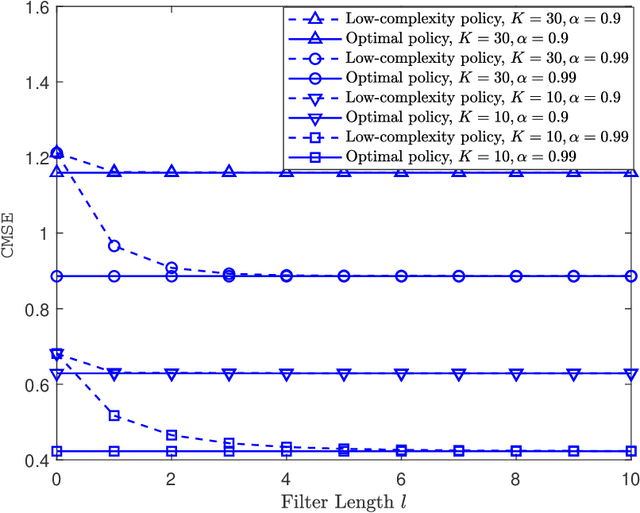
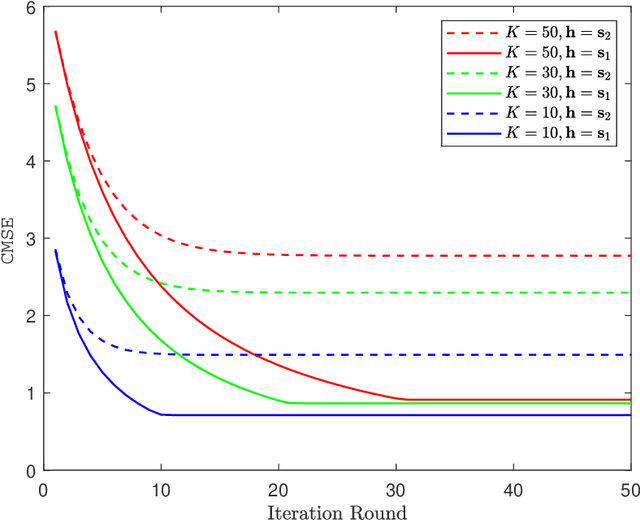
Over-the-air computation (AirComp) leveraging the superposition property of wireless multiple-access channel (MAC), is a promising technique for effective data collection and computation of large-scale wireless sensor measurements in Internet of Things applications. Most existing work on AirComp only considered computation of spatial-and-temporal independent sensor signals, though in practice different sensor measurement signals are usually correlated. In this letter, we propose an AirComp system with spatial-and-temporal correlated sensor signals, and formulate the optimal AirComp policy design problem for achieving the minimum computation mean-squared error (MSE). We develop the optimal AirComp policy with the minimum computation MSE in each time step by utilizing the current and the previously received signals. We also propose and optimize a low-complexity AirComp policy in closed form with the performance approaching to the optimal policy.