 Add to Chrome
 Add to Firefox
 Add to Edge
TaoLive Digital Avatar Agent Technical Report: Training Agents to Evolve with Their Harness
Aug 16, 2026
AI-powered digital-avatar streamers in live e-commerce must answer product questions, engage viewers, and execute changing business strategies in real time. This requires low latency, factual and effective replies, and rapid adaptation to updated campaign, compliance, and style requirements. We develop an evolvable Harness that decouples Skills, Hooks, system prompts, and tools from model weights, allowing runtime behavior to change without retraining. However, Harness evolution creates a moving execution environment: compact models fine-tuned on one configuration may memorize names, schemas, and prompt templates rather than follow the Harness currently provided, while stronger zero-shot models are too slow for real-time use. We address this tension with Harness-Aware Training (HAT), which makes Harness states part of the training distribution. HAT applies task-preserving Harness-State Augmentation (HSA) to Skills, tool schemas, prompt structures, and interaction constraints, and comprises three stages: HSA-based supervised fine-tuning, general on-policy distillation to recover general capabilities, and HSA-based agentic reinforcement learning in a production-informed live-room simulator. Across four evaluation sets with more than 4,500 cases, our compact 35B model scores 94.8 on real-world Live-Stream QA, versus 80.3 for the base model and 93.0 for the strongest evaluated general LLM, while scoring 94.6 on Harness-Variant QA and retaining 83.5 on IFEval. By contrast, fixed-Harness SFT reduces IFEval by 7.7 points. In a controlled complete-agent replay on one NVIDIA H20 GPU with MTP enabled, the system achieves 3.407 s P50 and 8.114 s P95 latency. These results show that HAT produces a latency-feasible compact agent that remains effective under evaluated Harness changes without sacrificing general instruction following.

SPAR: Support-Preserving Action Rectification
May 27, 2026Offline policy improvement faces an inherent conflict between maximizing value and fitting the data distribution. While in-sample weighted regression is stable, it suffers from over-conservatism that suppresses high-value actions in the distribution tail; conversely, gradient-based approaches often exhibit a fitting-optimization conflict of gradients, which drives the policy off the data manifold. To address this, we propose Support-Preserving Action Rectification (SPAR), which reframes global learning as a local residual rectification anchored to a frozen pure behavior cloning policy. This framework performs fine-grained fitting and local policy improvement in the residual space, thereby contracting the search space. We further introduce Latent Self-Imitation, utilizing a latent-sampling weighted-regression mechanism to address fitting-improvement gradient conflict in the residual space. Theoretically, we prove this mechanism eliminates the manifold-normal drift of standard value gradients, while extensive D4RL experiments show SPAR extracts significant gains from suboptimal baselines to achieve state-of-the-art performance.
Safe Path Planning and Observation Quality Enhancement Strategy for Unmanned Aerial Vehicles in Water Quality Monitoring Tasks
Dec 24, 2025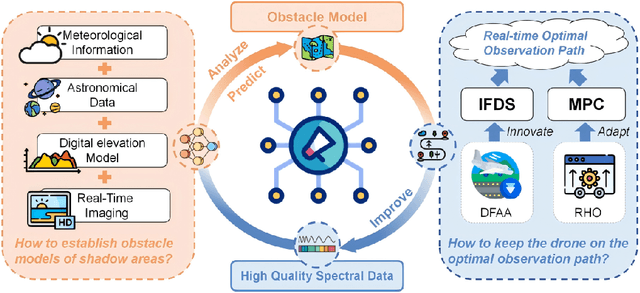
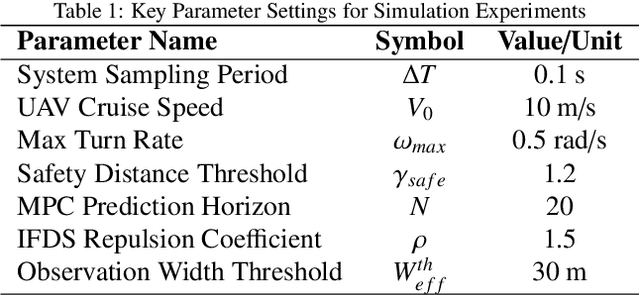
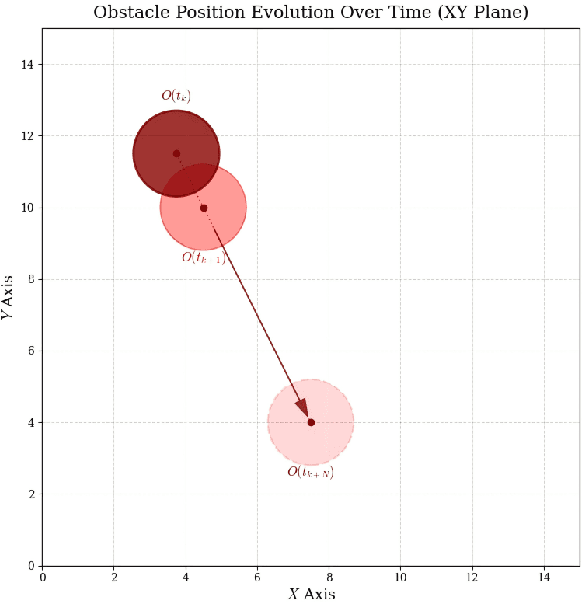

Unmanned Aerial Vehicle (UAV) spectral remote sensing technology is widely used in water quality monitoring. However, in dynamic environments, varying illumination conditions, such as shadows and specular reflection (sun glint), can cause severe spectral distortion, thereby reducing data availability. To maximize the acquisition of high-quality data while ensuring flight safety, this paper proposes an active path planning method for dynamic light and shadow disturbance avoidance. First, a dynamic prediction model is constructed to transform the time-varying light and shadow disturbance areas into three-dimensional virtual obstacles. Second, an improved Interfered Fluid Dynamical System (IFDS) algorithm is introduced, which generates a smooth initial obstacle avoidance path by building a repulsive force field. Subsequently, a Model Predictive Control (MPC) framework is employed for rolling-horizon path optimization to handle flight dynamics constraints and achieve real-time trajectory tracking. Furthermore, a Dynamic Flight Altitude Adjustment (DFAA) mechanism is designed to actively reduce the flight altitude when the observable area is narrow, thereby enhancing spatial resolution. Simulation results show that, compared with traditional PID and single obstacle avoidance algorithms, the proposed method achieves an obstacle avoidance success rate of 98% in densely disturbed scenarios, significantly improves path smoothness, and increases the volume of effective observation data by approximately 27%. This research provides an effective engineering solution for precise UAV water quality monitoring in complex illumination environments.