 Add to Chrome
 Add to Firefox
 Add to Edge
Intrinsic decomposition and editing of 3D Gaussian splats
Jun 30, 2026
Intrinsic decomposition which expresses image colors as the product of diffuse albedo and shading, possibly augmented with view-dependent residuals has a long history in image editing as it enables the modification of object colors and textures without altering lighting. We extend intrinsic decomposition to radiance fields represented with Gaussian splatting by proposing solutions to three key aspects of such decomposition. First, we describe how to model the intrinsic decomposition as independent sets of Gaussian primitives, which allows each set to adapt to the characteristics of the layer it represents. Second, we present an optimization procedure guided by data-driven predictions to disentangle multi-view photographs of a scene into the aforementioned intrinsic sets. Finally, we provide an editing workflow where users modify the texture of planar surfaces simply by modifying the albedo of that surface in one image. Capturing this edit within the intrinsic radiance field allows re-rendering of the edited scene with plausible lighting under arbitrary viewpoints.
* 18 pages

Matryoshka Gaussian Splatting
Mar 19, 2026The ability to render scenes at adjustable fidelity from a single model, known as level of detail (LoD), is crucial for practical deployment of 3D Gaussian Splatting (3DGS). Existing discrete LoD methods expose only a limited set of operating points, while concurrent continuous LoD approaches enable smoother scaling but often suffer noticeable quality degradation at full capacity, making LoD a costly design decision. We introduce Matryoshka Gaussian Splatting (MGS), a training framework that enables continuous LoD for standard 3DGS pipelines without sacrificing full-capacity rendering quality. MGS learns a single ordered set of Gaussians such that rendering any prefix, the first k splats, produces a coherent reconstruction whose fidelity improves smoothly with increasing budget. Our key idea is stochastic budget training: each iteration samples a random splat budget and optimises both the corresponding prefix and the full set. This strategy requires only two forward passes and introduces no architectural modifications. Experiments across four benchmarks and six baselines show that MGS matches the full-capacity performance of its backbone while enabling a continuous speed-quality trade-off from a single model. Extensive ablations on ordering strategies, training objectives, and model capacity further validate the designs.
Foundation-Model Surrogates Enable Data-Efficient Active Learning for Materials Discovery
Mar 17, 2026Active learning (AL) has emerged as a powerful paradigm for accelerating materials discovery by iteratively steering experiments toward promising candidates, reducing the number of costly synthesis-and-characterization cycles needed to identify optimal materials. However, current AL relies predominantly on Gaussian Process (GP) and Random Forest (RF) surrogates, which suffer from complementary limitations: GP underfits complex composition-property landscapes due to rigid kernel assumptions, while RF produces unreliable heuristic uncertainty estimates in small-data regimes. This small-data challenge is pervasive in materials science, making reliable surrogate modeling extremely difficult with models trained from scratch on each new dataset. Here we propose In-Context Active Learning (ICAL), which addresses this bottleneck by replacing conventional surrogates with TabPFN, a transformer-based foundation model (FM) pre-trained on millions of synthetic regression tasks to meta-learn a universal prior over tabular data, upon which TabPFN performs principled Bayesian inference in a single forward pass without dataset-specific retraining, delivering strong small-data regression performance and well-calibrated predictive uncertainty (required for effective AL). We benchmark ICAL against GP and RF across 10 materials datasets and TabPFN wins on 8 out of 10 datasets, achieving a mean saving of 52% in extra evaluations relative to GP and 29.77% relative to RF. Cross-validation analysis confirms that TabPFN's advantage stems from superior uncertainty calibration, achieving the lowest Negative Log-Likelihood and Area Under the Sparsification Error curve among all surrogates. These results demonstrate that pre-trained FMs can serve as effective surrogates for active learning, enabling data-efficient discovery across diverse materials systems and small-data experimental sciences.
Efficient Camera-Controlled Video Generation of Static Scenes via Sparse Diffusion and 3D Rendering
Jan 14, 2026Modern video generative models based on diffusion models can produce very realistic clips, but they are computationally inefficient, often requiring minutes of GPU time for just a few seconds of video. This inefficiency poses a critical barrier to deploying generative video in applications that require real-time interactions, such as embodied AI and VR/AR. This paper explores a new strategy for camera-conditioned video generation of static scenes: using diffusion-based generative models to generate a sparse set of keyframes, and then synthesizing the full video through 3D reconstruction and rendering. By lifting keyframes into a 3D representation and rendering intermediate views, our approach amortizes the generation cost across hundreds of frames while enforcing geometric consistency. We further introduce a model that predicts the optimal number of keyframes for a given camera trajectory, allowing the system to adaptively allocate computation. Our final method, SRENDER, uses very sparse keyframes for simple trajectories and denser ones for complex camera motion. This results in video generation that is more than 40 times faster than the diffusion-based baseline in generating 20 seconds of video, while maintaining high visual fidelity and temporal stability, offering a practical path toward efficient and controllable video synthesis.
gsplat: An Open-Source Library for Gaussian Splatting
Sep 10, 2024gsplat is an open-source library designed for training and developing Gaussian Splatting methods. It features a front-end with Python bindings compatible with the PyTorch library and a back-end with highly optimized CUDA kernels. gsplat offers numerous features that enhance the optimization of Gaussian Splatting models, which include optimization improvements for speed, memory, and convergence times. Experimental results demonstrate that gsplat achieves up to 10% less training time and 4x less memory than the original implementation. Utilized in several research projects, gsplat is actively maintained on GitHub. Source code is available at https://github.com/nerfstudio-project/gsplat under Apache License 2.0. We welcome contributions from the open-source community.
Composition based oxidation state prediction of materials using deep learning
Nov 29, 2022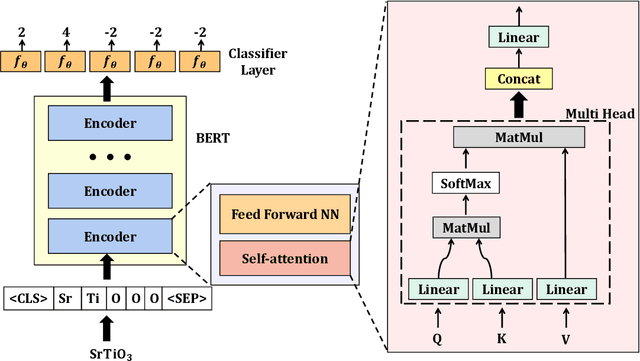

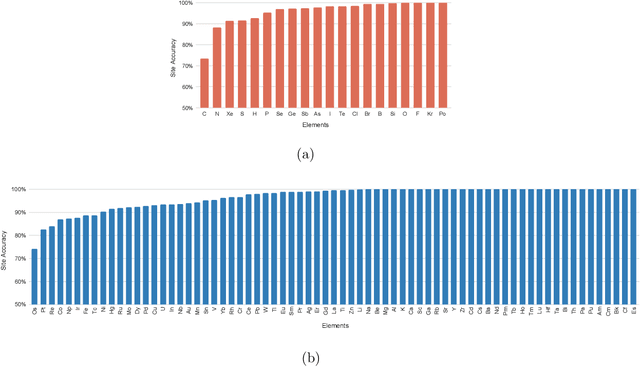
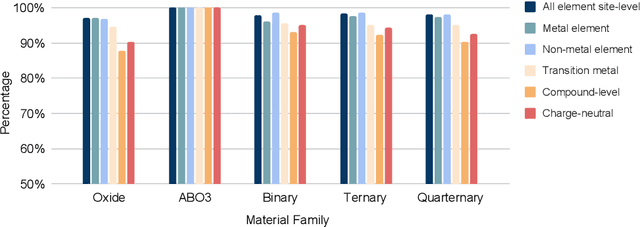
Oxidation states are the charges of atoms after their ionic approximation of their bonds, which have been widely used in charge-neutrality verification, crystal structure determination, and reaction estimation. Currently only heuristic rules exist for guessing the oxidation states of a given compound with many exceptions. Recent work has developed machine learning models based on heuristic structural features for predicting the oxidation states of metal ions. However, composition based oxidation state prediction still remains elusive so far, which is more important in new material discovery for which the structures are not even available. This work proposes a novel deep learning based BERT transformer language model BERTOS for predicting the oxidation states of all elements of inorganic compounds given only their chemical composition. Our model achieves 96.82\% accuracy for all-element oxidation states prediction benchmarked on the cleaned ICSD dataset and achieves 97.61\% accuracy for oxide materials. We also demonstrate how it can be used to conduct large-scale screening of hypothetical material compositions for materials discovery.