 Add to Chrome
 Add to Firefox
 Add to Edge
Towards Brain MRI Foundation Models for the Clinic: Findings from the FOMO25 Challenge
Apr 13, 2026
Clinical deployment of automated brain MRI analysis faces a fundamental challenge: clinical data is heterogeneous and noisy, and high-quality labels are prohibitively costly to obtain. Self-supervised learning (SSL) can address this by leveraging the vast amounts of unlabeled data produced in clinical workflows to train robust \textit{foundation models} that adapt out-of-domain with minimal supervision. However, the development of foundation models for brain MRI has been limited by small pretraining datasets and in-domain benchmarking focused on high-quality, research-grade data. To address this gap, we organized the FOMO25 challenge as a satellite event at MICCAI 2025. FOMO25 provided participants with a large pretraining dataset, FOMO60K, and evaluated models on data sourced directly from clinical workflows in few-shot and out-of-domain settings. Tasks covered infarct classification, meningioma segmentation, and brain age regression, and considered both models trained on FOMO60K (method track) and any data (open track). Nineteen foundation models from sixteen teams were evaluated using a standardized containerized pipeline. Results show that (a) self-supervised pretraining improves generalization on clinical data under domain shift, with the strongest models trained \textit{out-of-domain} surpassing supervised baselines trained \textit{in-domain}. (b) No single pretraining objective benefits all tasks: MAE favors segmentation, hybrid reconstruction-contrastive objectives favor classification, and (c) strong performance was achieved by small pretrained models, and improvements from scaling model size and training duration did not yield reliable benefits.

FedPOD: the deployable units of training for federated learning
Dec 24, 2025
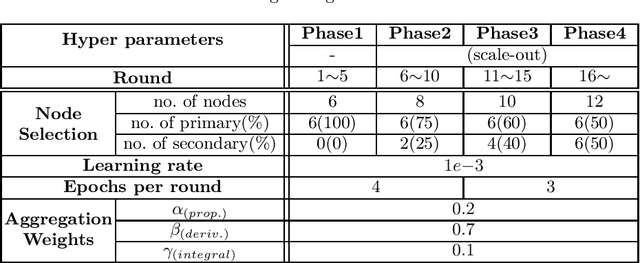
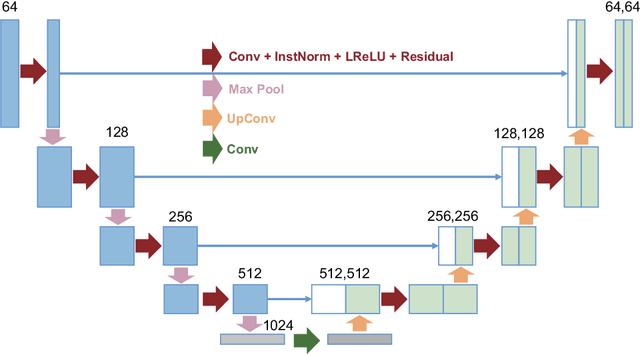
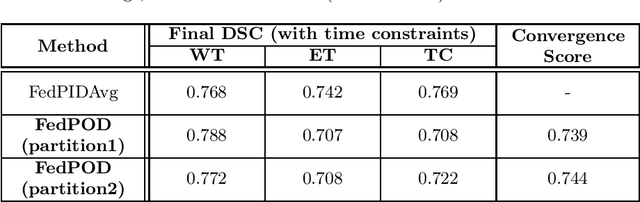
This paper proposes FedPOD, which ranked first in the 2024 Federated Tumor Segmentation (FeTS) Challenge, for optimizing learning efficiency and communication cost in federated learning among multiple clients. Inspired by FedPIDAvg, we define a round-wise task for FedPOD to enhance training efficiency. FedPIDAvg achieved performance improvement by incorporating the training loss reduction for prediction entropy as weights using differential terms. Furthermore, by modeling data distribution with a Poisson distribution and using a PID controller, it reduced communication costs even in skewed data distribution. However, excluding participants classified as outliers based on the Poisson distribution can limit data utilization. Additionally, PID controller requires the same participants to be maintained throughout the federated learning process as it uses previous rounds' learning information in the current round. In our approach, FedPOD addresses these issues by including participants excluded as outliers, eliminating dependency on previous rounds' learning information, and applying a method for calculating validation loss at each round. In this challenge, FedPOD presents comparable performance to FedPIDAvg in metrics of Dice score, 0.78, 0.71 and 0.72 for WT, ET and TC in average, and projected convergence score, 0.74 in average. Furthermore, the concept of FedPOD draws inspiration from Kubernetes' smallest computing unit, POD, designed to be compatible with Kubernetes auto-scaling. Extending round-wise tasks of FedPOD to POD units allows flexible design by applying scale-out similar to Kubernetes' auto-scaling. This work demonstrated the potentials of FedPOD to enhance federated learning by improving efficiency, flexibility, and performance in metrics.
Patlak Parametric Image Estimation from Dynamic PET Using Diffusion Model Prior
Dec 22, 2025Dynamic PET enables the quantitative estimation of physiology-related parameters and is widely utilized in research and increasingly adopted in clinical settings. Parametric imaging in dynamic PET requires kinetic modeling to estimate voxel-wise physiological parameters based on specific kinetic models. However, parametric images estimated through kinetic model fitting often suffer from low image quality due to the inherently ill-posed nature of the fitting process and the limited counts resulting from non-continuous data acquisition across multiple bed positions in whole-body PET. In this work, we proposed a diffusion model-based kinetic modeling framework for parametric image estimation, using the Patlak model as an example. The score function of the diffusion model was pre-trained on static total-body PET images and served as a prior for both Patlak slope and intercept images by leveraging their patch-wise similarity. During inference, the kinetic model was incorporated as a data-consistency constraint to guide the parametric image estimation. The proposed framework was evaluated on total-body dynamic PET datasets with different dose levels, demonstrating the feasibility and promising performance of the proposed framework in improving parametric image quality.