 Add to Chrome
 Add to Firefox
 Add to Edge
Unifying Adversarially Robust Model Experts in Vision-Language Models
Jul 30, 2026
Vision-language models (VLMs), such as CLIP, are vulnerable to adversarial attacks, posing a serious problem for real-life applications and deployment. Adversarial fine-tuning emerges as a prominent defense method; however, different fine-tuning strategies often produce specialized models with distinct robustness characteristics. Each fine-tuned model in turn thrives in some evaluation settings but falters on others, limiting their defensive capabilities. We refer to these specialized fine-tuned models as robust model experts and propose a collaborative adversarial fine-tuning framework: CARE - Collaborative Adversarial Robustness fine-tuning using Embedding alignment. CARE maintains multiple experts during training, enables knowledge exchange through embedding-space harmonization, and consolidates the learned knowledge into a single unified robust model. Experts benefit from one another while preserving their individual specializations, enabling the final model to inherit complementary robustness properties. In this paper, we demonstrate CARE on two different adversarial fine-tuning strategies with complementary robustness behaviors. Extensive experiments on classic image classification and downstream vision-language tasks display the effectiveness of our approach, with CARE being able to outperform individually learned model experts. The results suggest that collaborative learning across model experts is a promising direction for improving adversarial robustness.

From Consistency to Collaborative Discovery: MFEA-CoD for Multitask Novelty Search
Jul 01, 2026Evolutionary multitasking (EMT) has shown strong capability in solving multiple optimization problems simultaneously by exploiting latent inter-task consistency, such as similarities in promising solutions or search directions. However, most existing EMT studies remain focused on objective-driven optimization, where such consistency is mainly used to accelerate convergence toward predefined optima. In this paper, we move EMT from consistency to collaborative discovery and propose a multifactorial evolutionary algorithm with collaborative discovery (MFEA-CoD) for multitask novelty search. Unlike conventional EMT, MFEA-CoD coordinates multiple novelty search tasks to collaboratively discover behaviorally novel solutions rather than merely transferring consistent search information for faster convergence. Specifically, a multitask repulsion operator encourages different tasks to explore distinct regions of the unified search space, thereby reducing redundant behavioral discoveries. Meanwhile, an adaptive inter-task transfer mechanism exploits shared discovery opportunities in overlapping novelty-improving regions by adjusting the transfer probability according to the online contribution of transferred information. Furthermore, MFEA-CoD is extended to multitask novelty-augmented optimization, where behavioral novelty is jointly considered with objective information to alleviate premature convergence caused by deceptive objectives. Experiments on synthetic basin-type problems, deceptive maze navigation problems, MuJoCo policy optimization problems, and generative novelty search problems demonstrate that MFEA-CoD improves the efficiency of discovering diverse novel solutions and shows clear advantages in deceptive objective landscapes.
TransGP: Task-Conditioned Transformer-Guided Genetic Programming for Multitask Dynamic Flexible Job Shop Scheduling
Apr 04, 2026Hyper-heuristics have become a popular approach for solving dynamic flexible job shop scheduling (DFJSS) problems. They use gradient-free optimization techniques like Genetic Programming (GP) to evolve non-differentiable heuristics. However, conventional GP methods tend to converge slowly because they rely solely on evolutionary search to find good heuristics. Existing multitask GP methods can solve multiple tasks simultaneously and speed up the search by transferring knowledge across similar tasks. But they mostly exchange heuristic building blocks without truly generating heuristics conditioned on task information. In this paper, we aim to accelerate convergence and enable task-specific heuristic generation by incorporating a task-conditioned Transformer model. The Transformer works in two ways. First, it learns the distribution of elite heuristics, biasing the search toward promising regions of the heuristic space. Second, through conditional generation, it produces heuristics tailored to specific tasks, allowing the model to handle multiple scheduling tasks at once and improving overall optimization efficiency. Based on these ideas, we propose TransGP, a Task-Conditioned Transformer-Guided GP framework. This evolutionary paradigm integrates generative modeling with GP, enabling efficient multitask heuristic learning and knowledge transfer. We evaluate TransGP on a range of DFJSS scenarios. Experimental results show that TransGP consistently outperforms multitask GP baselines, widely used handcrafted heuristics, and the pure Transformer model, achieving faster convergence, superior solution quality, and enhanced robustness.
Learning Spiking Neural Network from Easy to Hard task
Sep 26, 2023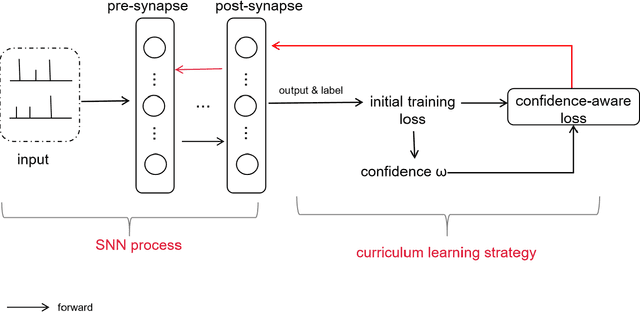
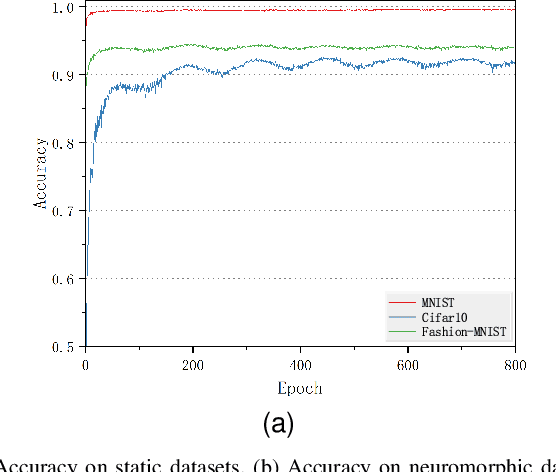
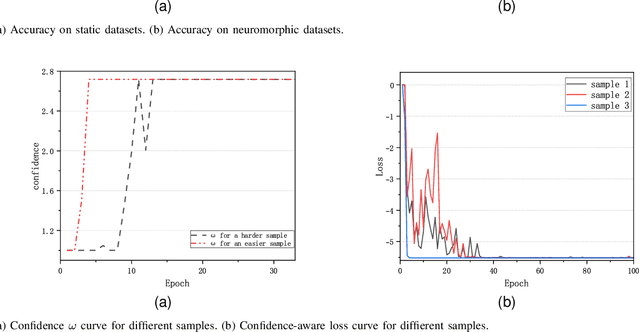
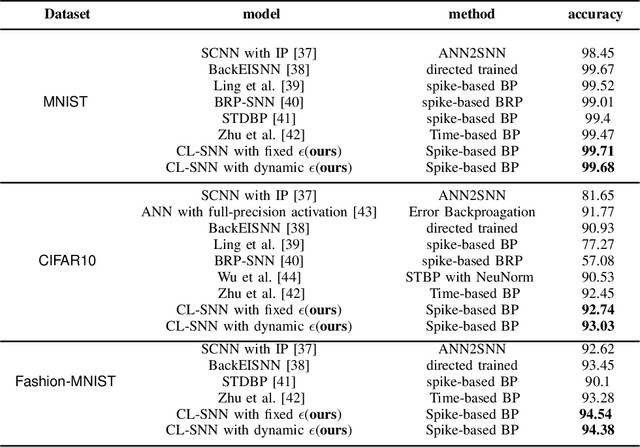
Starting with small and simple concepts, and gradually introducing complex and difficult concepts is the natural process of human learning. Spiking Neural Networks (SNNs) aim to mimic the way humans process information, but current SNNs models treat all samples equally, which does not align with the principles of human learning and overlooks the biological plausibility of SNNs. To address this, we propose a CL-SNN model that introduces Curriculum Learning(CL) into SNNs, making SNNs learn more like humans and providing higher biological interpretability. CL is a training strategy that advocates presenting easier data to models before gradually introducing more challenging data, mimicking the human learning process. We use a confidence-aware loss to measure and process the samples with different difficulty levels. By learning the confidence of different samples, the model reduces the contribution of difficult samples to parameter optimization automatically. We conducted experiments on static image datasets MNIST, Fashion-MNIST, CIFAR10, and neuromorphic datasets N-MNIST, CIFAR10-DVS, DVS-Gesture. The results are promising. To our best knowledge, this is the first proposal to enhance the biologically plausibility of SNNs by introducing CL.
High speed free-space optical communication using standard fiber communication component without optical amplification
Feb 27, 2023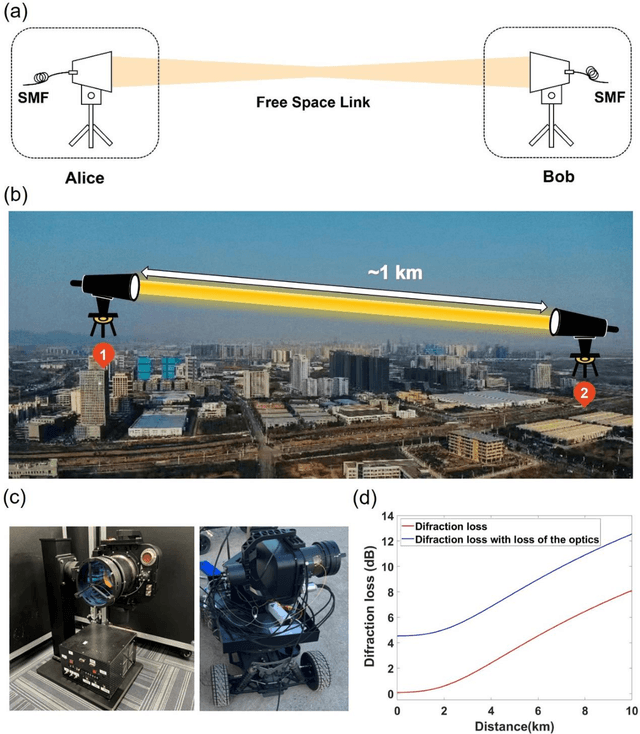
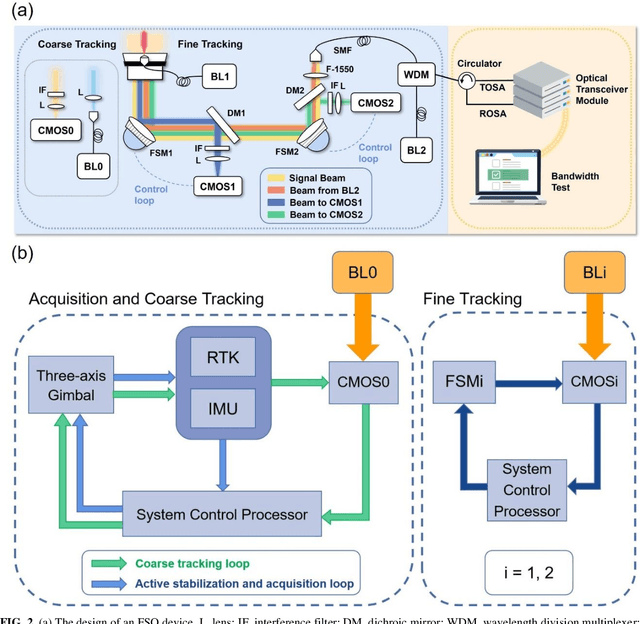
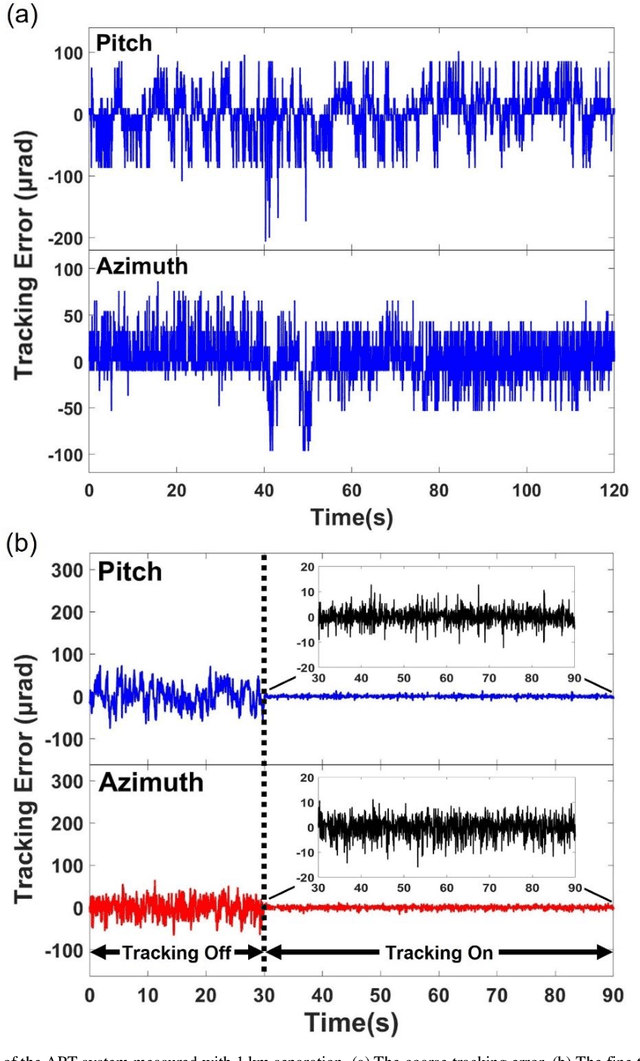
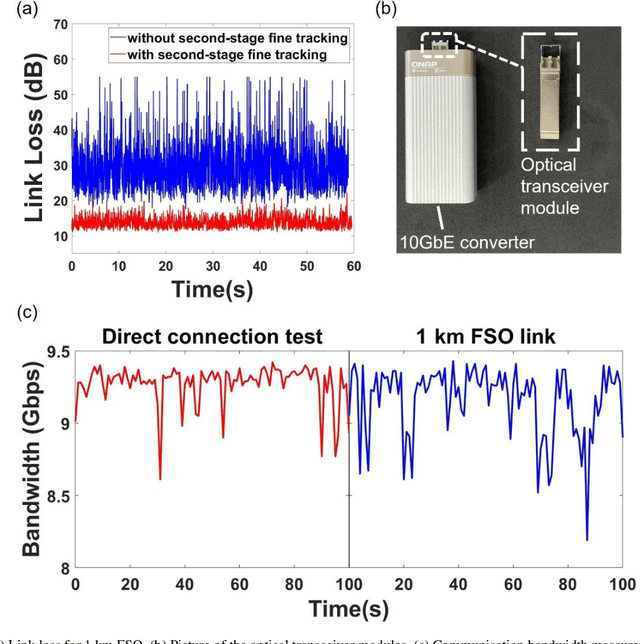
Free-space optical communication (FSO) can achieve fast, secure and license-free communication without need for physical cables, making it a cost-effective, energy-efficient and flexible solution when the fiber connection is absent. To establish FSO connection on-demand, it is essential to build portable FSO devices with compact structure and light weight. Here, we develop a miniaturized FSO system and realize 9.16 Gbps FSO between two nodes that is 1 km apart, using a commercial fiber-coupled optical transceiver module with no optical amplification. Basing on the home-made compact 90 mm-diameter acquisition, pointing and tracking (APT) system with four-stage close-loop feedback, the link tracking error is controlled at 3 {\mu}rad and results an average coupling loss of 13.7 dB. Such loss is within the tolerance of the commercial optical communication modules, and without the need of optical amplifiers, which contributes to the low system weight and power consumption. As a result, a single FSO device weighs only about 12 kg, making it compact and portable for potential application in high-speed wireless communication. Our FSO link has been tested up to 4 km, with link loss of 18 dB in the foggy weather in Nanjing, that shows longer distances can be covered with optical amplification.
Next-Generation Multiple Access Based on NOMA with Power Level Modulation
Jul 27, 2021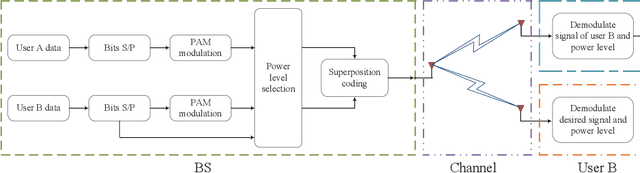
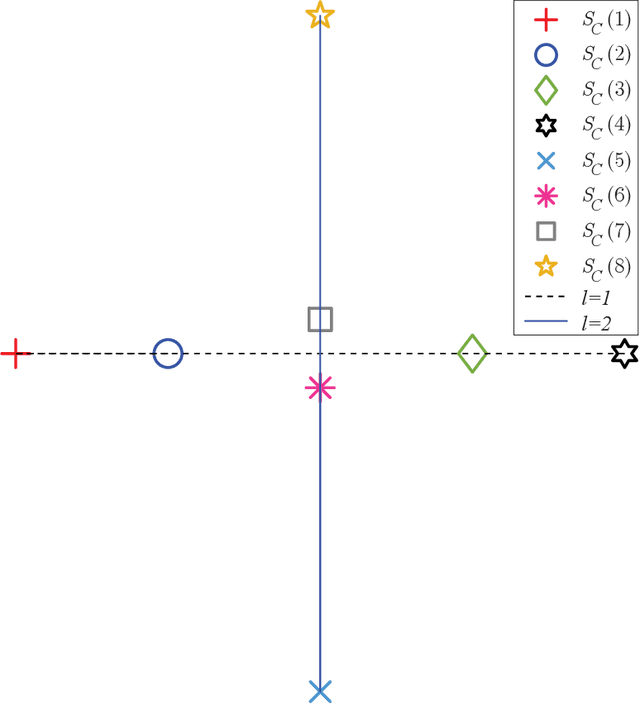
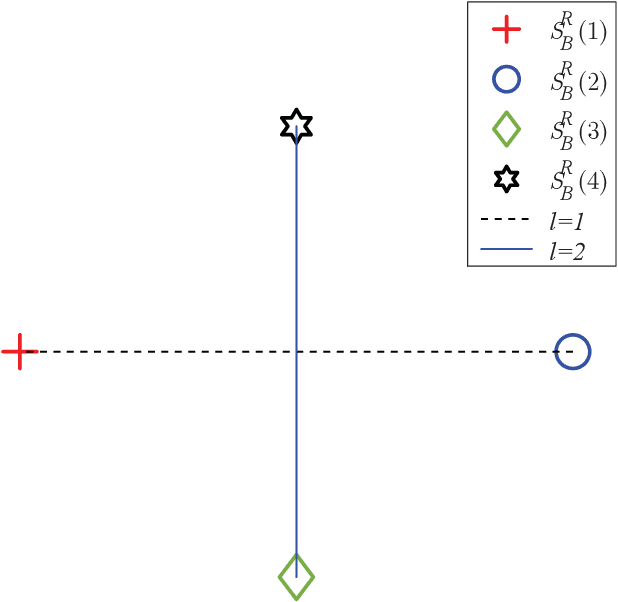
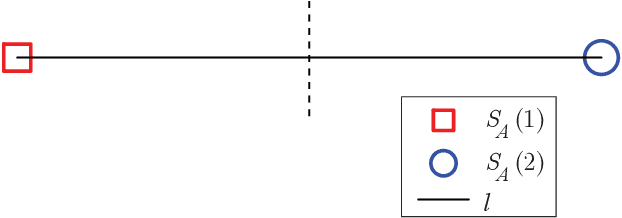
To cope with the explosive traffic growth of next-generation wireless communications, it is necessary to design next-generation multiple access techniques that can provide higher spectral efficiency as well as larger-scale connectivity. As a promising candidate, power-domain non-orthogonal multiple access (NOMA) has been widely studied. In conventional power-domain NOMA, multiple users are multiplexed in the same time and frequency band by different preset power levels, which, however, may limit the spectral efficiency under practical finite alphabet inputs. Inspired by the concept of spatial modulation, we propose to solve this problem by encoding extra information bits into the power levels, and exploit different signal constellations to help the receiver distinguish between them. To convey this idea, termed power selection (PS)-NOMA, clearly, we consider a simple downlink two-user NOMA system with finite input constellations. Assuming maximum-likelihood detection, we derive closed-form approximate bit error ratio (BER) expressions for both users. The achievable rates of both users are also derived in closed form. Simulation results verify the analysis and show that the proposed PS-NOMA outperforms conventional NOMA in terms of BER and achievable rate.