 Add to Chrome
 Add to Firefox
 Add to Edge
LLM-PDESR: Robust PDE Discovery via Subdomain Weighted Residuals and LLM-Guided Symbolic Hypothesis Generation
Jul 12, 2026
Discovering governing partial differential equations (PDEs) from noisy observational data is a fundamental challenge in scientific machine learning. Traditional symbolic regression (SR) methods often struggle to identify accurate equations within vast combinatorial search spaces, largely due to their inability to incorporate essential domain-specific prior knowledge. Furthermore, reliance on pointwise evaluations and discrete finite differences inherently amplifies high-frequency noise, creating deceptive fitness landscapes that derail the optimization process. To resolve these bottlenecks, we propose LLM-PDESR, a framework that integrates the structural hypothesis generation of Large Language Models (LLMs) with a mathematically rigorous evaluation environment. By employing C^4-continuous quintic splines for robust differentiation and subdomain weighted residuals as natural low-pass filters, our approach effectively mitigates the fitness landscape distortion that plagues existing methods. A Pareto-driven feedback loop then enables the LLM to iteratively refine candidate equations, balancing predictive accuracy with structural parsimony. We evaluate LLM-PDESR on 23 canonical PDEs and five structurally novel equations (including a multivariate system) specifically designed to preclude dataset memorization and test true discovery capabilities. Demonstrating real-world applicability, the framework successfully extracts a consistent structural skeleton for an interpretable 1D dynamical surrogate (1D-CACE) directly from noisy ERA5 reanalysis data. Extensive experiments and out-of-distribution testing confirm that LLM-PDESR significantly outperforms state-of-the-art methodologies in structural recovery, noise resilience, and the avoidance of spurious complexity and equation bloat.

RHVI-FDD: A Hierarchical Decoupling Framework for Low-Light Image Enhancement
Apr 07, 2026Low-light images often suffer from severe noise, detail loss, and color distortion, which hinder downstream multimedia analysis and retrieval tasks. The degradation in low-light images is complex: luminance and chrominance are coupled, while within the chrominance, noise and details are deeply entangled, preventing existing methods from simultaneously correcting color distortion, suppressing noise, and preserving fine details. To tackle the above challenges, we propose a novel hierarchical decoupling framework (RHVI-FDD). At the macro level, we introduce the RHVI transform, which mitigates the estimation bias caused by input noise and enables robust luminance-chrominance decoupling. At the micro level, we design a Frequency-Domain Decoupling (FDD) module with three branches for further feature separation. Using the Discrete Cosine Transform, we decompose chrominance features into low, mid, and high-frequency bands that predominantly represent global tone, local details, and noise components, which are then processed by tailored expert networks in a divide-and-conquer manner and fused via an adaptive gating module for content-aware fusion. Extensive experiments on multiple low-light datasets demonstrate that our method consistently outperforms existing state-of-the-art approaches in both objective metrics and subjective visual quality.
Surprisingly Popular Algorithm-based Adaptive Euclidean Distance Topology Learning PSO
Aug 25, 2021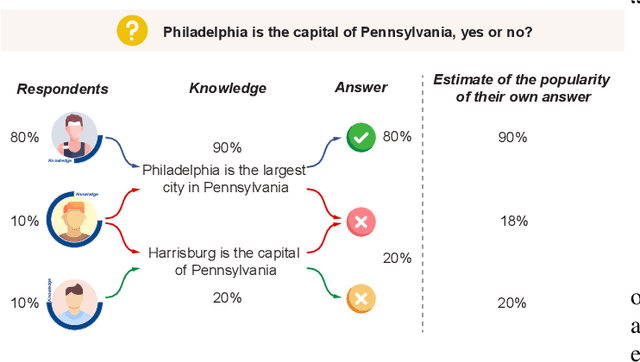
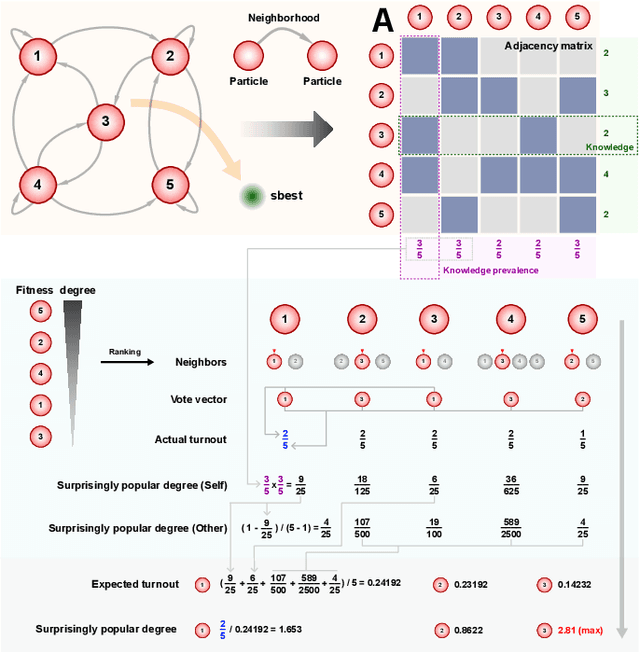
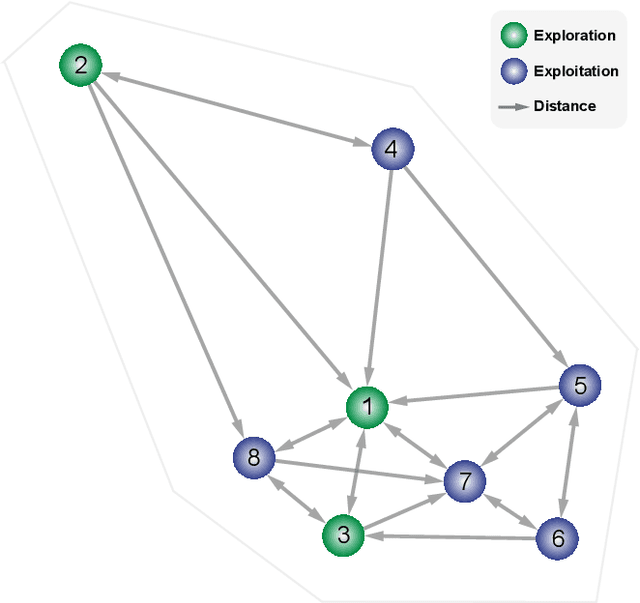
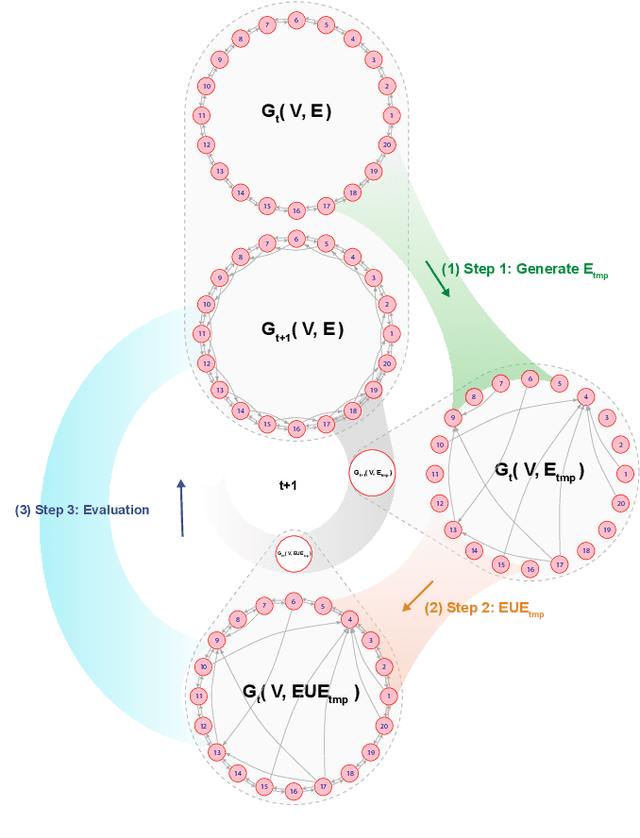
The surprisingly popular algorithm (SPA) is a powerful crowd decision model proposed in social science, which can identify the knowledge possessed in of the minority. We have modelled the SPA to select the exemplars in PSO scenarios and proposed the Surprisingly Popular Algorithm-based Comprehensive Adaptive Topology Learning Particle Swarm Optimization. Due to the significant influence of the communication topology on exemplar selection, we propose an adaptive euclidean distance dynamic topology maintenance. And then we propose the Surprisingly Popular Algorithm-based Adaptive Euclidean Distance Topology Learning Particle Swarm Optimization (SpadePSO), which use SPA to guide the direction of the exploitation sub-population. We analyze the influence of different topologies on the SPA. We evaluate the proposed SpadePSO on the full CEC2014 benchmark suite, the spread spectrum radar polyphase coding design and the ordinary differential equations models inference. The experimental results on the full CEC2014 benchmark suite show that the SpadePSO is competitive with PSO, OLPSO, HCLPSO, GL-PSO, TSLPSO and XPSO. The mean and standard deviation of SpadePSO are lower than the other PSO variants on the spread spectrum radar polyphase coding design. Finally, the ordinary differential equations models' inference results show that SpadePSO performs better than LatinPSO, specially designed for this problem. SpadePSO has lower requirements for population number than LatinPSO.
Investigation of lightweight acoustic curtains for mid-to-high frequency noise insulations
Aug 16, 2021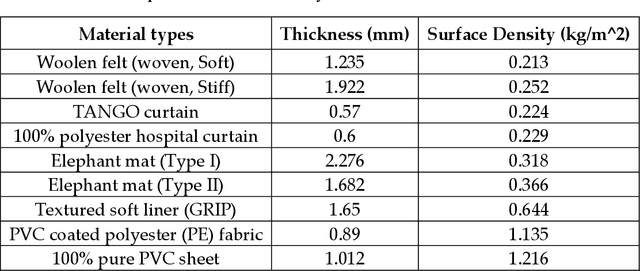
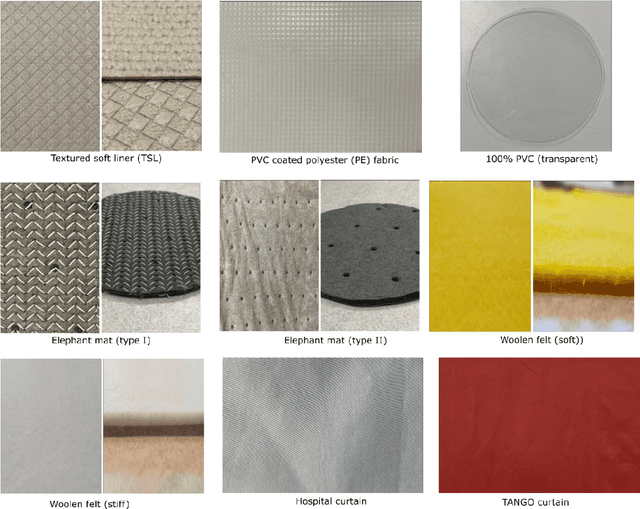
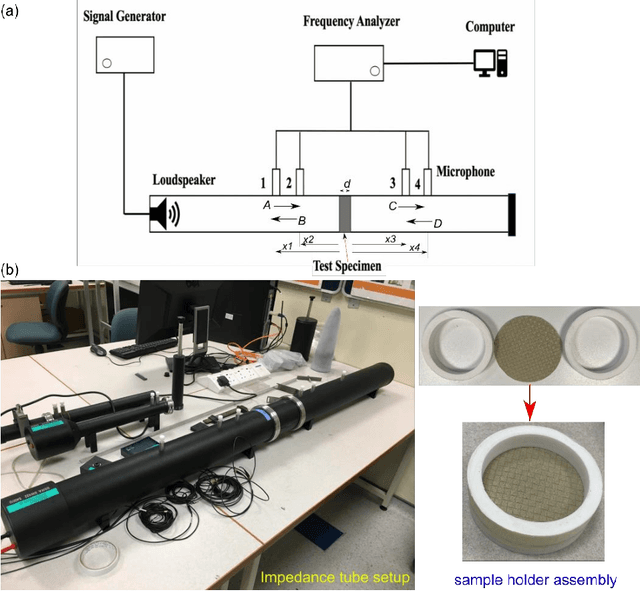
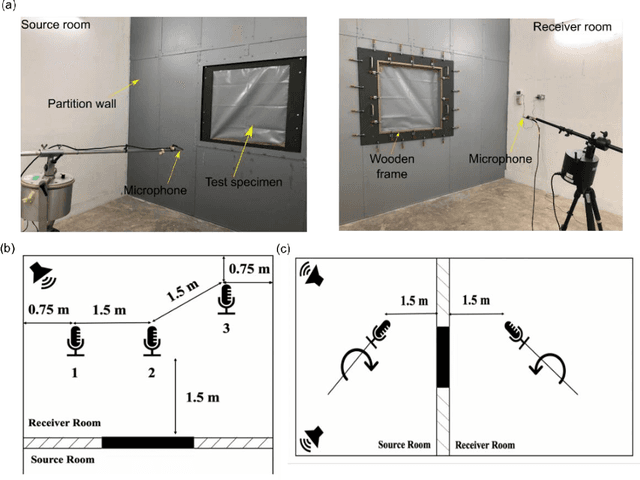
The continuous surge of environmental noise levels has become a vital challenge for humanity. Earlier studies have reported that prolonged exposure to loud noise may cause auditory and non-auditory disorders. Therefore, there is a growing demand for suitable noise barriers. Herein, we have investigated several commercially available curtain fabrics' acoustic performance, potentially used for sound insulation purposes. Thorough experimental investigations have been performed on PVC coated polyester fabrics' acoustical performances and 100 % pure PVC sheets. The PVC-coated polyester fabric exhibited better sound insulation properties, particularly in the mid-to-high frequency range (600-1600 Hz) with a transmission loss of about 11 to 22 dB, while insertion loss of > 10 dB has been achieved. Also, the acoustic performance of multi-layer curtains has been investigated. These multi-layer curtains have shown superior acoustic properties to that of single-layer acoustic curtains.