 Add to Chrome
 Add to Firefox
 Add to Edge
CMGL: Confidence-guided Multi-omics Graph Learning for Cancer Subtype Classification
Apr 27, 2026
Motivation: Multi-omics integration can improve cancer subtyping, but modality informativeness and noise vary across cancer types and patients. Existing graph-based methods optimize modality weights jointly with the classification objective and therefore lack independent reliability estimates, so low-quality omics distort patient similarity graphs and amplify noise through message passing. Results: We propose CMGL, a two-stage framework that estimates per-sample modality reliability through evidential deep learning and uses the frozen confidence scores to guide cross-omics fusion and graph construction. On four MLOmics cancer-subtype tasks and the 32-class pan-cancer task, CMGL consistently improves over the strongest baseline, surpassing it by 4.03% in average accuracy on the four single-cancer tasks. Its representations recover the PAM50 intrinsic subtypes of breast invasive carcinoma (BRCA), and the BRCA-trained model transfers without fine-tuning to kidney renal clear cell carcinoma (KIRC), stratifying patients into prognostically distinct groups.

An Evaluation of Large Language Models in Bioinformatics Research
Feb 21, 2024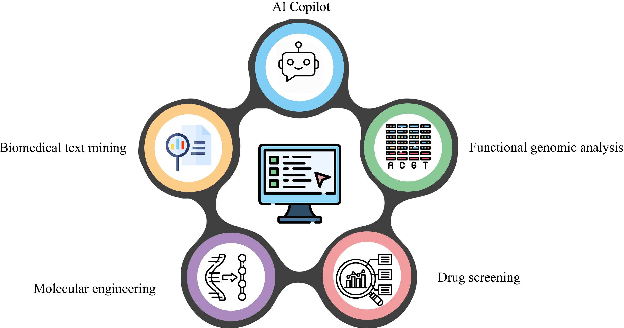
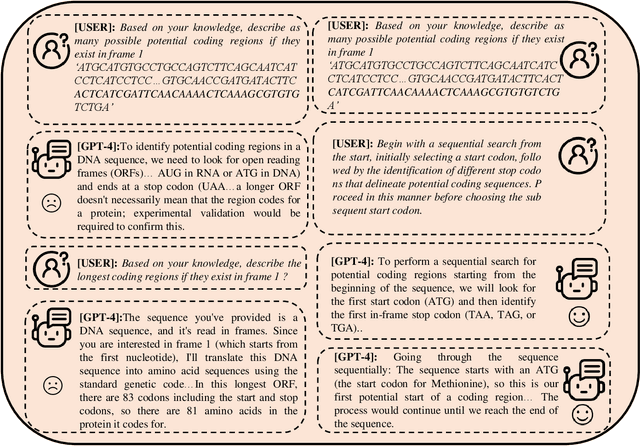
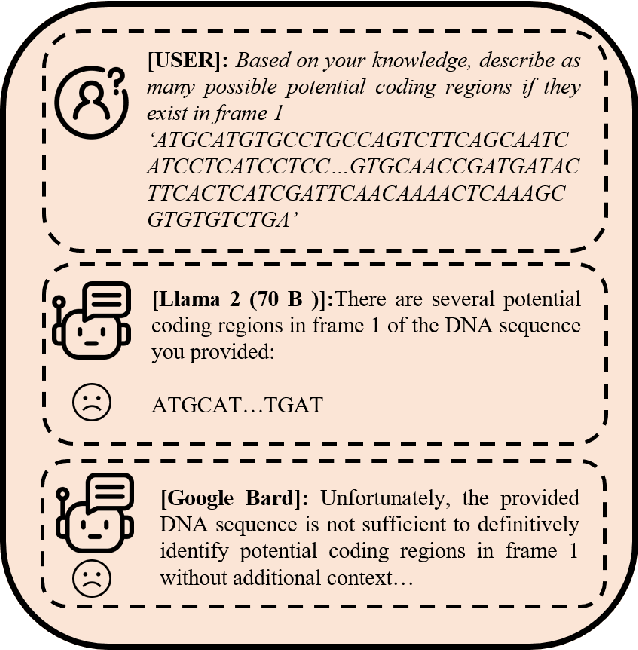
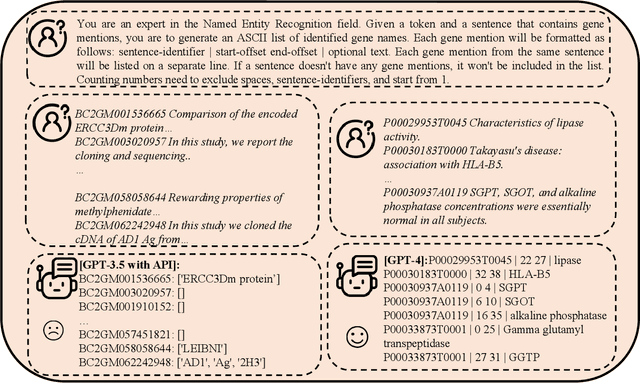
Large language models (LLMs) such as ChatGPT have gained considerable interest across diverse research communities. Their notable ability for text completion and generation has inaugurated a novel paradigm for language-interfaced problem solving. However, the potential and efficacy of these models in bioinformatics remain incompletely explored. In this work, we study the performance LLMs on a wide spectrum of crucial bioinformatics tasks. These tasks include the identification of potential coding regions, extraction of named entities for genes and proteins, detection of antimicrobial and anti-cancer peptides, molecular optimization, and resolution of educational bioinformatics problems. Our findings indicate that, given appropriate prompts, LLMs like GPT variants can successfully handle most of these tasks. In addition, we provide a thorough analysis of their limitations in the context of complicated bioinformatics tasks. In conclusion, we believe that this work can provide new perspectives and motivate future research in the field of LLMs applications, AI for Science and bioinformatics.