 Add to Chrome
 Add to Firefox
 Add to Edge
BenchGuard: Who Guards the Benchmarks? Automated Auditing of LLM Agent Benchmarks
Apr 27, 2026
As benchmarks grow in complexity, many apparent agent failures are not failures of the agent at all - they are failures of the benchmark itself: broken specifications, implicit assumptions, and rigid evaluation scripts that penalize valid alternative approaches. We propose employing frontier LLMs as systematic auditors of evaluation infrastructure, and realize this vision through BenchGuard, the first automated auditing framework for task-oriented, execution-based agent benchmarks. BenchGuard cross-verifies all benchmark artifacts via structured LLM protocols, optionally incorporating agent solutions or execution traces as additional diagnostic evidence. Deployed on two prominent scientific benchmarks, BenchGuard identified 12 author-confirmed issues in ScienceAgentBench - including fatal errors rendering tasks unsolvable - and exactly matched 83.3% of expert-identified issues on the BIXBench Verified-50 subset, catching defects that prior human review missed entirely. A full audit of 50 complex bioinformatics tasks costs under USD 15, making automated benchmark auditing a practical and valuable complement to human review. These findings point toward AI-assisted benchmark development, where frontier models serve not only as subjects of evaluation but as active participants in validating the evaluation infrastructure itself.

An Evaluation of Large Language Models in Bioinformatics Research
Feb 21, 2024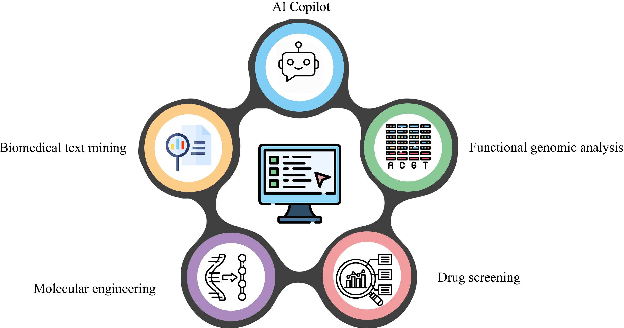
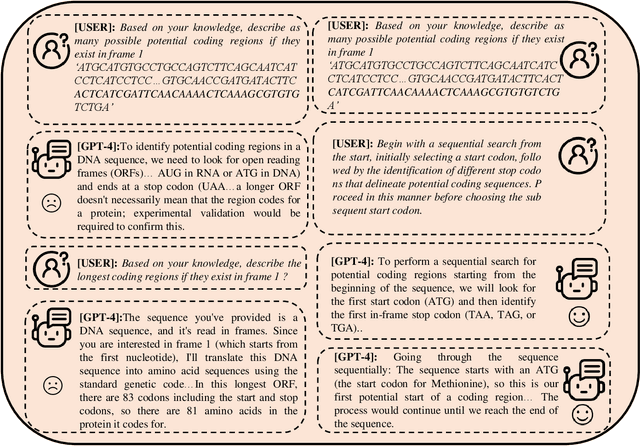
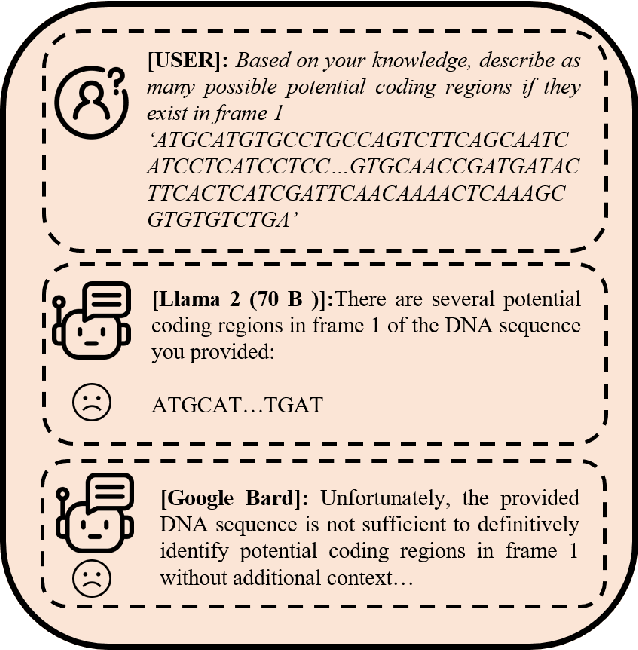
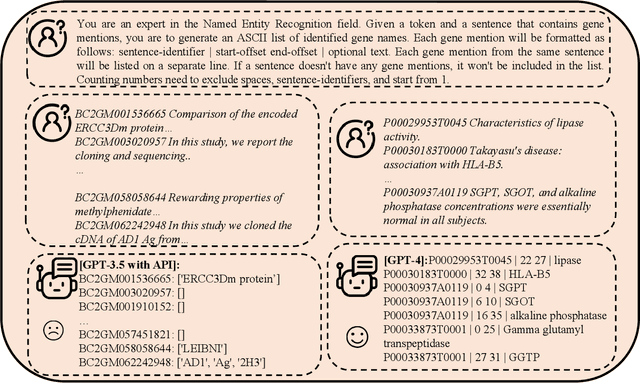
Large language models (LLMs) such as ChatGPT have gained considerable interest across diverse research communities. Their notable ability for text completion and generation has inaugurated a novel paradigm for language-interfaced problem solving. However, the potential and efficacy of these models in bioinformatics remain incompletely explored. In this work, we study the performance LLMs on a wide spectrum of crucial bioinformatics tasks. These tasks include the identification of potential coding regions, extraction of named entities for genes and proteins, detection of antimicrobial and anti-cancer peptides, molecular optimization, and resolution of educational bioinformatics problems. Our findings indicate that, given appropriate prompts, LLMs like GPT variants can successfully handle most of these tasks. In addition, we provide a thorough analysis of their limitations in the context of complicated bioinformatics tasks. In conclusion, we believe that this work can provide new perspectives and motivate future research in the field of LLMs applications, AI for Science and bioinformatics.
What Should Data Science Education Do with Large Language Models?
Jul 07, 2023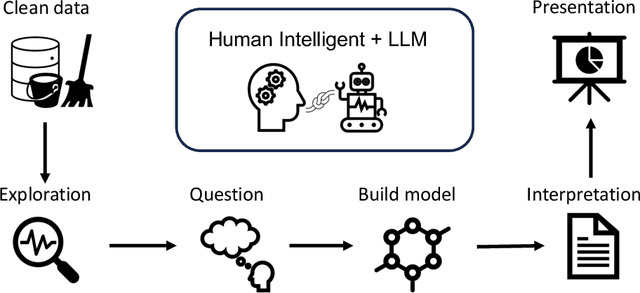
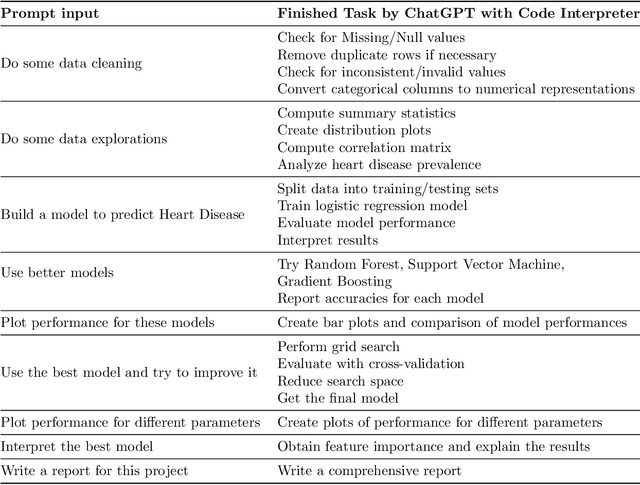
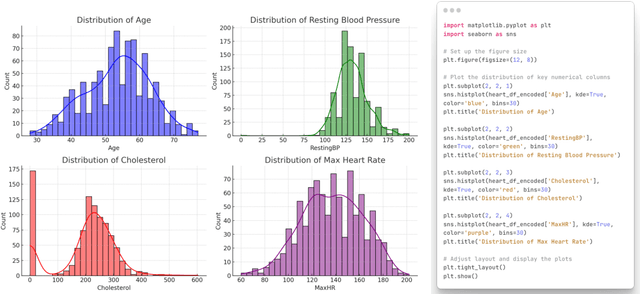

The rapid advances of large language models (LLMs), such as ChatGPT, are revolutionizing data science and statistics. These state-of-the-art tools can streamline complex processes. As a result, it reshapes the role of data scientists. We argue that LLMs are transforming the responsibilities of data scientists, shifting their focus from hands-on coding, data-wrangling and conducting standard analyses to assessing and managing analyses performed by these automated AIs. This evolution of roles is reminiscent of the transition from a software engineer to a product manager. We illustrate this transition with concrete data science case studies using LLMs in this paper. These developments necessitate a meaningful evolution in data science education. Pedagogy must now place greater emphasis on cultivating diverse skillsets among students, such as LLM-informed creativity, critical thinking, AI-guided programming. LLMs can also play a significant role in the classroom as interactive teaching and learning tools, contributing to personalized education. This paper discusses the opportunities, resources and open challenges for each of these directions. As with any transformative technology, integrating LLMs into education calls for careful consideration. While LLMs can perform repetitive tasks efficiently, it's crucial to remember that their role is to supplement human intelligence and creativity, not to replace it. Therefore, the new era of data science education should balance the benefits of LLMs while fostering complementary human expertise and innovations. In conclusion, the rise of LLMs heralds a transformative period for data science and its education. This paper seeks to shed light on the emerging trends, potential opportunities, and challenges accompanying this paradigm shift, hoping to spark further discourse and investigation into this exciting, uncharted territory.