 Add to Chrome
 Add to Firefox
 Add to Edge
AI-Native Closed-Loop Security for 6G-Enabled Cyber-Physical Systems: From Edge Detection to Network-Wide Mitigation
Jun 06, 2026
In sixth-generation (6G) networks, billions of cyber-physical systems (CPSs) - autonomous vehicles, smart grids, industrial robots, and remote-surgical equipment - will run over ultra-reliable low-latency slices, collapsing the gap between a remote breach and physical harm to milliseconds, a budget perimeter firewalls and centralised security operations centres cannot meet. This survey reframes 6G CPS security as a closed-loop, AI-native pipeline that senses at the multi-access edge computing (MEC) tier, using minute-scale call-detail records (CDRs) for baseline learning and sub-millisecond RAN/Open-RAN (O-RAN) telemetry for the latency-critical path. It decides locally with compressed deep models, mitigates network-wide via SDN, NFV, and O-RAN controllers, and retrains through federated learning (FL) and digital-twin (DT) replay. We formalise a per-slice, tail-bounded latency contract on the sense, detect, and mitigate stages, enforced at a slice-dependent tail percentile (p99 for safety-critical URLLC slices). Organising 128 peer-reviewed studies (2017-2026) under a PRISMA 2020 protocol, we (i) map the 6G/CPS threat surface to MITRE ATT&CK and a CDR-observable feature space; (ii) unify edge anomaly detection and DDoS classification across twelve datasets and statistical, graph, and transformer models; (iii) synthesise SDN/NFV/O-RAN primitives into one closed-loop reference architecture; (iv) treat FL, large language models (LLMs), DT, post-quantum cryptography (PQC), zero-trust architecture (ZTA), and explainable AI as cross-cutting enablers, not parallel pillars; and (v) consolidate open problems into five directions spanning data, latency, trust, standardisation, and evaluation.

Opportunities for Intelligent Reflecting Surfaces in 6G-Empowered V2X Communications
Oct 02, 2022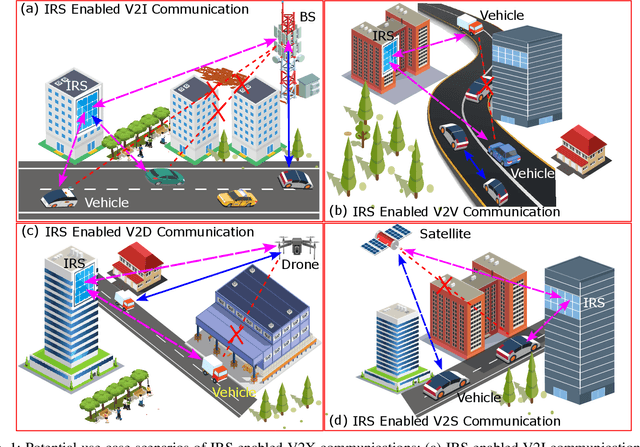
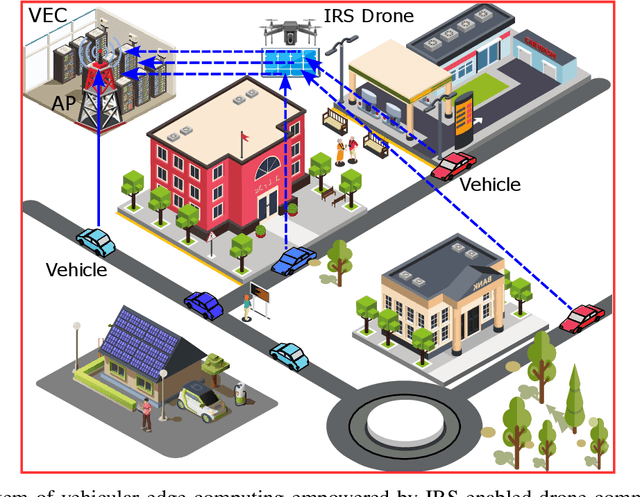
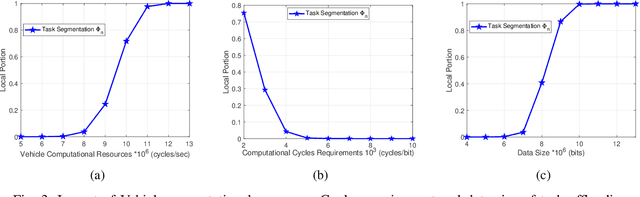
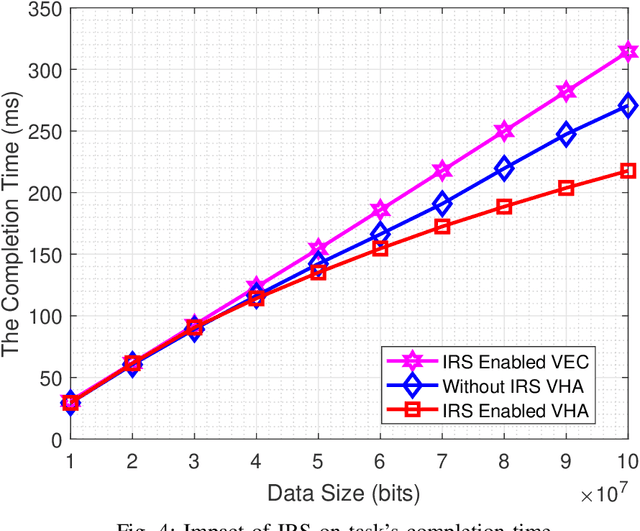
This paper first describes the introduction of 6G-empowered V2X communications and IRS technology. Then it discusses different use case scenarios of IRS enabled V2X communications and reports recent advances in the existing literature. Next, we focus our attention on the scenario of vehicular edge computing involving IRS enabled drone communications in order to reduce vehicle computational time via optimal computational and communication resource allocation. At the end, this paper highlights current challenges and discusses future perspectives of IRS enabled V2X communications in order to improve current work and spark new ideas.
Reconfigurable Intelligent Surfaces: Potentials, Applications, and Challenges for 6G Wireless Networks
Jul 12, 2021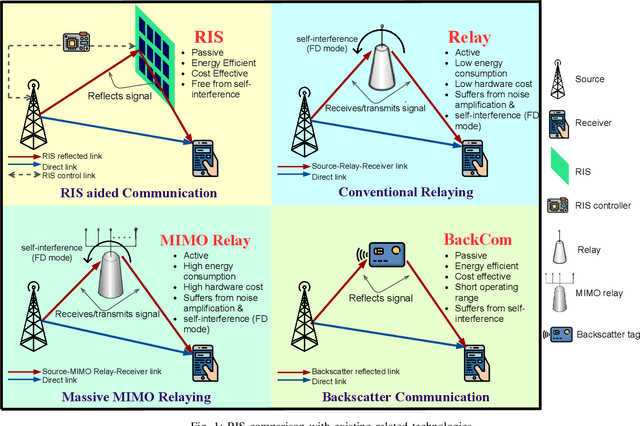
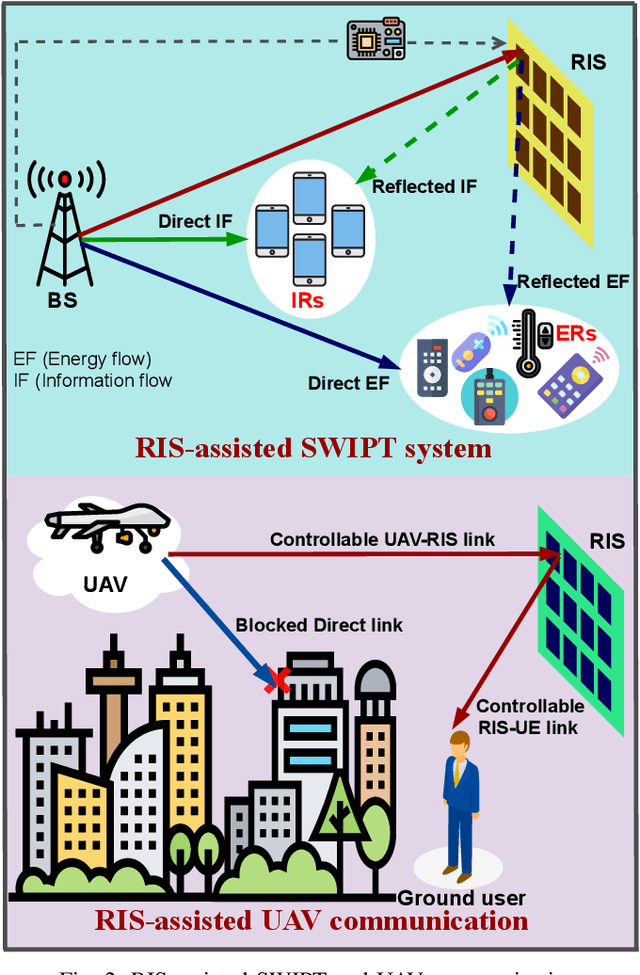
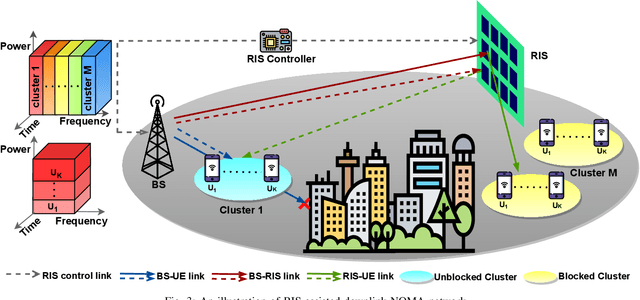
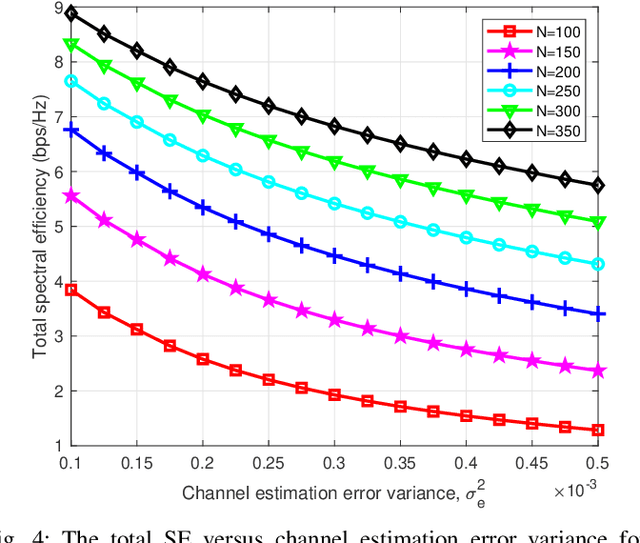
Reconfigurable intelligent surfaces (RISs), with the potential to realize a smart radio environment, have emerged as an energy-efficient and a cost-effective technology to support the services and demands foreseen for coming decades. By leveraging a large number of low-cost passive reflecting elements, RISs introduce a phase-shift in the impinging signal to create a favorable propagation channel between the transmitter and the receiver.~\textcolor{black}{In this article, we provide a tutorial overview of RISs for sixth-generation (6G) wireless networks. Specifically, we present a comprehensive discussion on performance gains that can be achieved by integrating RISs with emerging communication technologies. We address the practical implementation of RIS-assisted networks and expose the crucial challenges, including the RIS reconfiguration, deployment and size optimization, and channel estimation. Furthermore, we explore the integration of RIS and non-orthogonal multiple access (NOMA) under imperfect channel state information (CSI). Our numerical results illustrate the importance of better channel estimation in RIS-assisted networks and indicate the various factors that impact the size of RIS. Finally, we present promising future research directions for realizing RIS-assisted networks in 6G communication.