 Add to Chrome
 Add to Firefox
 Add to Edge
COMBINER: Composed Image Retrieval Guided by Attribute-based Neighbor Relations
Jun 03, 2026
Composed Image Retrieval (CIR) represents a challenging retrieval task that targets locating specific images through multimodal inputs. Despite recent progress in CIR techniques, prior approaches often overlook cases where images appear visually alike yet differ in attributes, potentially undermining both multimodal feature fusion and similarity modeling. To mitigate this limitation, we design a unified representation of cross-modal features based on attribute prototypes. Nevertheless, the task is far from straightforward, owing to three core issues: (1) entanglement in attribute-level semantics, (2) inconsistency across modalities, and (3) supervised signal missing. To tackle the above obstacles, we introduce a COMposed image retrieval network guided By attrIbute-based NEighbor Relations (COMBINER). Specifically, we first design an Adaptive Semantic Disentanglement module, which is capable of disentangling attribute features based on multimodal primitive features. Secondly, we propose a Unified Prototype-based Composition module, which can construct cross-modal unified prototypes (CUP) and facilitate multimodal feature composition. Finally, we introduce a Dual Relations Modeling module, which can mine pairwise and neighbor relations based on attribute similarity. Compared to traditional neighbor relations modeling CIR methods, COMBINER represents the first study addressing the phenomenon of visually similar but attribute-unrelated samples. It achieves a more accurate understanding of the semantic relations among samples by employing an attribute prototype-based similarity metric. Comprehensive experiments conducted on three benchmark datasets confirm the effectiveness of our proposed COMBINER. The implementation of our method will be accessed at https://github.com/Lee-zixu/COMBINER

FashionLens: Toward Versatile Fashion Image Retrieval via Task-Adaptive Learning
May 21, 2026Fashion image retrieval is a cornerstone of modern e-commerce systems. A unified framework that supports diverse query formats and search intentions is highly desired in practice. However, existing approaches focus on narrow retrieval tasks and do not fully capture such diversity. Therefore, in this work, we aim to develop a unified framework capable of handling diverse realistic fashion retrieval scenarios, achieving truly versatile fashion image retrieval. To establish a data foundation, we first introduce U-FIRE, a comprehensive benchmark that consolidates fragmented fashion datasets into a unified collection, supplemented by two manually curated datasets for testing generalization. Building upon this, we propose FashionLens, a unified framework based on Multimodal Large Language Models. To handle divergent matching objectives, we design a Proposal-Guided Spherical Query Calibrator that dynamically shifts query representations into task-aligned metric spaces via adaptive spherical linear interpolation. Additionally, to mitigate the optimization imbalance caused by varying task complexities and data scales, we develop a Gradient-Guided Adaptive Sampling strategy that automatically re-weights tasks based on realtime learning difficulty and the data scale prior. Experiments on U-FIRE show that FashionLens achieves state-of-the-art performance across diverse retrieval scenarios and generalizes robustly to unseen tasks. The data and code are publicly released at https://github.com/haokunwen/FashionLens.
UniCVR: From Alignment to Reranking for Unified Zero-Shot Composed Visual Retrieval
Apr 22, 2026Composed image retrieval, multi-turn composed image retrieval, and composed video retrieval all share a common paradigm: composing the reference visual with modification text to retrieve the desired target. Despite this shared structure, the three tasks have been studied in isolation, with no prior work proposing a unified framework, let alone a zero-shot solution. In this paper, we propose UniCVR, the first unified zero-shot composed visual retrieval framework that jointly addresses all three tasks without any task-specific human-annotated data. UniCVR strategically combines two complementary strengths: Multimodal Large Language Models (MLLMs) for compositional query understanding and Vision-Language Pre-trained (VLP) models for structured visual retrieval. Concretely, UniCVR operates in two stages. In Stage I, we train the MLLM as a compositional query embedder via contrastive learning on a curated multi-source dataset of approximately 3.5M samples, bridging the heterogeneous embedding spaces between the MLLM and the frozen VLP gallery encoder. A cluster-based hard negative sampling strategy is proposed to strengthen contrastive supervision. In Stage II, we introduce an MLLM-guided dual-level reranking mechanism that applies adaptive budgeted subset scoring to a small number of top-ranked candidates, and then exploits the resulting relevance signals through a dual-level re-scoring scheme, producing more accurate final rankings with minimal computational overhead. Extensive experiments across five benchmarks covering all three tasks demonstrate that UniCVR achieves cutting-edge performance, validating its effectiveness and generalizability. Our data and code will be released upon acceptance.
Dual Knowledge-Enhanced Two-Stage Reasoner for Multimodal Dialog Systems
Sep 09, 2025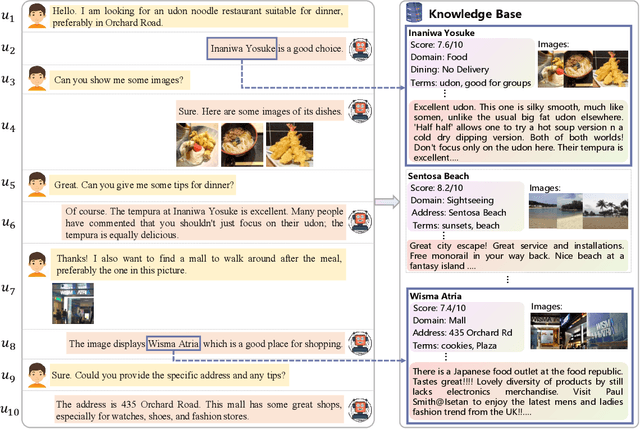
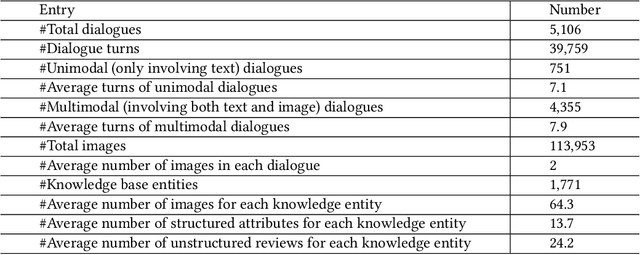
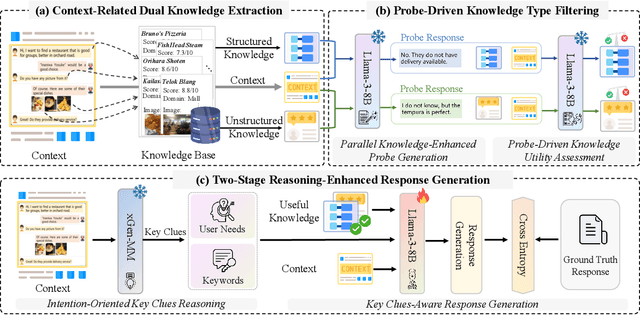
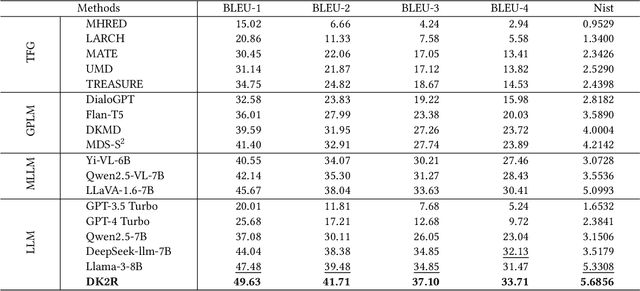
Textual response generation is pivotal for multimodal \mbox{task-oriented} dialog systems, which aims to generate proper textual responses based on the multimodal context. While existing efforts have demonstrated remarkable progress, there still exist the following limitations: 1) \textit{neglect of unstructured review knowledge} and 2) \textit{underutilization of large language models (LLMs)}. Inspired by this, we aim to fully utilize dual knowledge (\textit{i.e., } structured attribute and unstructured review knowledge) with LLMs to promote textual response generation in multimodal task-oriented dialog systems. However, this task is non-trivial due to two key challenges: 1) \textit{dynamic knowledge type selection} and 2) \textit{intention-response decoupling}. To address these challenges, we propose a novel dual knowledge-enhanced two-stage reasoner by adapting LLMs for multimodal dialog systems (named DK2R). To be specific, DK2R first extracts both structured attribute and unstructured review knowledge from external knowledge base given the dialog context. Thereafter, DK2R uses an LLM to evaluate each knowledge type's utility by analyzing LLM-generated provisional probe responses. Moreover, DK2R separately summarizes the intention-oriented key clues via dedicated reasoning, which are further used as auxiliary signals to enhance LLM-based textual response generation. Extensive experiments conducted on a public dataset verify the superiority of DK2R. We have released the codes and parameters.
FineCIR: Explicit Parsing of Fine-Grained Modification Semantics for Composed Image Retrieval
Mar 27, 2025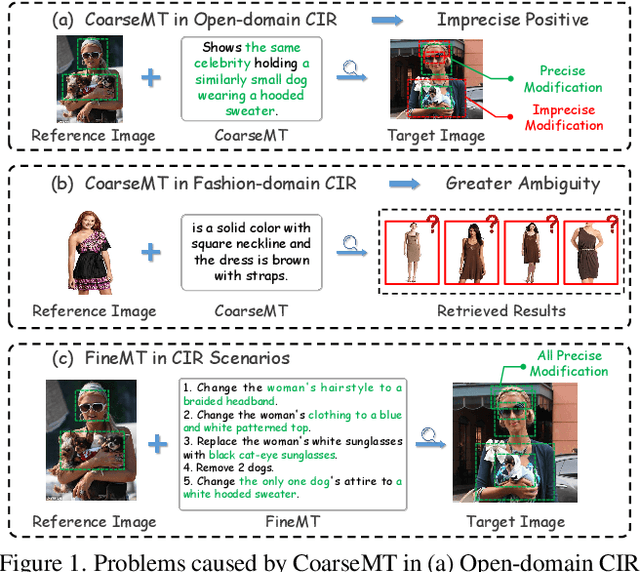
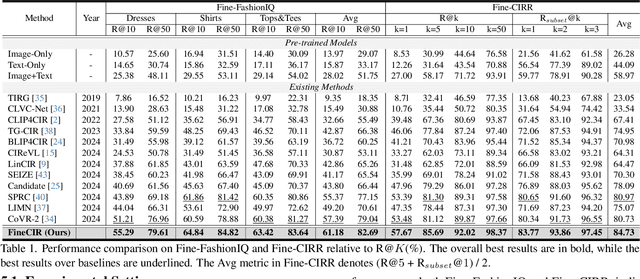
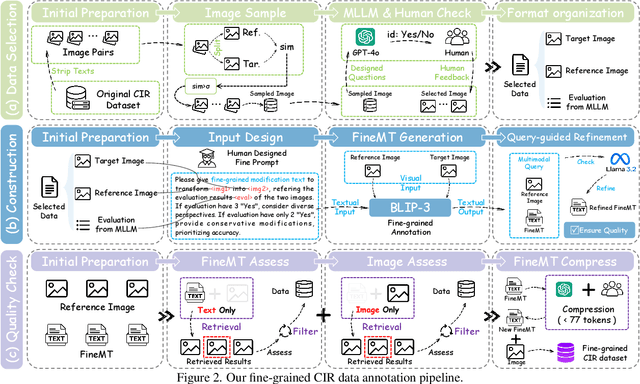
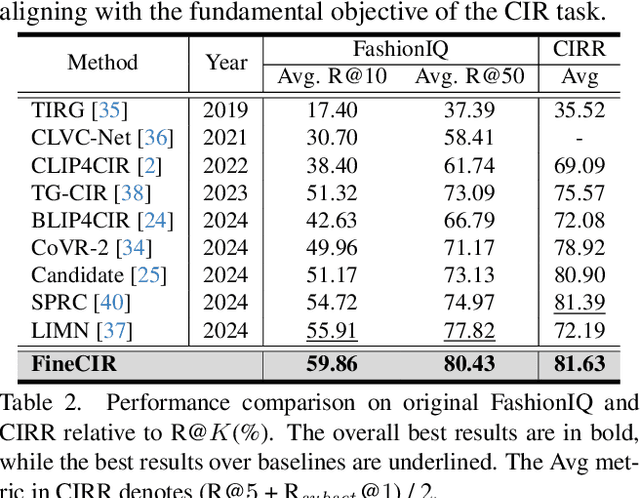
Composed Image Retrieval (CIR) facilitates image retrieval through a multimodal query consisting of a reference image and modification text. The reference image defines the retrieval context, while the modification text specifies desired alterations. However, existing CIR datasets predominantly employ coarse-grained modification text (CoarseMT), which inadequately captures fine-grained retrieval intents. This limitation introduces two key challenges: (1) ignoring detailed differences leads to imprecise positive samples, and (2) greater ambiguity arises when retrieving visually similar images. These issues degrade retrieval accuracy, necessitating manual result filtering or repeated queries. To address these limitations, we develop a robust fine-grained CIR data annotation pipeline that minimizes imprecise positive samples and enhances CIR systems' ability to discern modification intents accurately. Using this pipeline, we refine the FashionIQ and CIRR datasets to create two fine-grained CIR datasets: Fine-FashionIQ and Fine-CIRR. Furthermore, we introduce FineCIR, the first CIR framework explicitly designed to parse the modification text. FineCIR effectively captures fine-grained modification semantics and aligns them with ambiguous visual entities, enhancing retrieval precision. Extensive experiments demonstrate that FineCIR consistently outperforms state-of-the-art CIR baselines on both fine-grained and traditional CIR benchmark datasets. Our FineCIR code and fine-grained CIR datasets are available at https://github.com/SDU-L/FineCIR.git.
Fine-grained Textual Inversion Network for Zero-Shot Composed Image Retrieval
Mar 25, 2025Composed Image Retrieval (CIR) allows users to search target images with a multimodal query, comprising a reference image and a modification text that describes the user's modification demand over the reference image. Nevertheless, due to the expensive labor cost of training data annotation, recent researchers have shifted to the challenging task of zero-shot CIR (ZS-CIR), which targets fulfilling CIR without annotated triplets. The pioneer ZS-CIR studies focus on converting the CIR task into a standard text-to-image retrieval task by pre-training a textual inversion network that can map a given image into a single pseudo-word token. Despite their significant progress, their coarse-grained textual inversion may be insufficient to capture the full content of the image accurately. To overcome this issue, in this work, we propose a novel Fine-grained Textual Inversion Network for ZS-CIR, named FTI4CIR. In particular, FTI4CIR comprises two main components: fine-grained pseudo-word token mapping and tri-wise caption-based semantic regularization. The former maps the image into a subject-oriented pseudo-word token and several attribute-oriented pseudo-word tokens to comprehensively express the image in the textual form, while the latter works on jointly aligning the fine-grained pseudo-word tokens to the real-word token embedding space based on a BLIP-generated image caption template. Extensive experiments conducted on three benchmark datasets demonstrate the superiority of our proposed method.
A Comprehensive Survey on Composed Image Retrieval
Feb 19, 2025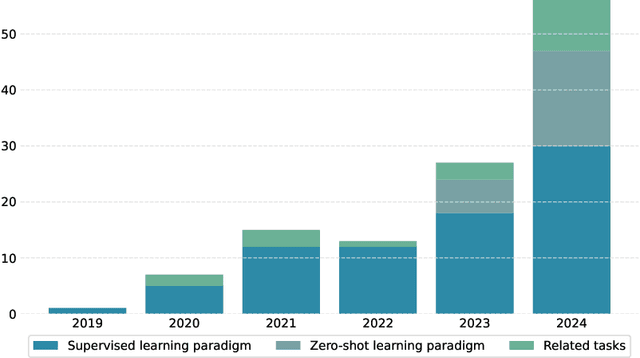
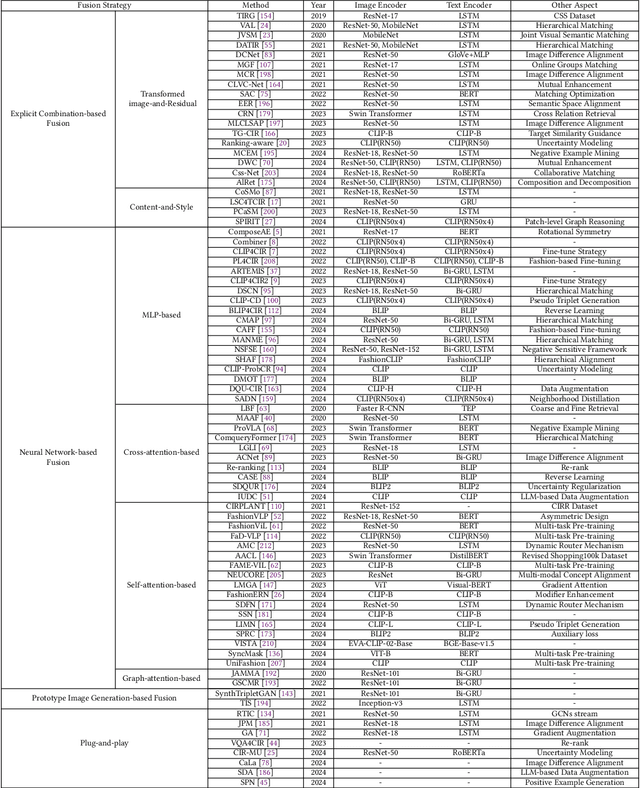
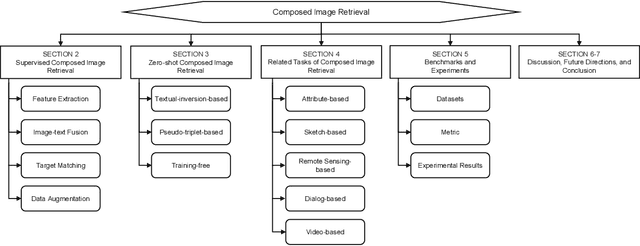
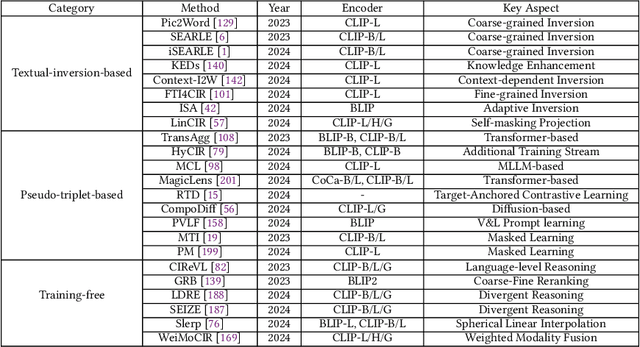
Composed Image Retrieval (CIR) is an emerging yet challenging task that allows users to search for target images using a multimodal query, comprising a reference image and a modification text specifying the user's desired changes to the reference image. Given its significant academic and practical value, CIR has become a rapidly growing area of interest in the computer vision and machine learning communities, particularly with the advances in deep learning. To the best of our knowledge, there is currently no comprehensive review of CIR to provide a timely overview of this field. Therefore, we synthesize insights from over 120 publications in top conferences and journals, including ACM TOIS, SIGIR, and CVPR In particular, we systematically categorize existing supervised CIR and zero-shot CIR models using a fine-grained taxonomy. For a comprehensive review, we also briefly discuss approaches for tasks closely related to CIR, such as attribute-based CIR and dialog-based CIR. Additionally, we summarize benchmark datasets for evaluation and analyze existing supervised and zero-shot CIR methods by comparing experimental results across multiple datasets. Furthermore, we present promising future directions in this field, offering practical insights for researchers interested in further exploration.
Pseudo-triplet Guided Few-shot Composed Image Retrieval
Jul 08, 2024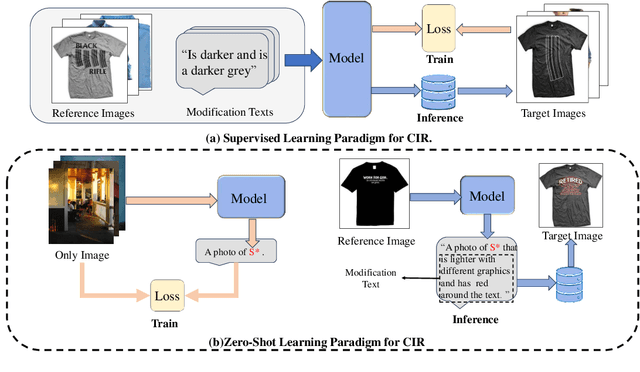
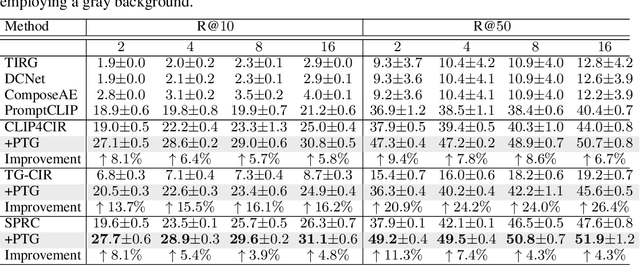

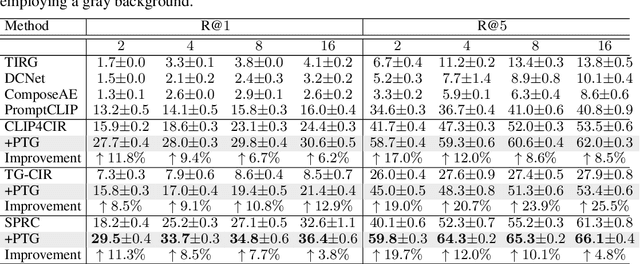
Composed Image Retrieval (CIR) is a challenging task that aims to retrieve the target image based on a multimodal query, i.e., a reference image and its corresponding modification text. While previous supervised or zero-shot learning paradigms all fail to strike a good trade-off between time-consuming annotation cost and retrieval performance, recent researchers introduced the task of few-shot CIR (FS-CIR) and proposed a textual inversion-based network based on pretrained CLIP model to realize it. Despite its promising performance, the approach suffers from two key limitations: insufficient multimodal query composition training and indiscriminative training triplet selection. To address these two limitations, in this work, we propose a novel two-stage pseudo triplet guided few-shot CIR scheme, dubbed PTG-FSCIR. In the first stage, we employ a masked training strategy and advanced image caption generator to construct pseudo triplets from pure image data to enable the model to acquire primary knowledge related to multimodal query composition. In the second stage, based on active learning, we design a pseudo modification text-based query-target distance metric to evaluate the challenging score for each unlabeled sample. Meanwhile, we propose a robust top range-based random sampling strategy according to the 3-$\sigma$ rule in statistics, to sample the challenging samples for fine-tuning the pretrained model. Notably, our scheme is plug-and-play and compatible with any existing supervised CIR models. We tested our scheme across three backbones on three public datasets (i.e., FashionIQ, CIRR, and Birds-to-Words), achieving maximum improvements of 26.4%, 25.5% and 21.6% respectively, demonstrating our scheme's effectiveness.
Interactive Garment Recommendation with User in the Loop
Feb 18, 2024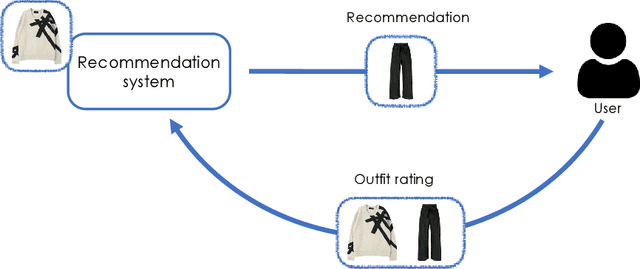
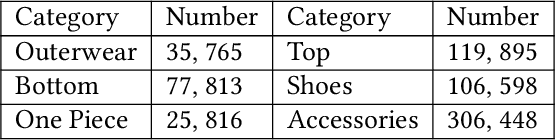
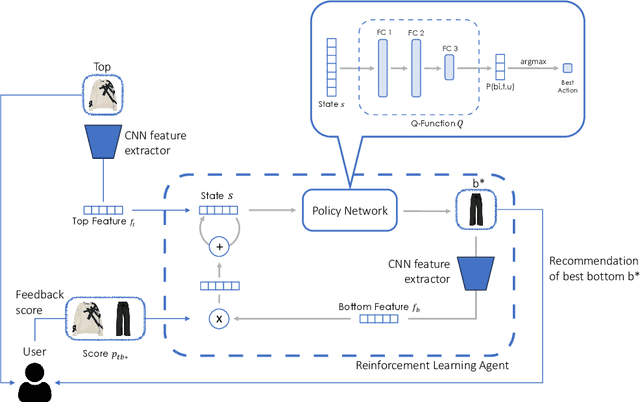

Recommending fashion items often leverages rich user profiles and makes targeted suggestions based on past history and previous purchases. In this paper, we work under the assumption that no prior knowledge is given about a user. We propose to build a user profile on the fly by integrating user reactions as we recommend complementary items to compose an outfit. We present a reinforcement learning agent capable of suggesting appropriate garments and ingesting user feedback so to improve its recommendations and maximize user satisfaction. To train such a model, we resort to a proxy model to be able to simulate having user feedback in the training loop. We experiment on the IQON3000 fashion dataset and we find that a reinforcement learning-based agent becomes capable of improving its recommendations by taking into account personal preferences. Furthermore, such task demonstrated to be hard for non-reinforcement models, that cannot exploit exploration during training.