 Add to Chrome
 Add to Firefox
 Add to Edge
Denser $ eq$ Better: Limits of On-Policy Self-Distillation for Continual Post-Training
Jul 02, 2026
Continual post-training enables foundation models to acquire new knowledge while preserving existing capabilities. Recent work suggests that on-policy learning can mitigate forgetting, with on-policy self-distillation emerging as a particularly attractive approach. In this work, we revisit this optimistic view through self-distillation policy optimization (SDPO). Our experiments show that SDPO can accelerate in-domain specialization when teacher signals are stable and well aligned, but it struggles to generalize to out-of-distribution scenarios. In continual post-training, SDPO exhibits stronger forgetting and can even collapse, whereas on-policy reinforcement learning methods such as GRPO adapt more conservatively and better preserve prior capabilities. Further analyses reveal that denser self-distillation induces larger drift in both parameter space and response space, and can amplify high-frequency formatting artifacts through a self-reinforcing teacher--student loop. These findings suggest that on-policy data alone is insufficient for continual learning. Dense self-distillation can accelerate specialization when teacher targets are stable and token-level supervision is reliable, but it should not be treated as a default stabilizer for continual post-training. Our code is available at https://github.com/Moenupa/SDPO-CL.

Can LLM Substitute Human Labeling? A Case Study of Fine-grained Chinese Address Entity Recognition Dataset for UAV Delivery
Mar 19, 2024
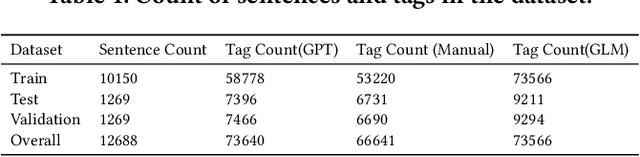
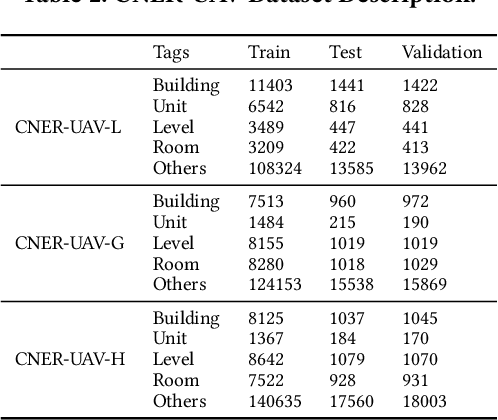

We present CNER-UAV, a fine-grained \textbf{C}hinese \textbf{N}ame \textbf{E}ntity \textbf{R}ecognition dataset specifically designed for the task of address resolution in \textbf{U}nmanned \textbf{A}erial \textbf{V}ehicle delivery systems. The dataset encompasses a diverse range of five categories, enabling comprehensive training and evaluation of NER models. To construct this dataset, we sourced the data from a real-world UAV delivery system and conducted a rigorous data cleaning and desensitization process to ensure privacy and data integrity. The resulting dataset, consisting of around 12,000 annotated samples, underwent human experts and \textbf{L}arge \textbf{L}anguage \textbf{M}odel annotation. We evaluated classical NER models on our dataset and provided in-depth analysis. The dataset and models are publicly available at \url{https://github.com/zhhvvv/CNER-UAV}.
RecRanker: Instruction Tuning Large Language Model as Ranker for Top-k Recommendation
Jan 15, 2024



Large language models (LLMs) have demonstrated remarkable capabilities and have been extensively deployed across various domains, including recommender systems. Numerous studies have employed specialized \textit{prompts} to harness the in-context learning capabilities intrinsic to LLMs. For example, LLMs are prompted to act as zero-shot rankers for listwise ranking, evaluating candidate items generated by a retrieval model for recommendation. Recent research further uses instruction tuning techniques to align LLM with human preference for more promising recommendations. Despite its potential, current research overlooks the integration of multiple ranking tasks to enhance model performance. Moreover, the signal from the conventional recommendation model is not integrated into the LLM, limiting the current system performance. In this paper, we introduce RecRanker, tailored for instruction tuning LLM to serve as the \textbf{Ranker} for top-\textit{k} \textbf{Rec}ommendations. Specifically, we introduce importance-aware sampling, clustering-based sampling, and penalty for repetitive sampling for sampling high-quality, representative, and diverse training data. To enhance the prompt, we introduce position shifting strategy to mitigate position bias and augment the prompt with auxiliary information from conventional recommendation models, thereby enriching the contextual understanding of the LLM. Subsequently, we utilize the sampled data to assemble an instruction-tuning dataset with the augmented prompt comprising three distinct ranking tasks: pointwise, pairwise, and listwise rankings. We further propose a hybrid ranking method to enhance the model performance by ensembling these ranking tasks. Our empirical evaluations demonstrate the effectiveness of our proposed RecRanker in both direct and sequential recommendation scenarios.