 Add to Chrome
 Add to Firefox
 Add to Edge
Brain-Inspired Capture: Evidence-Driven Neuromimetic Perceptual Simulation for Visual Decoding
Apr 20, 2026
Visual decoding of neurophysiological signals is a critical challenge for brain-computer interfaces (BCIs) and computational neuroscience. However, current approaches are often constrained by the systematic and stochastic gaps between neural and visual modalities, largely neglecting the intrinsic computational mechanisms of the Human Visual System (HVS). To address this, we propose Brain-Inspired Capture (BI-Cap), a neuromimetic perceptual simulation paradigm that aligns these modalities by emulating HVS processing. Specifically, we construct a neuromimetic pipeline comprising four biologically plausible dynamic and static transformations, coupled with Mutual Information (MI)-guided dynamic blur regulation to simulate adaptive visual processing. Furthermore, to mitigate the inherent non-stationarity of neural activity, we introduce an evidence-driven latent space representation. This formulation explicitly models uncertainty, thereby ensuring robust neural embeddings. Extensive evaluations on zero-shot brain-to-image retrieval across two public benchmarks demonstrate that BI-Cap substantially outperforms state-of-the-art methods, achieving relative gains of 9.2\% and 8.0\%, respectively. We have released the source code on GitHub through the link https://github.com/flysnow1024/BI-Cap.

Feature-prompting GBMSeg: One-Shot Reference Guided Training-Free Prompt Engineering for Glomerular Basement Membrane Segmentation
Jun 24, 2024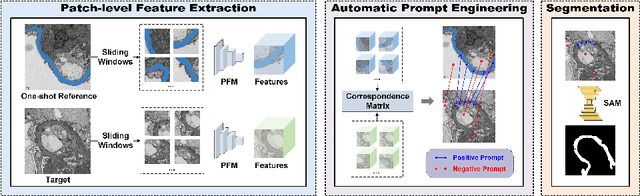
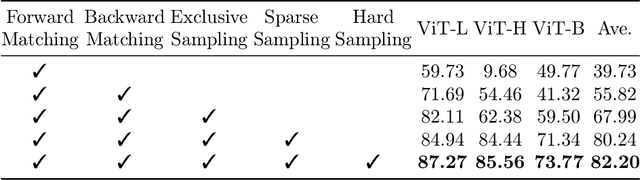

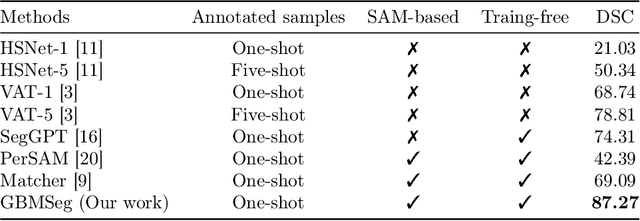
Assessment of the glomerular basement membrane (GBM) in transmission electron microscopy (TEM) is crucial for diagnosing chronic kidney disease (CKD). The lack of domain-independent automatic segmentation tools for the GBM necessitates an AI-based solution to automate the process. In this study, we introduce GBMSeg, a training-free framework designed to automatically segment the GBM in TEM images guided only by a one-shot annotated reference. Specifically, GBMSeg first exploits the robust feature matching capabilities of the pretrained foundation model to generate initial prompt points, then introduces a series of novel automatic prompt engineering techniques across the feature and physical space to optimize the prompt scheme. Finally, GBMSeg employs a class-agnostic foundation segmentation model with the generated prompt scheme to obtain accurate segmentation results. Experimental results on our collected 2538 TEM images confirm that GBMSeg achieves superior segmentation performance with a Dice similarity coefficient (DSC) of 87.27% using only one labeled reference image in a training-free manner, outperforming recently proposed one-shot or few-shot methods. In summary, GBMSeg introduces a distinctive automatic prompt framework that facilitates robust domain-independent segmentation performance without training, particularly advancing the automatic prompting of foundation segmentation models for medical images. Future work involves automating the thickness measurement of segmented GBM and quantifying pathological indicators, holding significant potential for advancing pathology assessments in clinical applications. The source code is available on https://github.com/SnowRain510/GBMSeg