 Add to Chrome
 Add to Firefox
 Add to Edge
SARLO-80: Worldwide Slant SAR Language Optic Dataset 80cm
Jun 18, 2026
Multimodal foundation models have advanced rapidly thanks to large optical benchmarks, but comparable resources for synthetic aperture radar (SAR) remain limited. Existing SAR--optical datasets largely rely on low-resolution, intensity-only Ground Range Detected~(GRD) products and do not preserve complex-valued SAR measurements or native acquisition geometry, which restricts physically grounded multimodal learning. In particular, large-scale public datasets combining very-high-resolution (VHR) SAR SLC, aligned optical imagery, and natural-language descriptions are still lacking. We present a VHR SAR--optical--text dataset built from open-access Umbra spotlight acquisitions distributed as Sensor Independent Complex Data (SICD). From around 2,500 worldwide scenes (VV/HH, 20cm--2m native resolution), we standardize all SAR data to an 80cm slant-range grid via band-limited FFT resampling and tile the imagery into 1024 by 1024 patches. For each SAR patch, we retrieve a high-resolution optical tile and warp it into the SAR grid using local coordinate correspondences for local pixel-level alignment. We further generate three caption variants (SHORT/MID/LONG) per sample to support vision--language training and evaluation. Our dataset contains 119,566 triplets (complex and amplitude slant-range SAR patch, aligned optical patch, natural-language description) covering 257 locations across 72 countries and a broad range of land types and infrastructures. We release fixed train/validation/test splits and the full preprocessing and baseline code to enable reproducible benchmarks for multimodal alignment on cross-modal retrieval and conditional generation in native SAR geometry. The dataset is publicly available on the Hugging Face Hub at https://huggingface.co/datasets/ONERA/SARLO-80.

Building Reliable Long-Form Generation via Hallucination Rejection Sampling
Jun 02, 2026Large language models (LLMs) have achieved remarkable progress in open-ended text generation, yet they remain prone to hallucinating incorrect or unsupported content, which undermines their reliability. This issue is exacerbated in long-form generation due to hallucination snowballing, a phenomenon where early errors propagate and compound into subsequent outputs. To address this challenge, we propose a novel inference-time hallucination mitigation framework, named Segment-wise HAllucination Rejection Sampling (SHARS), which uses an arbitrary hallucination detector to identify and reject hallucinated segments during generation and resample until faithful content is produced. By retaining only confident information and building subsequent generations upon it, the framework mitigates hallucination accumulation and enhances factual consistency. To instantiate this framework, we adopt semantic uncertainty as the detector and introduce several vital modifications to address its limitations and better adapt it to long-form text. Our method enables models to self-correct hallucinations without requiring external resources such as web search or knowledge bases, while remaining compatible with them for future extensions. Empirical evaluations on standardized hallucination benchmarks demonstrate that our method substantially reduces hallucinations in long-form generation while preserving or even improving the informativeness of generation. Code is available at: https://github.com/TreeLLi/hallucination-rejection-sampling.
Contrastive Image-Metadata Pre-Training for Materials Transmission Electron Microscopy
Apr 27, 2026The vast majority of transmission electron microscopy (TEM) data never gets published and ends up on a backup drive until deleted to free up space. These left-over datasets are rich in detail and variation, often paired with automatically saved metadata of instrument state and acquisition parameters. In this work, we introduce a dataset of 7,330 high-angle annular dark-field scanning-TEM (HAADF-STEM) images from a single instrument to learn a joint embedding space between image metadata and HAADF image. These embeddings link image style with acquisition parameters, which allows us to train a generative style transfer network that can convert experimental images into the style they would have had if they were recorded with different instrument parameters. We evaluate the performance of the network and explore the usefulness of the technique for physical denoising.
PSyDUCK: Training-Free Steganography for Latent Diffusion
Jan 31, 2025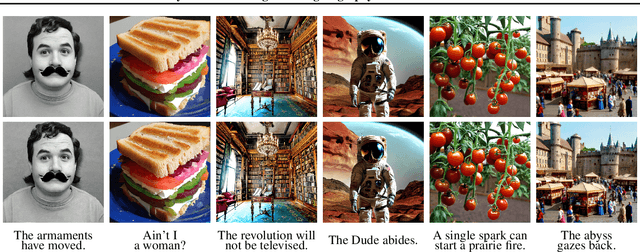


Recent advances in AI-generated steganography highlight its potential for safeguarding the privacy of vulnerable democratic actors, including aid workers, journalists, and whistleblowers operating in oppressive regimes. In this work, we address current limitations and establish the foundations for large-throughput generative steganography. We introduce a novel approach that enables secure and efficient steganography within latent diffusion models. We show empirically that our methods perform well across a variety of open-source latent diffusion models, particularly in generative image and video tasks.
Toward Robust Real-World Audio Deepfake Detection: Closing the Explainability Gap
Oct 09, 2024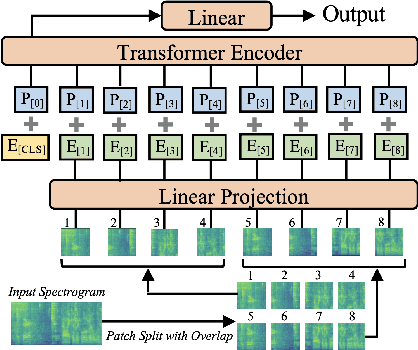


The rapid proliferation of AI-manipulated or generated audio deepfakes poses serious challenges to media integrity and election security. Current AI-driven detection solutions lack explainability and underperform in real-world settings. In this paper, we introduce novel explainability methods for state-of-the-art transformer-based audio deepfake detectors and open-source a novel benchmark for real-world generalizability. By narrowing the explainability gap between transformer-based audio deepfake detectors and traditional methods, our results not only build trust with human experts, but also pave the way for unlocking the potential of citizen intelligence to overcome the scalability issue in audio deepfake detection.