 Add to Chrome
 Add to Firefox
 Add to Edge
The Transferability of Downsamped Sparse Graph Convolutional Networks
Sep 08, 2024
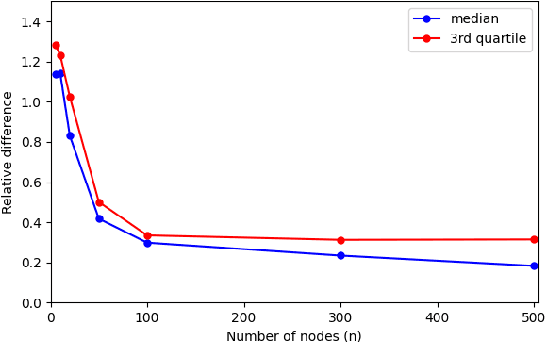
To accelerate the training of graph convolutional networks (GCNs) on real-world large-scale sparse graphs, downsampling methods are commonly employed as a preprocessing step. However, the effects of graph sparsity and topological structure on the transferability of downsampling methods have not been rigorously analyzed or theoretically guaranteed, particularly when the topological structure is affected by graph sparsity. In this paper, we introduce a novel downsampling method based on a sparse random graph model and derive an expected upper bound for the transfer error. Our findings show that smaller original graph sizes, higher expected average degrees, and increased sampling rates contribute to reducing this upper bound. Experimental results validate the theoretical predictions. By incorporating both sparsity and topological similarity into the model, this study establishes an upper bound on the transfer error for downsampling in the training of large-scale sparse graphs and provides insight into the influence of topological structure on transfer performance.

Generalized Graph Signal Reconstruction via the Uncertainty Principle
Sep 06, 2024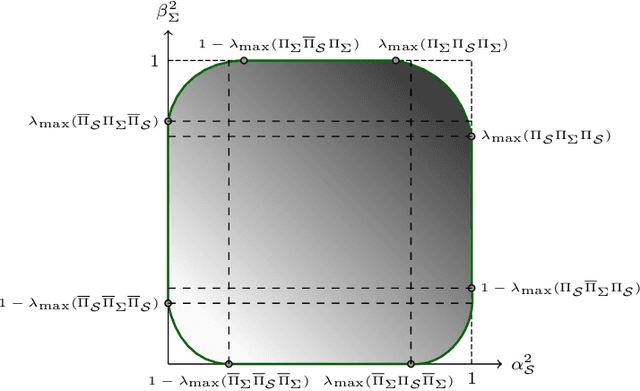
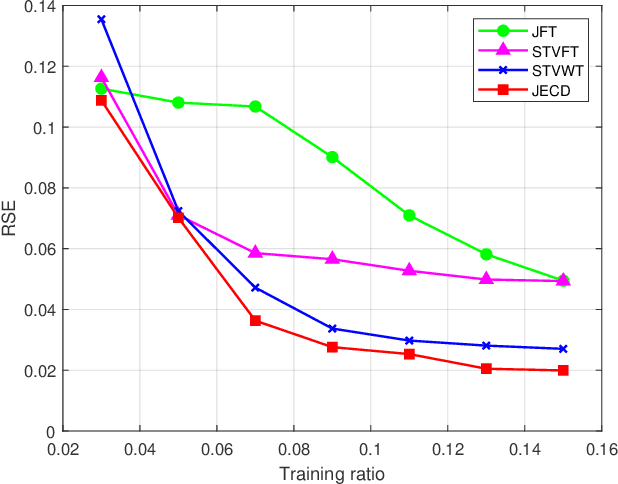
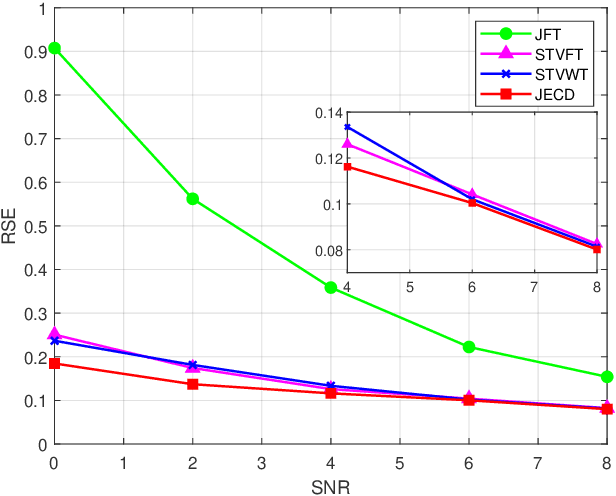
We introduce a novel uncertainty principle for generalized graph signals that extends classical time-frequency and graph uncertainty principles into a unified framework. By defining joint vertex-time and spectral-frequency spreads, we quantify signal localization across these domains, revealing a trade-off between them. This framework allows us to identify a class of signals with maximal energy concentration in both domains, forming the fundamental atoms for a new joint vertex-time dictionary. This dictionary enhances signal reconstruction under practical constraints, such as incomplete or intermittent data, commonly encountered in sensor and social networks. Numerical experiments on real-world datasets demonstrate the effectiveness of the proposed approach, showing improved reconstruction accuracy and noise robustness compared to existing methods.
A Graph Signal Processing Perspective of Network Multiple Hypothesis Testing with False Discovery Rate Control
Aug 06, 2024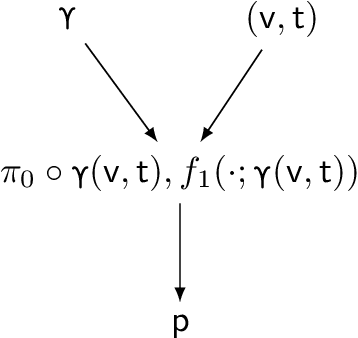
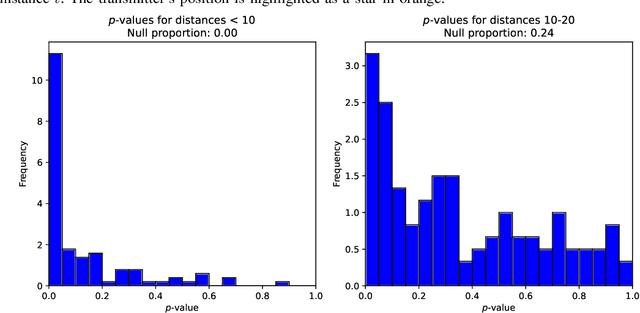
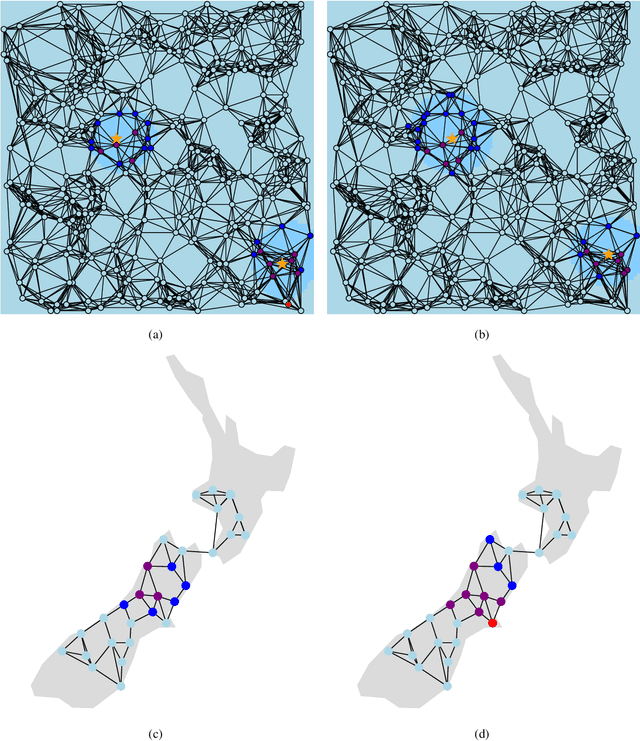
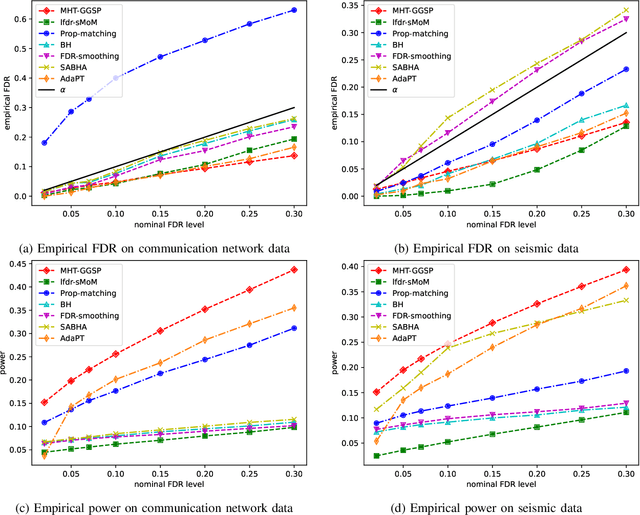
We consider a multiple hypothesis testing problem in a sensor network over the joint spatial-time domain. The sensor network is modeled as a graph, with each vertex representing a sensor and a signal over time associated with each vertex. We assume a hypothesis test and an associated p-value for every sample point in the joint spatial-time domain. Our goal is to determine which points have true alternative hypotheses. By parameterizing the unknown alternative distribution of $p$-values and the prior probabilities of hypotheses being null with a bandlimited generalized graph signal, we can obtain consistent estimates for them. Consequently, we also obtain an estimate of the local false discovery rates (lfdr). We prove that by using a step-up procedure on the estimated lfdr, we can achieve asymptotic false discovery rate control at a pre-determined level. Numerical experiments validate the effectiveness of our approach compared to existing methods.
Unleashing the Potential of Fractional Calculus in Graph Neural Networks with FROND
Apr 26, 2024


We introduce the FRactional-Order graph Neural Dynamical network (FROND), a new continuous graph neural network (GNN) framework. Unlike traditional continuous GNNs that rely on integer-order differential equations, FROND employs the Caputo fractional derivative to leverage the non-local properties of fractional calculus. This approach enables the capture of long-term dependencies in feature updates, moving beyond the Markovian update mechanisms in conventional integer-order models and offering enhanced capabilities in graph representation learning. We offer an interpretation of the node feature updating process in FROND from a non-Markovian random walk perspective when the feature updating is particularly governed by a diffusion process. We demonstrate analytically that oversmoothing can be mitigated in this setting. Experimentally, we validate the FROND framework by comparing the fractional adaptations of various established integer-order continuous GNNs, demonstrating their consistently improved performance and underscoring the framework's potential as an effective extension to enhance traditional continuous GNNs. The code is available at \url{https://github.com/zknus/ICLR2024-FROND}.
Online Signed Sampling of Bandlimited Graph Signals
Feb 19, 2024

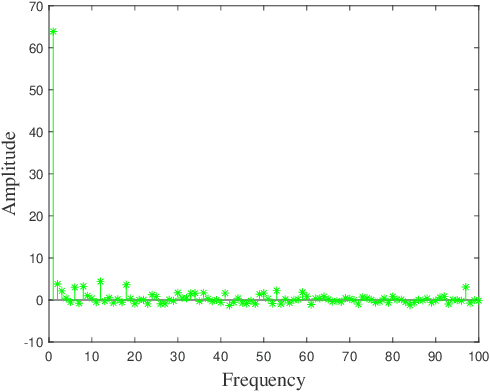

The theory of sampling and recovery of bandlimited graph signals has been extensively studied. However, in many cases, the observation of a signal is quite coarse. For example, users only provide simple comments such as "like" or "dislike" for a product on an e-commerce platform. This is a particular scenario where only the sign information of a graph signal can be measured. In this paper, we are interested in how to sample based on sign information in an online manner, by which the direction of the original graph signal can be estimated. The online signed sampling problem of a graph signal can be formulated as a Markov decision process in a finite horizon. Unfortunately, it is intractable for large size graphs. We propose a low-complexity greedy signed sampling algorithm (GSS) as well as a stopping criterion. Meanwhile, we prove that the objective function is adaptive monotonic and adaptive submodular, so that the performance is close enough to the global optimum with a lower bound. Finally, we demonstrate the effectiveness of the GSS algorithm by both synthesis and realworld data.
Lossless digraph signal processing via polar decomposition
Dec 30, 2023In this paper, we present a signal processing framework for directed graphs. Unlike undirected graphs, a graph shift operator such as the adjacency matrix associated with a directed graph usually does not admit an orthogonal eigenbasis. This makes it challenging to define the Fourier transform. Our methodology leverages the polar decomposition to define two distinct eigendecompositions, each associated with different matrices derived from this decomposition. We propose to extend the frequency domain and introduce a Fourier transform that jointly encodes the spectral response of a signal for the two eigenbases from the polar decomposition. This allows us to define convolution following a standard routine. Our approach has two features: it is lossless as the shift operator can be fully recovered from factors of the polar decomposition. Moreover, it subsumes the traditional graph signal processing if the graph is directed. We present numerical results to show how the framework can be applied.
Sparse graph sequences, generalized graphons and signal processing
Dec 21, 2023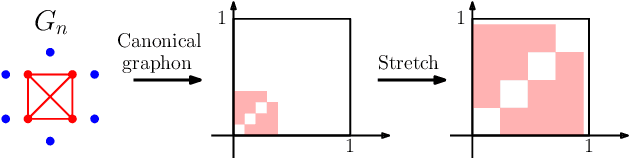
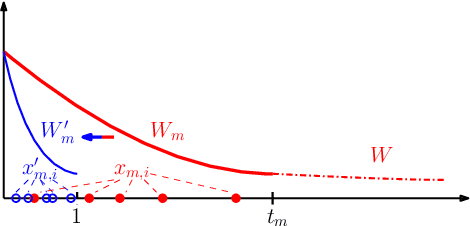
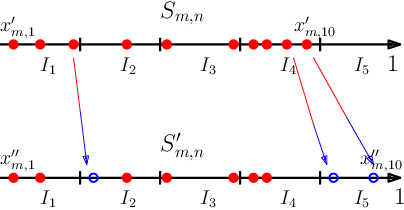
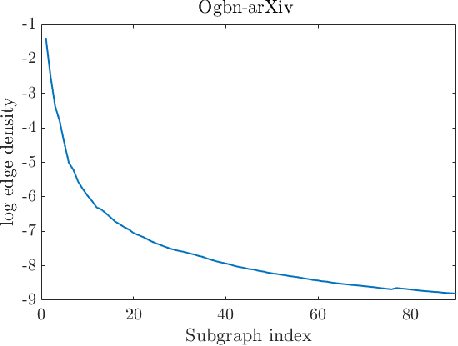
Graphons are limit objects of sequences of graphs, used to analyze the behavior of large graphs. Recently, graphon signal processing has been developed to study large graphs from the signal processing perspective. However, it has the shortcoming that any sparse sequence of graphs always converges to the zero graphon, and the resulting signal processing theory is trivial. In this paper, we propose a signal processing framework based on the generalized graphon theory. The main ingredient is to use the stretched cut distance to compare these graphons. We focus on sampling graph sequences from generalized graphons, and discuss convergence results of associated operators, spectrum as well as signals. Though the paper is theoretical, we also discuss what the theory implies for real large networks.
Graph Neural Networks with a Distribution of Parametrized Graphs
Oct 28, 2023Traditionally, graph neural networks have been trained using a single observed graph. However, the observed graph represents only one possible realization. In many applications, the graph may encounter uncertainties, such as having erroneous or missing edges, as well as edge weights that provide little informative value. To address these challenges and capture additional information previously absent in the observed graph, we introduce latent variables to parameterize and generate multiple graphs. We obtain the maximum likelihood estimate of the network parameters in an Expectation-Maximization (EM) framework based on the multiple graphs. Specifically, we iteratively determine the distribution of the graphs using a Markov Chain Monte Carlo (MCMC) method, incorporating the principles of PAC-Bayesian theory. Numerical experiments demonstrate improvements in performance against baseline models on node classification for heterogeneous graphs and graph regression on chemistry datasets.
Comments on "Graphon Signal Processing''
Oct 23, 2023This correspondence points out a technical error in Proposition 4 of the paper [1]. Because of this error, the proofs of Lemma 3, Theorem 1, Theorem 3, Proposition 2, and Theorem 4 in that paper are no longer valid. We provide counterexamples to Proposition 4 and discuss where the flaw in its proof lies. We also provide numerical evidence indicating that Lemma 3, Theorem 1, and Proposition 2 are likely to be false. Since the proof of Theorem 4 depends on the validity of Proposition 4, we propose an amendment to the statement of Theorem 4 of the paper using convergence in operator norm and prove this rigorously. In addition, we also provide a construction that guarantees convergence in the sense of Proposition 4.
Frequency Convergence of Complexon Shift Operators (Extended Version)
Sep 15, 2023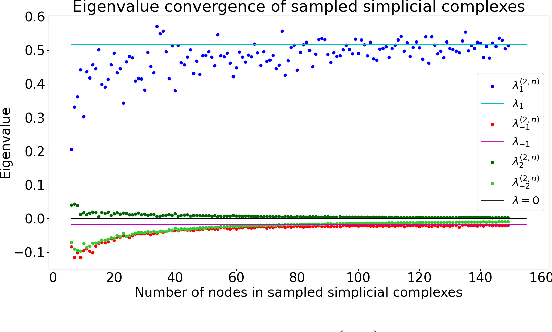
Topological Signal Processing (TSP) utilizes simplicial complexes to model structures with higher order than vertices and edges. In this paper, we study the transferability of TSP via a generalized higher-order version of graphon, known as complexon. We recall the notion of a complexon as the limit of a simplicial complex sequence. Inspired by the integral operator form of graphon shift operators, we construct a marginal complexon and complexon shift operator (CSO) according to components of all possible dimensions from the complexon. We investigate the CSO's eigenvalues and eigenvectors, and relate them to a new family of weighted adjacency matrices. We prove that when a simplicial complex sequence converges to a complexon, the eigenvalues of the corresponding CSOs converge to that of the limit complexon. This conclusion is further verified by a numerical experiment. These results hint at learning transferability on large simplicial complexes or simplicial complex sequences, which generalize the graphon signal processing framework.