 Add to Chrome
 Add to Firefox
 Add to Edge
Evaluating Commercial AI Chatbots as News Intermediaries
May 21, 2026
AI chatbots are rapidly shaping how people encounter the news, yet no prior study has systematically measured how accurately these systems, with their proprietary search integrations and retrieval-synthesis pipelines, handle emerging facts across languages and regions. We present a 14-day (February 9-22, 2026) evaluation of six AI chatbots (Gemini 3 Flash and Pro, Grok 4, Claude 4.5 Sonnet, GPT-5 and GPT-4o mini) on 2,100 factual questions derived from same-day BBC News reporting across six regional services (US & Canada, Arabic, Afrique, Hindi, Russian, Turkish). The best systems achieve over 90% multiple-choice accuracy on questions about events reported hours earlier. The same systems, however, lose 11-13% under free-response evaluation, and 16-17% across the cohort. We further characterize three failure patterns. First, every model achieves its lowest accuracy on Hindi (79% vs. 89-91% elsewhere) and citations indicate an Anglophone retrieval bias (e.g., models answering Hindi queries cite English Wikipedia more than any Hindi outlet). Second, retrieval, not reasoning, failures drive over 70% of all errors. When models retrieve a correct source, they often extract the correct answer; the problem is to land on the right source in the first place. Third, models achieving 88-96% accuracy on well-formed questions drop to 19-70% when questions contain subtle false premises, with the most vulnerable model accepting fabricated facts 64% of the time. We also identify a detection-accuracy paradox: the best false-premise detector ranks second in adversarial accuracy (abstention rate), while a weaker detector ranks first, showing that premise detection and answer recovery are partially independent capabilities. Overall, these suggest that high accuracy can mask systematic regional inequity, near-total dependence on retrieval infrastructure, and vulnerability to imperfect queries real users pose.

Class-RAG: Content Moderation with Retrieval Augmented Generation
Oct 18, 2024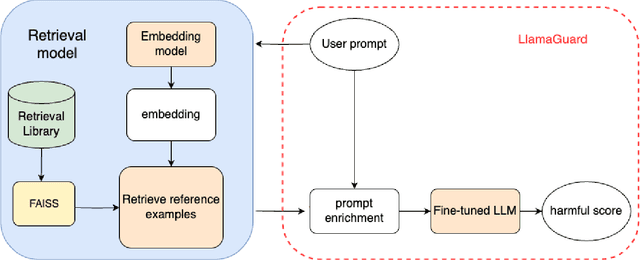

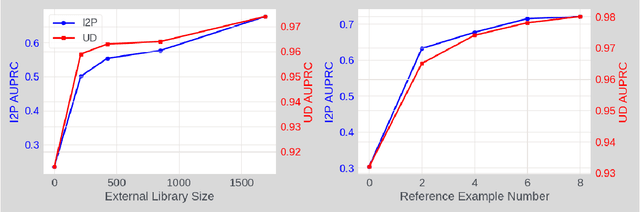
Robust content moderation classifiers are essential for the safety of Generative AI systems. Content moderation, or safety classification, is notoriously ambiguous: differences between safe and unsafe inputs are often extremely subtle, making it difficult for classifiers (and indeed, even humans) to properly distinguish violating vs. benign samples without further context or explanation. Furthermore, as these technologies are deployed across various applications and audiences, scaling risk discovery and mitigation through continuous model fine-tuning becomes increasingly challenging and costly. To address these challenges, we propose a Classification approach employing Retrieval-Augmented Generation (Class-RAG). Class-RAG extends the capability of its base LLM through access to a retrieval library which can be dynamically updated to enable semantic hotfixing for immediate, flexible risk mitigation. Compared to traditional fine-tuned models, Class-RAG demonstrates flexibility and transparency in decision-making. As evidenced by empirical studies, Class-RAG outperforms on classification and is more robust against adversarial attack. Besides, our findings suggest that Class-RAG performance scales with retrieval library size, indicating that increasing the library size is a viable and low-cost approach to improve content moderation.