 Add to Chrome
 Add to Firefox
 Add to Edge
OmniSpace: Efficient Geometry Awareness for Autonomous Vehicles MLLMs
Jun 21, 2026
Multimodal Large Language Models (MLLMs) have achieved remarkable performance on 2D visual tasks, yet enhancing their spatial intelligence for real-world applications such as Autonomous Vehicles (AV) remains an open challenge. Existing geometry-aware MLLMs typically rely on auxiliary 3D models at inference time, introducing pipeline complexity and the risk of cascading failures. In this paper, we present OmniSpace, a simple yet effective plug-and-play paradigm for geometry-aware spatial reasoning from purely 2D observations. Motivated by our finding that current MLLMs are bottlenecked by weak cross-view correspondence and depth estimation, OmniSpace introduces a Camera Pose Injector, a Multi-view Epipolar Attention module, and a 3D Geometric Distillation objective that jointly address these two limitations by transferring geometric knowledge into the model. Extensive experiments show that OmniSpace surpasses existing methods on planning benchmarks (nuScenes, Bench2Drive), risk detection (nuInstruct), language (Omnidrive), and generalization (DriveBench).

FOCA: Future-Oriented Conditioning for Data-Efficient Vision-Language-Action Adaptation
Jun 18, 2026Vision-Language-Action (VLA) models enable general-purpose robotic control via large-scale multimodal pretraining, yet their effectiveness under few-shot imitation learning remains limited. We conduct a systematic stress test of state-of-the-art VLA models and show that performance degrades sharply as demonstrations are reduced, revealing a key weakness of existing adaptation strategies. To address this, we introduce FOCA, a future-oriented conditioning framework for data-efficient VLA adaptation. FOCA combines explicit prediction of task-grounded future interaction embeddings with implicit alignment to future goal observations, enabling long-horizon reasoning in latent space without pixel-level prediction. This formulation naturally supports action-free co-training with synthetic videos from video world models and can be interpreted as learning a future-conditioned value-like representation. Extensive experiments demonstrate FOCA achieves 95.7% success with 20 demonstrations on LIBERO, improves 7-12% on RoboCasa, and delivers up to 26% absolute gains on real robots, establishing a new state of the art in few-shot VLA adaptation.
Self-Improving VLA Policies: Selected Diffusion Noise for Spurious-Robust Action Smoothing
Jun 12, 2026Diffusion-based Vision-Language-Action (VLA) policies enable strong generalization in robotic manipulation, but remain sensitive to spurious visual correlations and noisy action generation, leading to brittle behavior under perturbations. We introduce Selected Diffusion Noise (SDN), a simple, training-free test-time method that improves both robustness and success rate by leveraging the diffusion noise space as a controllable degree of freedom. SDN dynamically samples noise vectors that are maximally separated from a reference set to mitigate reliance on spurious cues, while selecting candidates that yield more coherent action trajectories. This dual objective encourages stable behavior even under object-masked observations and reduces action jitter without modifying model parameters. We evaluate SDN on two simulation benchmarks (Google Robot, Widow-X) and two real-world robotic datasets across multiple VLA policies, including pi_0, Groot-N1.5, and Groot-N1.6. SDN consistently improves success rates by +8% in simulation and +10% in real-world settings, while producing smoother and more stable actions. Our results highlight that diffusion noise selection can serve as an effective and general mechanism for enhancing VLA policies at test time.
DRIVESPATIAL: A Benchmark for Spatiotemporal Intelligence in VLMs for Autonomous Driving
May 22, 2026Spatiotemporal intelligence in autonomous driving (AD) requires an agent to integrate multi-view observations into a coherent scene representation, maintain object continuity across viewpoints and time, and reason about spatial relations, interactions, and future dynamics. However, existing AD vision-language benchmarks largely focus on single-view, static, ego-centric, or single-source question answering, leaving it unclear whether current Vision-Language Models (VLMs) can truly construct and reason over dynamic driving scenes. We introduce DriveSpatial, a benchmark of 15.6K human-verified QA pairs across 20 tasks from five large-scale AD datasets. DriveSpatial evaluates four abilities: Cognitive Scene Construction, Multi-view Relational Understanding, Temporal Reasoning, and Generalization. Unlike prior benchmarks, DriveSpatial is generated from a dynamic multi-relational scene graph that encodes object states, spatial relations, interactions, camera visibility, and temporal correspondences, enabling QA pairs that enforce genuine cross-view and spatiotemporal reasoning. Evaluating 15 representative VLMs reveals a substantial human-model gap: the strongest model trails humans by 28.4 points, with Cognitive Scene Construction emerging as the key bottleneck. Further diagnostics show that language-only prompting is insufficient, while explicit BEV grounding consistently improves performance. These results suggest that current VLMs lack the scene-construction ability needed for reliable spatiotemporal driving intelligence. DriveSpatial and its construction pipeline will be released to support future research.
Neural Multigrid Memory For Computational Fluid Dynamics
Jun 24, 2023Turbulent flow simulation plays a crucial role in various applications, including aircraft and ship design, industrial process optimization, and weather prediction. In this paper, we propose an advanced data-driven method for simulating turbulent flow, representing a significant improvement over existing approaches. Our methodology combines the strengths of Video Prediction Transformer (VPTR) (Ye & Bilodeau, 2022) and Multigrid Architecture (MgConv, MgResnet) (Ke et al., 2017). VPTR excels in capturing complex spatiotemporal dependencies and handling large input data, making it a promising choice for turbulent flow prediction. Meanwhile, Multigrid Architecture utilizes multiple grids with different resolutions to capture the multiscale nature of turbulent flows, resulting in more accurate and efficient simulations. Through our experiments, we demonstrate the effectiveness of our proposed approach, named MGxTransformer, in accurately predicting velocity, temperature, and turbulence intensity for incompressible turbulent flows across various geometries and flow conditions. Our results exhibit superior accuracy compared to other baselines, while maintaining computational efficiency. Our implementation in PyTorch is available publicly at https://github.com/Combi2k2/MG-Turbulent-Flow
Temporal Collaborative Filtering with Graph Convolutional Neural Networks
Oct 13, 2020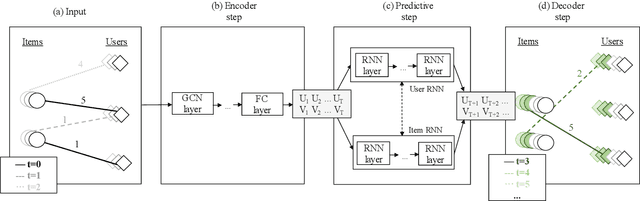
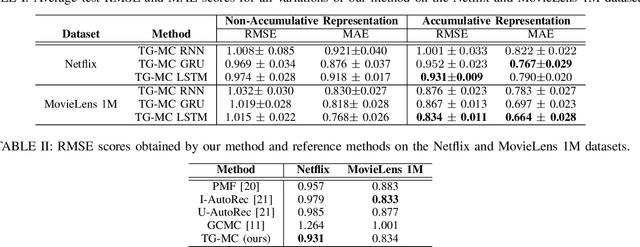
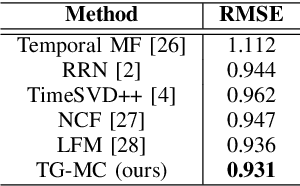
Temporal collaborative filtering (TCF) methods aim at modelling non-static aspects behind recommender systems, such as the dynamics in users' preferences and social trends around items. State-of-the-art TCF methods employ recurrent neural networks (RNNs) to model such aspects. These methods deploy matrix-factorization-based (MF-based) approaches to learn the user and item representations. Recently, graph-neural-network-based (GNN-based) approaches have shown improved performance in providing accurate recommendations over traditional MF-based approaches in non-temporal CF settings. Motivated by this, we propose a novel TCF method that leverages GNNs to learn user and item representations, and RNNs to model their temporal dynamics. A challenge with this method lies in the increased data sparsity, which negatively impacts obtaining meaningful quality representations with GNNs. To overcome this challenge, we train a GNN model at each time step using a set of observed interactions accumulated time-wise. Comprehensive experiments on real-world data show the improved performance obtained by our method over several state-of-the-art temporal and non-temporal CF models.
Graph Convolutional Neural Networks with Node Transition Probability-based Message Passing and DropNode Regularization
Aug 28, 2020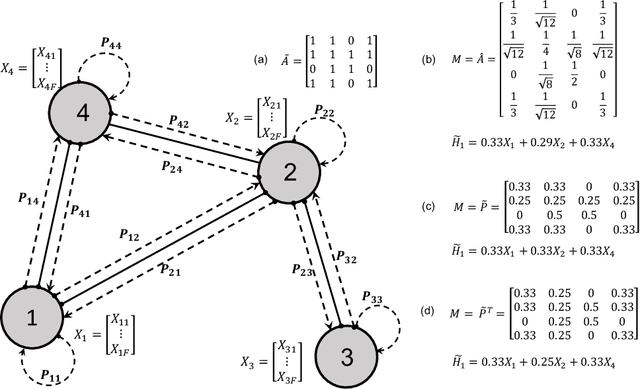
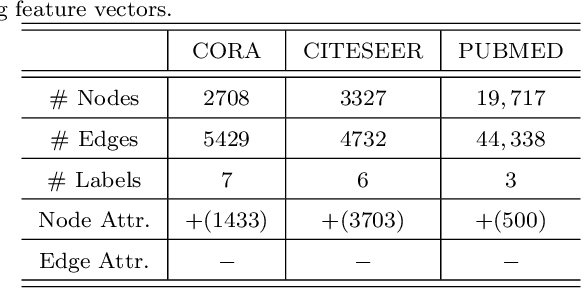
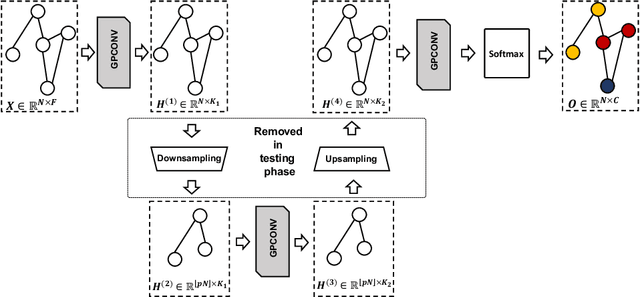
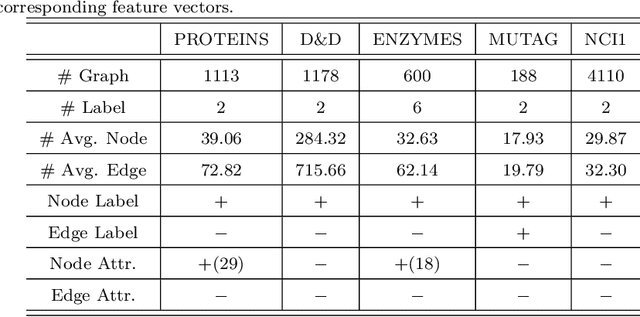
Graph convolutional neural networks (GCNNs) have received much attention recently, owing to their capability in handling graph-structured data. Among the existing GCNNs, many methods can be viewed as instances of a neural message passing motif; features of nodes are passed around their neighbors, aggregated and transformed to produce better nodes' representations. Nevertheless, these methods seldom use node transition probabilities, a measure that has been found useful in exploring graphs. Furthermore, when the transition probabilities are used, their transition direction is often improperly considered in the feature aggregation step, resulting in an inefficient weighting scheme. In addition, although a great number of GCNN models with increasing level of complexity have been introduced, the GCNNs often suffer from over-fitting when being trained on small graphs. Another issue of the GCNNs is over-smoothing, which tends to make nodes' representations indistinguishable. This work presents a new method to improve the message passing process based on node transition probabilities by properly considering the transition direction, leading to a better weighting scheme in nodes' features aggregation compared to the existing counterpart. Moreover, we propose a novel regularization method termed DropNode to address the over-fitting and over-smoothing issues simultaneously. DropNode randomly discards part of a graph, thus it creates multiple deformed versions of the graph, leading to data augmentation regularization effect. Additionally, DropNode lessens the connectivity of the graph, mitigating the effect of over-smoothing in deep GCNNs. Extensive experiments on eight benchmark datasets for node and graph classification tasks demonstrate the effectiveness of the proposed methods in comparison with the state of the art.
Rumour Detection via News Propagation Dynamics and User Representation Learning
Apr 18, 2019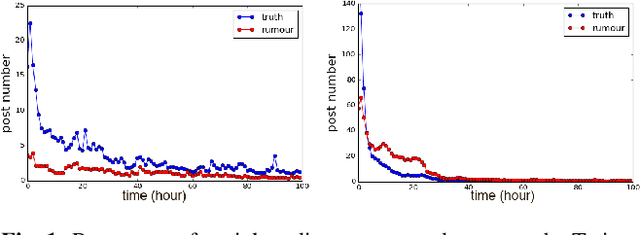
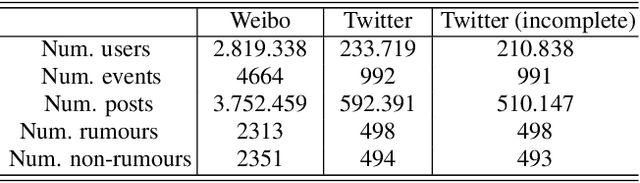
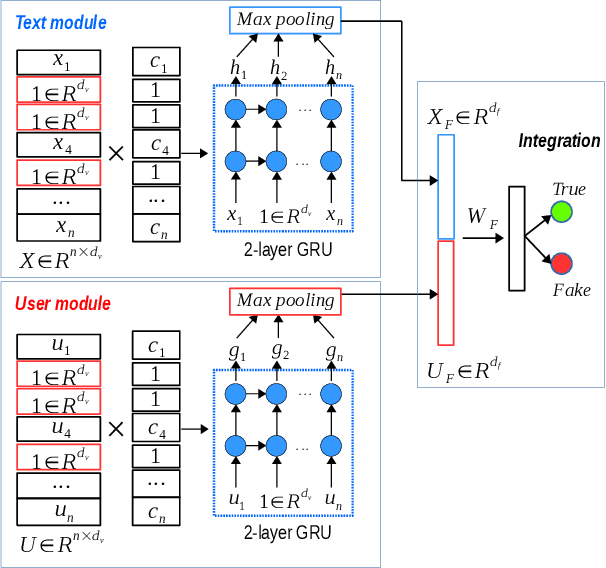
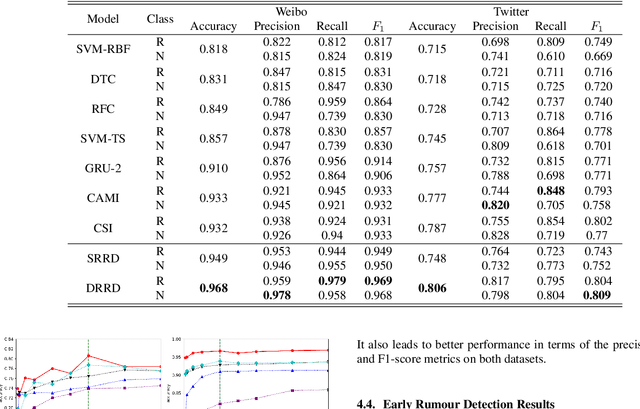
Rumours have existed for a long time and have been known for serious consequences. The rapid growth of social media platforms has multiplied the negative impact of rumours; it thus becomes important to early detect them. Many methods have been introduced to detect rumours using the content or the social context of news. However, most existing methods ignore or do not explore effectively the propagation pattern of news in social media, including the sequence of interactions of social media users with news across time. In this work, we propose a novel method for rumour detection based on deep learning. Our method leverages the propagation process of the news by learning the users' representation and the temporal interrelation of users' responses. Experiments conducted on Twitter and Weibo datasets demonstrate the state-of-the-art performance of the proposed method.
Geometric Matrix Completion with Deep Conditional Random Fields
Jan 29, 2019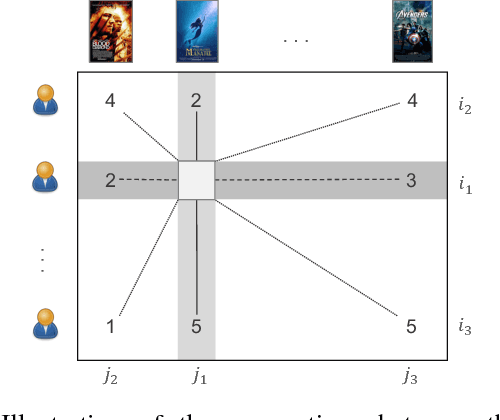
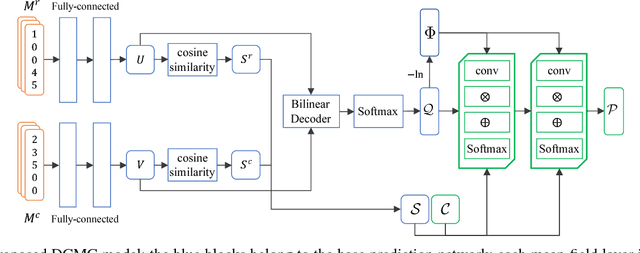
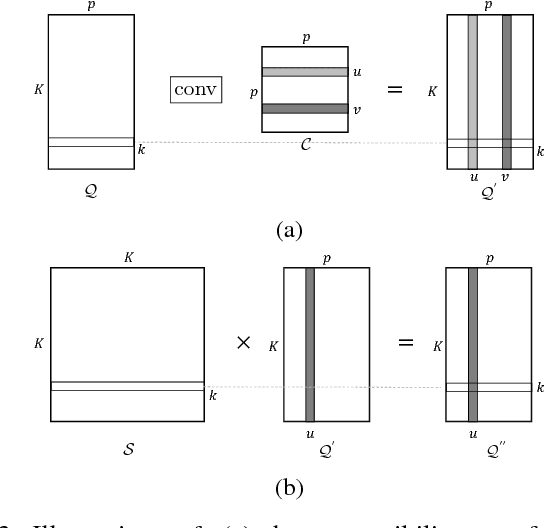
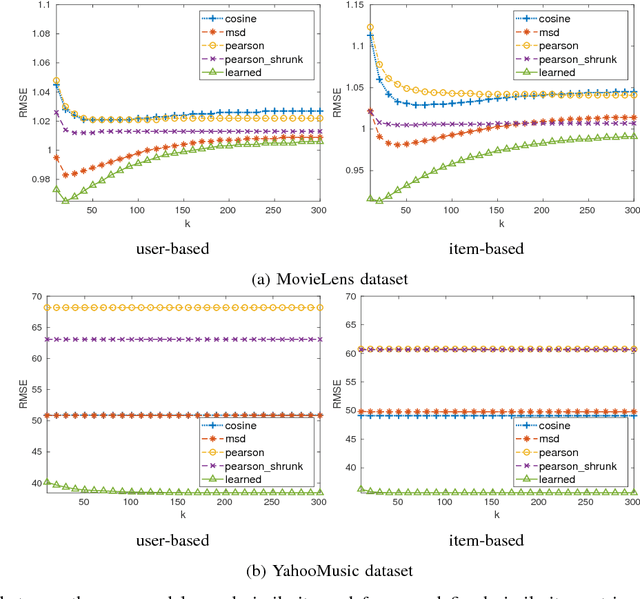
The problem of completing high-dimensional matrices from a limited set of observations arises in many big data applications, especially, recommender systems. Existing matrix completion models generally follow either a memory- or a model-based approach, whereas, geometric matrix completion models combine the best from both approaches. Existing deep-learning-based geometric models yield good performance, but, in order to operate, they require a fixed structure graph capturing the relationships among the users and items. This graph is typically constructed by evaluating a pre-defined similarity metric on the available observations or by using side information, e.g., user profiles. In contrast, Markov-random-fields-based models do not require a fixed structure graph but rely on handcrafted features to make predictions. When no side information is available and the number of available observations becomes very low, existing solutions are pushed to their limits. In this paper, we propose a geometric matrix completion approach that addresses these challenges. We consider matrix completion as a structured prediction problem in a conditional random field (CRF), which is characterized by a maximum a posterior (MAP) inference, and we propose a deep model that predicts the missing entries by solving the MAP inference problem. The proposed model simultaneously learns the similarities among matrix entries, computes the CRF potentials, and solves the inference problem. Its training is performed in an end-to-end manner, with a method to supervise the learning of entry similarities. Comprehensive experiments demonstrate the superior performance of the proposed model compared to various state-of-the-art models on popular benchmark datasets and underline its superior capacity to deal with highly incomplete matrices.
Matrix Factorization via Deep Learning
Dec 04, 2018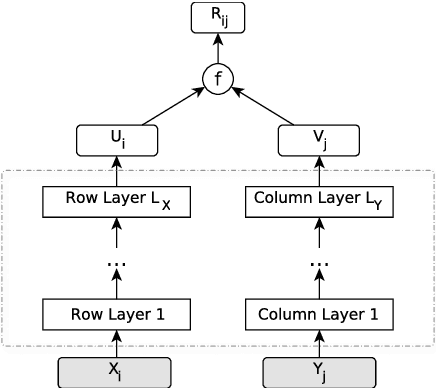
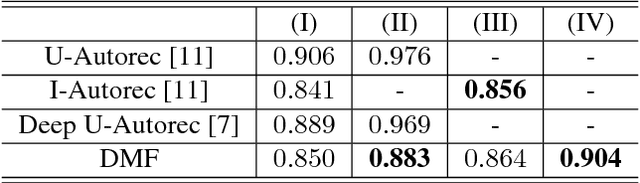
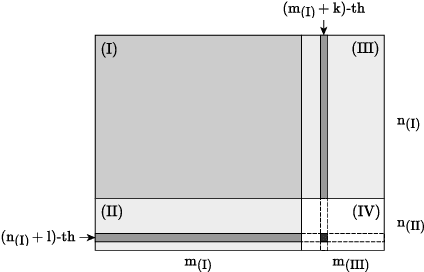
Matrix completion is one of the key problems in signal processing and machine learning. In recent years, deep-learning-based models have achieved state-of-the-art results in matrix completion. Nevertheless, they suffer from two drawbacks: (i) they can not be extended easily to rows or columns unseen during training; and (ii) their results are often degraded in case discrete predictions are required. This paper addresses these two drawbacks by presenting a deep matrix factorization model and a generic method to allow joint training of the factorization model and the discretization operator. Experiments on a real movie rating dataset show the efficacy of the proposed models.