 Add to Chrome
 Add to Firefox
 Add to Edge
Perceive Before Reasoning: A Pre-Reasoning Perception Framework for Efficient and Reliable Proactive Mobile Agents
Jun 02, 2026
Multimodal large language models (MLLMs) have substantially advanced mobile agents, yet proactive mobile assistance remains challenging because agents must decide \emph{when} to intervene before determining \emph{how} to assist. Existing systems often implement these two decisions within a unified MLLM-based pipeline, leading to goal misalignment between conservative intervention filtering and comprehensive assistance generation, as well as redundant inference when the agent should remain silent. To address these limitations, we propose the \textbf{Pre-Reasoning Perception Framework (PRPF)}, a two-stage framework built on perceiving before reasoning. PRPF introduces a lightweight Multimodal Proactive Perceptor (MPP) for intervention gating and context compression, and activates the Proactive Agent Reasoner (PAR) only when intervention is warranted. Experiments on the ProactiveMobile benchmark show that PRPF substantially reduces false trigger rates (FTR) while improving success rates (SR) and inference efficiency over the ProactiveMobile baseline.

ProactiveMobile: A Comprehensive Benchmark for Boosting Proactive Intelligence on Mobile Devices
Feb 26, 2026Multimodal large language models (MLLMs) have made significant progress in mobile agent development, yet their capabilities are predominantly confined to a reactive paradigm, where they merely execute explicit user commands. The emerging paradigm of proactive intelligence, where agents autonomously anticipate needs and initiate actions, represents the next frontier for mobile agents. However, its development is critically bottlenecked by the lack of benchmarks that can address real-world complexity and enable objective, executable evaluation. To overcome these challenges, we introduce ProactiveMobile, a comprehensive benchmark designed to systematically advance research in this domain. ProactiveMobile formalizes the proactive task as inferring latent user intent across four dimensions of on-device contextual signals and generating an executable function sequence from a comprehensive function pool of 63 APIs. The benchmark features over 3,660 instances of 14 scenarios that embrace real-world complexity through multi-answer annotations. To ensure quality, a team of 30 experts conducts a final audit of the benchmark, verifying factual accuracy, logical consistency, and action feasibility, and correcting any non-compliant entries. Extensive experiments demonstrate that our fine-tuned Qwen2.5-VL-7B-Instruct achieves a success rate of 19.15%, outperforming o1 (15.71%) and GPT-5 (7.39%). This result indicates that proactivity is a critical competency widely lacking in current MLLMs, yet it is learnable, emphasizing the importance of the proposed benchmark for proactivity evaluation.
3D Gaussian Splatting in Robotics: A Survey
Oct 16, 2024
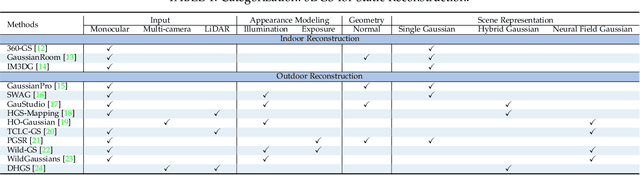
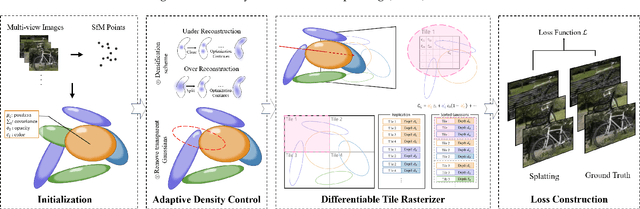
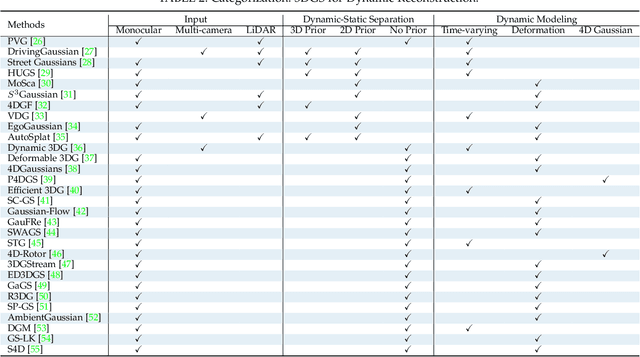
Dense 3D representations of the environment have been a long-term goal in the robotics field. While previous Neural Radiance Fields (NeRF) representation have been prevalent for its implicit, coordinate-based model, the recent emergence of 3D Gaussian Splatting (3DGS) has demonstrated remarkable potential in its explicit radiance field representation. By leveraging 3D Gaussian primitives for explicit scene representation and enabling differentiable rendering, 3DGS has shown significant advantages over other radiance fields in real-time rendering and photo-realistic performance, which is beneficial for robotic applications. In this survey, we provide a comprehensive understanding of 3DGS in the field of robotics. We divide our discussion of the related works into two main categories: the application of 3DGS and the advancements in 3DGS techniques. In the application section, we explore how 3DGS has been utilized in various robotics tasks from scene understanding and interaction perspectives. The advance of 3DGS section focuses on the improvements of 3DGS own properties in its adaptability and efficiency, aiming to enhance its performance in robotics. We then summarize the most commonly used datasets and evaluation metrics in robotics. Finally, we identify the challenges and limitations of current 3DGS methods and discuss the future development of 3DGS in robotics.