 Add to Chrome
 Add to Firefox
 Add to Edge
Meituan Merchant Business Diagnosis via Policy-Guided Dual-Process User Simulation
Apr 16, 2026
Simulating group-level user behavior enables scalable counterfactual evaluation of merchant strategies without costly online experiments. However, building a trustworthy simulator faces two structural challenges. First, information incompleteness causes reasoning-based simulators to over-rationalize when unobserved factors such as offline context and implicit habits are missing. Second, mechanism duality requires capturing both interpretable preferences and implicit statistical regularities, which no single paradigm achieves alone. We propose Policy-Guided Hybrid Simulation (PGHS), a dual-process framework that mines transferable decision policies from behavioral trajectories and uses them as a shared alignment layer. This layer anchors an LLM-based reasoning branch that prevents over-rationalization and an ML-based fitting branch that absorbs implicit regularities. Group-level predictions from both branches are fused for complementary correction. We deploy PGHS on Meituan with 101 merchants and over 26,000 trajectories. PGHS achieves a group simulation error of 8.80%, improving over the best reasoning-based and fitting-based baselines by 45.8% and 40.9% respectively.

Visual Attention on the Sun: What Do Existing Models Actually Predict?
Nov 25, 2018
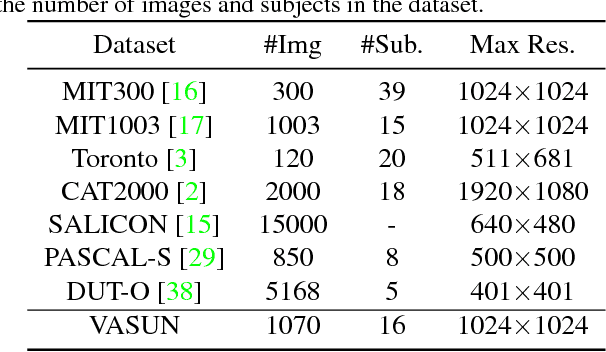
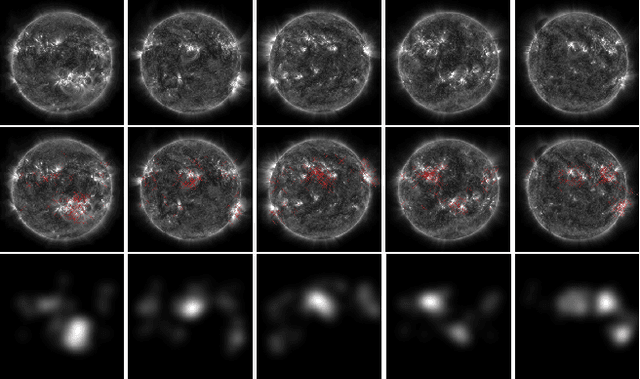
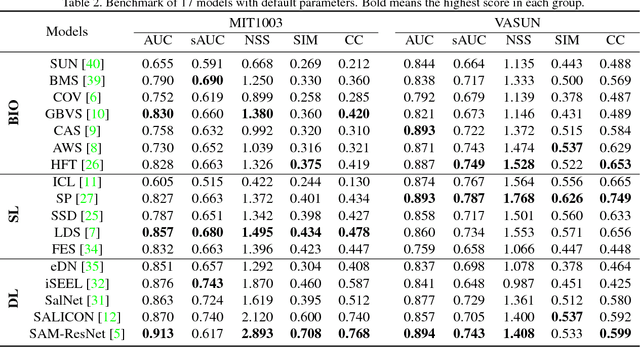
Visual attention prediction is a classic problem that seems to be well addressed in the deep learning era. One compelling concern, however, gradually arise along with the rapidly growing performance scores over existing visual attention datasets: do existing deep models really capture the inherent mechanism of human visual attention? To address this concern, this paper proposes a new dataset, named VASUN, that records the free-viewing human attention on solar images. Different from previous datasets, images in VASUN contain many irregular visual patterns that existing deep models have never seen. By benchmarking existing models on VASUN, we find the performances of many state-of-the-art deep models drop remarkably, while many classic shallow models perform impressively. From these results, we find that the significant performance advance of existing deep attention models may come from their capabilities of memorizing and predicting the occurrence of some specific visual patterns other than learning the inherent mechanism of human visual attention. In addition, we also train several baseline models on VASUN to demonstrate the feasibility and key issues of predicting visual attention on the sun. These baseline models, together with the proposed dataset, can be used to revisit the problem of visual attention prediction from a novel perspective that are complementary to existing ones.