 Add to Chrome
 Add to Firefox
 Add to Edge
Machine Learning Approaches to Decoding Topological Quantum Codes
Aug 16, 2026
Decoding is an essential component of quantum error correction (QEC), translating stabilizer measurement outcomes into corrective actions that suppress logical errors and preserve logical quantum information. Building fault-tolerant architectures requires increasing the code distance, which in turn places growing demands on decoding accuracy, scalability, and practical deployability. While a wide range of decoding algorithms have been proposed and demonstrated, achieving reliable, scalable, and real-time decoding remains a significant challenge. Machine-learning (ML) approaches are particularly well suited to this setting, as quantum error decoding is fundamentally a problem of processing large volumes of classical data with complex spatiotemporal correlations. This chapter surveys ML-based methods for quantum error decoding, with a focus on topological codes and an emphasis on architectural principles, practical performance, and real-time considerations. We first frame decoding as a learning problem and outline key paradigms, including discriminative, generative, and reinforcement-learning formulations. We then introduce the neural network building blocks that underpin most contemporary neural decoders and discuss how these components can be integrated to balance expressivity, scalability, and latency. Building on this architectural perspective, we review recent progress and benchmarks in neural decoding for memory experiments, and discuss real-time decoding, open challenges, and future directions toward scalable fault-tolerant quantum computing.

Generative Modeling of Quantum Distribution with Functional Flow Matching
Jul 01, 2026The emergence of powerful deep generative models based on diffusion and flow matching has enabled the learning and modeling of complex distributions. Learning quantum distributions, however, remains challenging due to the inherent difficulty of accurately modeling the meaningful physical properties of quantum states. We propose Quantum Flow Matching (QFM), a novel generative model designed to learn quantum distribution by utilizing spin Wigner function and flow matching. By converting density matrix into the spin Wigner function and leveraging functional flow matching to learn distributions in function space, QFM enables accurate and effective learning of multi-qubit quantum distributions. We demonstrate the effectiveness of our method by evaluating physical quantities such as trace, purity, and entanglement entropy of the generated quantum states, accurately capturing the underlying physics of the given quantum distributions.
Boltzmann Attention: Learnable Ising Couplings for Cooperative Attention
Jun 10, 2026Attention mechanisms are central to modern sequence models, yet standard attention computes relevance primarily through individual query--key similarities. Although softmax normalization introduces competition among positions, a standard attention layer does not explicitly parameterize learnable interactions between attention decisions. This limits its ability to directly model cooperative or antagonistic co-attention structure within the attention mechanism itself. We propose Boltzmann attention, an energy-based generalization in which attention patterns are governed by an interacting Ising model. The method augments the usual data-dependent local fields with learnable pairwise couplings, allowing the model to represent inter-position correlations beyond those captured by softmax or sigmoid attention. Experiments on character-level language modeling and synthetic bracket matching show that Boltzmann attention consistently improves over standard softmax attention within a standard Transformer architecture, with the advantage becoming more pronounced as sequence length increases. A four-way ablation confirms that the improvement arises from the learnable pairwise couplings. These results suggest that explicit inter-position interactions provide a principled enhancement for attention-based sequence modeling. Moreover, the Ising formulation opens a natural path toward quantum-computing-based sampling strategies: we demonstrate that diabatic quantum annealing provides a practical training method while maintaining competitive performance with exact Boltzmann computation.
Generative Quantum Data Embeddings for Supervised Learning
May 29, 2026Many practically relevant applications of quantum machine learning involve classical data, for which performance depends critically on how inputs are embedded into quantum states. Yet the use of a fixed embedding circuit ansatz remains standard practice. We propose an energy-based generative learning framework that synthesizes gate sequences to optimize embedding structures and refine data-tailored parameters, using a fidelity-based surrogate objective to guide the search toward improved class distinguishability. Empirically, the method improves classification performance across diverse settings, while also revealing datasets where architecture search within the present embedding family yields only limited additional gains. We explain this saturation by deriving bounds on the achievable empirical risk in terms of the Wasserstein distance in the input space, showing that classical data geometry provides an \emph{a priori} diagnostic for regimes in which substantial gains from embedding optimization are unlikely. The results establish a practically useful and theoretically motivated framework for searching effective quantum data embeddings through generative optimization, with the attainable gains diagnosed through the geometry of the underlying classical data.
Multi-Mode Quantum Annealing for Variational Autoencoders with General Boltzmann Priors
Apr 01, 2026Variational autoencoders (VAEs) learn compact latent representations of complex data, but their generative capacity is fundamentally constrained by the choice of prior distribution over the latent space. Energy-based priors offer a principled way to move beyond factorized assumptions and capture structured interactions among latent variables, yet training such priors at scale requires accurate and efficient sampling from intractable distributions. Here we present Boltzmann-machine--prior VAEs (BM-VAEs) trained using quantum annealing--based sampling in three distinct operational modes within a single generative system. During training, diabatic quantum annealing (DQA) provides unbiased Boltzmann samples for gradient estimation of the energy-based prior; for unconditional generation, slower quantum annealing (QA) concentrates samples near low-energy minima; for conditional generation, bias fields are added to direct sampling toward attribute-specific regions of the energy landscape (c-QA). Using up to 2000 qubits on a D-Wave Advantage2 processor, we demonstrate stable and efficient training across multiple datasets, with faster convergence and lower reconstruction loss than a Gaussian-prior VAE. The learned Boltzmann prior enables unconditional generation by sampling directly from the energy-based latent distribution, a capability that plain autoencoders lack, and conditional generation through latent biasing that leverages the learned pairwise interactions.
Neural quantum support vector data description for one-class classification
Mar 03, 2026One-class classification (OCC) is a fundamental problem in machine learning with numerous applications, such as anomaly detection and quality control. With the increasing complexity and dimensionality of modern datasets, there is a growing demand for advanced OCC techniques with better expressivity and efficiency. We introduce Neural Quantum Support Vector Data Description (NQSVDD), a classical-quantum hybrid framework for OCC that performs end-to-end optimized hierarchical representation learning. NQSVDD integrates a classical neural network with trainable quantum data encoding and a variational quantum circuit, enabling the model to learn nonlinear feature transformations tailored to the OCC objective. The hybrid architecture maps input data into an intermediate high-dimensional feature space and subsequently projects it into a compact latent space defined through quantum measurements. Importantly, both the feature embedding and the latent representation are jointly optimized such that normal data form a compact cluster, for which a minimum-volume enclosing hypersphere provides an effective decision boundary. Experimental evaluations on benchmark datasets demonstrate that NQSVDD achieves competitive or superior AUC performance compared to classical Deep SVDD and quantum baselines, while maintaining parameter efficiency and robustness under realistic noise conditions.
Scalable Neural Decoders for Practical Real-Time Quantum Error Correction
Oct 26, 2025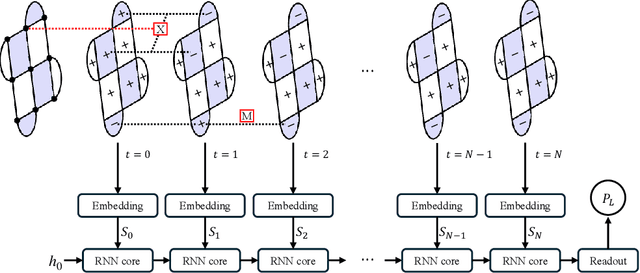
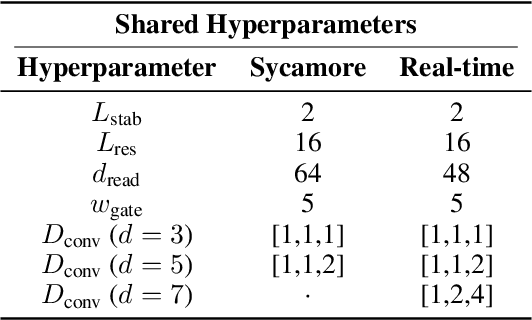
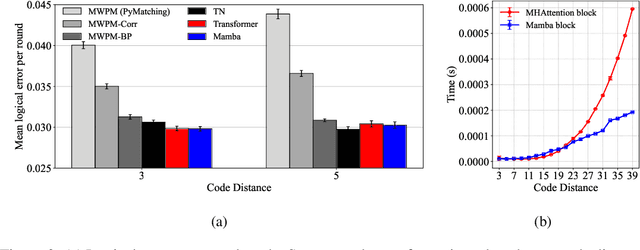
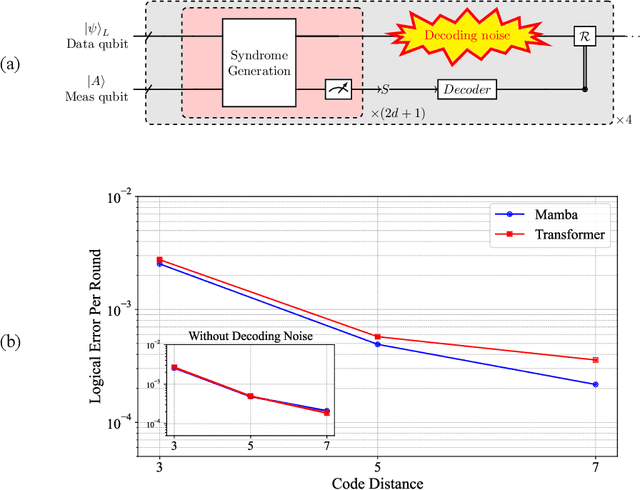
Real-time, scalable, and accurate decoding is a critical component for realizing a fault-tolerant quantum computer. While Transformer-based neural decoders such as \textit{AlphaQubit} have demonstrated high accuracy, the computational complexity of their core attention mechanism, which scales as $\mathcal{O}(d^4)$ with code distance $d$, results in decoding speeds insufficient for practical real-time applications. In this work, we introduce and evaluate a \textit{Mamba}-based decoder, a state-space model with $\mathcal{O}(d^2)$ complexity. In memory experiments using Sycamore hardware data, our Mamba decoder matches the performance of its Transformer-based counterpart, providing that its superior efficiency does not come at the cost of performance. Crucially, in simulated real-time scenarios that account for decoder-induced noise, the Mamba decoder significantly outperforms the Transformer, exhibiting a higher error threshold of $0.0104$ compared to $0.0097$. These results demonstrate that Mamba decoders offer a compelling balance between speed and accuracy, making them a promising architecture for scalable, real-time quantum error correction.
Multi-channel convolutional neural quantum embedding
Sep 26, 2025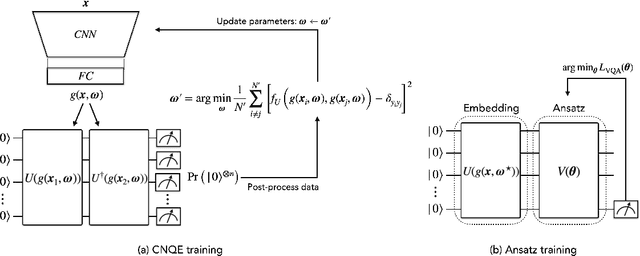
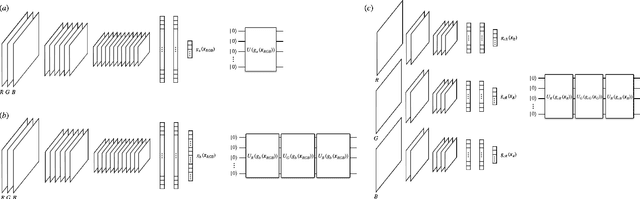
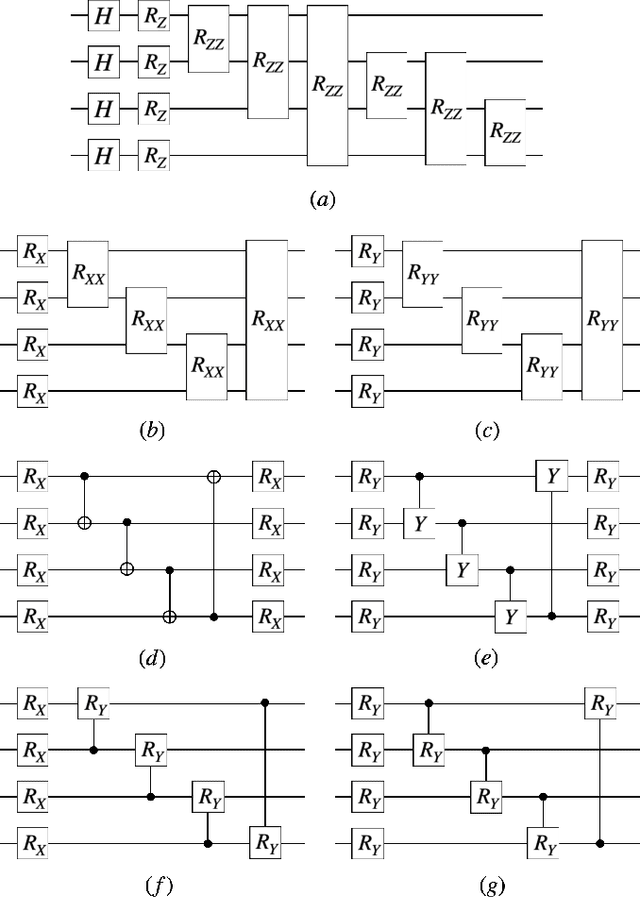
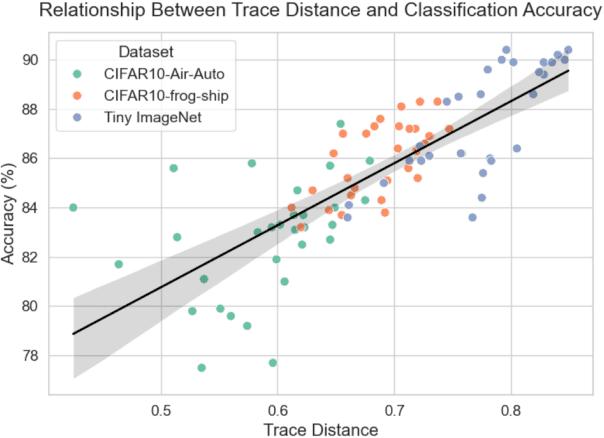
Classification using variational quantum circuits is a promising frontier in quantum machine learning. Quantum supervised learning (QSL) applied to classical data using variational quantum circuits involves embedding the data into a quantum Hilbert space and optimizing the circuit parameters to train the measurement process. In this context, the efficacy of QSL is inherently influenced by the selection of quantum embedding. In this study, we introduce a classical-quantum hybrid approach for optimizing quantum embedding beyond the limitations of the standard circuit model of quantum computation (i.e., completely positive and trace-preserving maps) for general multi-channel data. We benchmark the performance of various models in our framework using the CIFAR-10 and Tiny ImageNet datasets and provide theoretical analyses that guide model design and optimization.
Improving Quantum Machine Learning via Heat-Bath Algorithmic Cooling
Jan 05, 2025


This work introduces an approach rooted in quantum thermodynamics to enhance sampling efficiency in quantum machine learning (QML). We propose conceptualizing quantum supervised learning as a thermodynamic cooling process. Building on this concept, we develop a quantum refrigerator protocol that enhances sample efficiency during training and prediction without the need for Grover iterations or quantum phase estimation. Inspired by heat-bath algorithmic cooling protocols, our method alternates entropy compression and thermalization steps to decrease the entropy of qubits, increasing polarization towards the dominant bias. This technique minimizes the computational overhead associated with estimating classification scores and gradients, presenting a practical and efficient solution for QML algorithms compatible with noisy intermediate-scale quantum devices.
Understanding Generalization in Quantum Machine Learning with Margins
Nov 11, 2024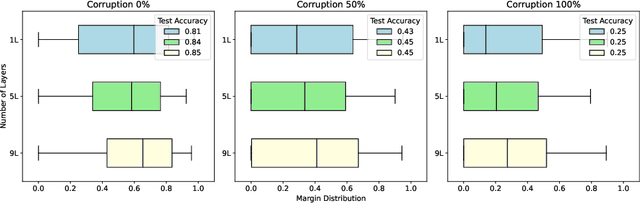
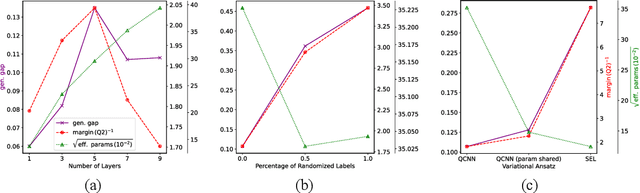
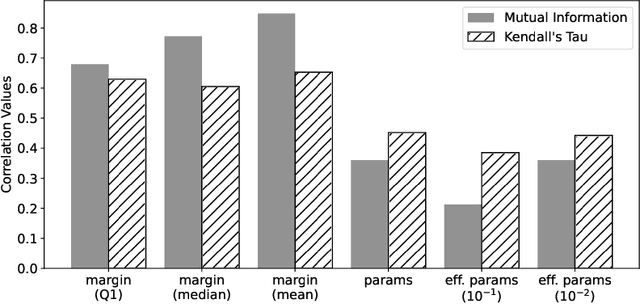
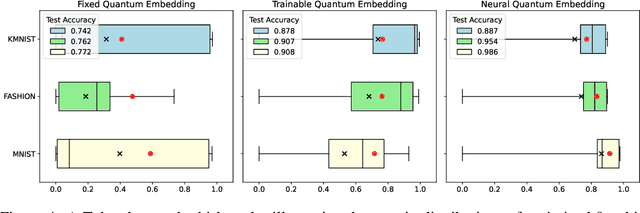
Understanding and improving generalization capabilities is crucial for both classical and quantum machine learning (QML). Recent studies have revealed shortcomings in current generalization theories, particularly those relying on uniform bounds, across both classical and quantum settings. In this work, we present a margin-based generalization bound for QML models, providing a more reliable framework for evaluating generalization. Our experimental studies on the quantum phase recognition (QPR) dataset demonstrate that margin-based metrics are strong predictors of generalization performance, outperforming traditional metrics like parameter count. By connecting this margin-based metric to quantum information theory, we demonstrate how to enhance the generalization performance of QML through a classical-quantum hybrid approach when applied to classical data.